
Battery Cage Dimensions and Capacity Planning Guide
TIME
Click count
Battery cage purchases should be checked with the same discipline used for other farm machinery. The buyer is not only buying a cage frame; the buyer is accepting a layout that will affect bird capacity, egg collection, feeding access, water line maintenance, manure cleaning, and worker movement for years. For that reason, cage dimensions should be reviewed through documents, drawings, measurements, and site fit before the order is finalized.
This article takes a standards-and-acceptance view without inventing any certification requirement. It focuses on practical buyer checks: what dimension documents should show, how capacity should be explained, which measurements should be verified, and what to inspect before installation. It is intended for poultry farm owners, procurement teams, and project managers comparing cage offers from different suppliers.
What a Dimension Document Should Include
A useful cage dimension document should not be a single line of length, width, and height. It should identify the cage model, cage unit size, birds per cage, tiers, rows, trough position, drinker line position, door style, frame structure, and recommended house layout. If the document is prepared for a complete house, it should also show aisle width, row length, service end space, and manure route.
Buyers should ask for dimensions in a clear unit system. If the farm team uses feet and the supplier drawing uses meters, both units should be checked carefully before construction. Unit confusion can lead to wrong house width, short aisles, or a cage row that does not fit the building. A dimension PDF or drawing should be treated as a working document, not a marketing attachment.
Inspection Points Before Ordering
Capacity Should Be Transparent
When reviewing battery cage dimensions, the buyer should ask how the supplier calculates capacity. The answer should be broken down into cage-level capacity, row-level capacity, house-level capacity, and final stocked capacity. If a supplier only gives a total number without the calculation path, the buyer should request clarification.
Transparent capacity matters because two cage systems can both claim the same bird number while using different tier counts, aisle spacing, and working access. A higher-density plan may reduce building footprint, but it can require better ventilation and manure handling. A more open layout may use more floor area but make inspection easier. The better choice depends on the farm's climate, labor, budget, and operating discipline.
Material and Structure Notes
Dimension review should also consider material and structure. Wire diameter, galvanizing quality, frame support, trough material, plastic parts, and door design can affect service life and daily handling. A dimension table does not tell the whole story if material specifications are absent. Buyers should ask which parts are galvanized, which parts are plastic, what spare parts are recommended, and how cleaning should be handled.
Structural stability is especially important for multi-tier systems. The supplier should explain how the frame is supported, how the rows are aligned, and how loads are transferred to the floor. The buyer should also check whether the floor must be leveled before installation. Poor floor preparation can create alignment issues even when the cage dimensions are correct.
Site Acceptance Before Installation
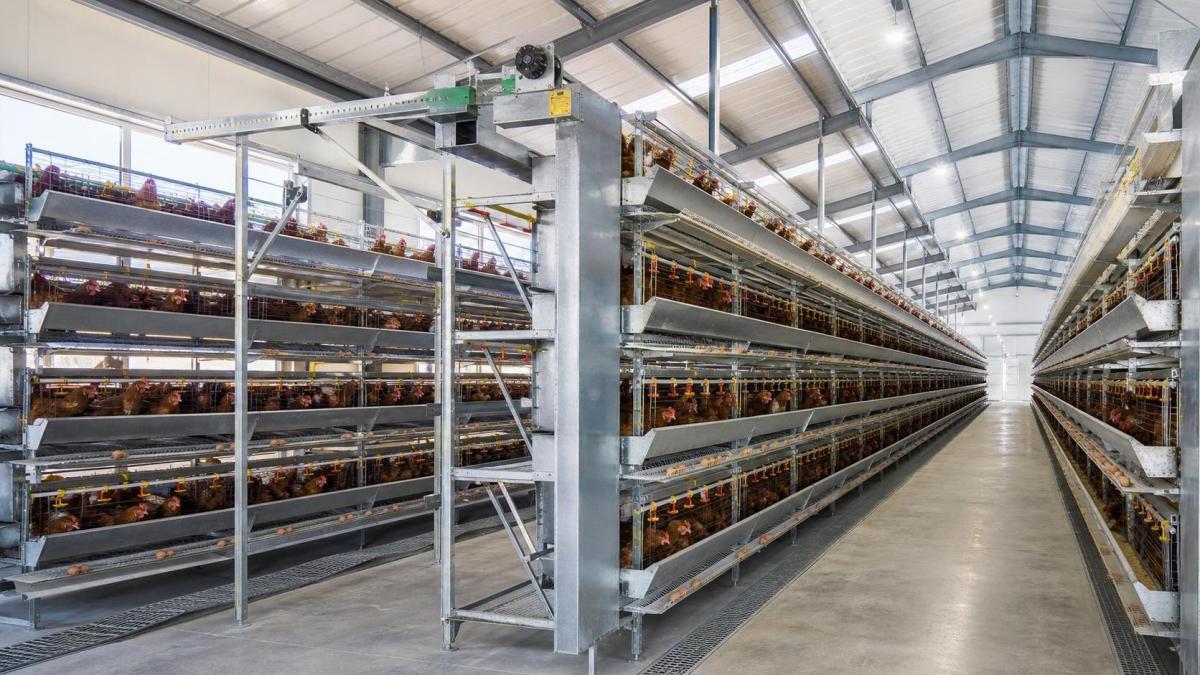
Before installation begins, the buyer should compare the final drawing with the actual house. Measure internal width, internal length, roof height, door position, column position, floor level, drainage, and electrical route. If the farm uses automatic feeding, manure belts, egg collection, or fans, confirm where motors and controls will be placed.
Acceptance should include practical movement. Can workers walk through aisles with tools? Can they inspect lower tiers? Can they reach water lines? Is there room to remove a damaged part? Can manure leave the house without crossing clean egg-handling areas? These questions protect the farm from a technically installed but uncomfortable layout.
How to Compare Two Supplier Drawings
When two suppliers quote the same bird capacity, the drawings may still represent very different farms. One proposal may use narrower aisles, more tiers, shorter service space, or a different manure removal method. Another may include more working space and stronger accessory planning. The buyer should place both drawings side by side and compare assumptions line by line.
The comparison should begin with capacity calculation. Check birds per cage, cages per row, rows per house, and the total number of tiers. Then compare house width and aisle width. A layout with higher capacity is not automatically better if it makes inspection and cleaning harder. Next, review water lines, troughs, manure handling, egg collection, and ventilation. These items decide whether the drawing can become a working farm.
Finally, compare what is included in the price. Some quotations include drinkers, troughs, frame accessories, installation parts, and basic spare parts. Others list only the cage body. A buyer who does not check included items may choose the lower quotation and later discover missing parts during installation. The safest comparison is a drawing plus an itemized bill of materials.
Documentation Buyers Should Keep
- Final cage dimension sheet with unit system clearly marked.
- House layout drawing showing rows, aisles, end space, and service areas.
- Capacity calculation by cage, row, tier, and house.
- Material and accessory list, including drinkers, troughs, frames, and optional systems.
- Installation notes and floor preparation requirements.
- Spare parts list and maintenance guidance.
- Warranty and after-sales contact information.
Common Buyer Mistakes
The first mistake is comparing cage quotations only by price. A lower price may exclude accessories, use a different material specification, or assume narrower aisles. The second mistake is building the poultry house before the cage drawing is confirmed. This can force awkward row layouts or reduce capacity.
The third mistake is ignoring service access. A cage layout that is difficult to inspect will create management problems after the first flock is placed. The fourth mistake is failing to record the final agreed dimensions. Verbal confirmation is not enough for a project that depends on accurate fit.
FAQ
Should buyers request cage dimensions in feet or meters?
Use whichever unit the farm team can read reliably, but keep the supplier drawing consistent. If both units are used, verify conversions before construction.
Is a higher cage capacity always better?
No. Higher capacity can be useful, but it must be supported by ventilation, manure removal, water access, worker movement, and maintenance planning.
What is the most important document before payment?
The most important document is the final layout drawing with cage dimensions, house dimensions, capacity calculation, included accessories, and installation notes.
Editorial Review Note
This article is buyer-facing inspection guidance. It does not claim any invented certification or universal dimension standard. It avoids fabricated prices, unsupported performance promises, and invented case numbers.
Recommended News
- Battery Cage Size Guide: Stocking Density, Welfare Rules, and Farm LayoutOct 09, 2026Battery cage size guide for calculating stocking density, usable area, welfare compliance, and efficient farm layouts. Plan safer, audit-ready hen housing today.
- Where Semi-Automatic Poultry Farms Fit Between Manual and Smart SystemsOct 09, 2026Semi automatic poultry farm solutions bridge manual labor and smart systems, improving feeding, watering, waste handling, and control. Explore the right upgrade path for your farm.
- Layer Battery Cage System Selection: Capacity, Access, and Welfare FactorsSep 22, 2026Poultry cage system selection guide: compare capacity, access, automation, and welfare factors to build a reliable, efficient layer operation.
- How to Specify Energy-Efficient Poultry Ventilation for Broiler HousesSep 20, 2026Energy efficient poultry ventilation systems: learn how to specify fans, inlets, controls, and cooling for lower energy use, healthier broilers, and reliable airflow.
- Which Broiler Chicken Farming Equipment Manufacturer Fits Your Farm Scale?Sep 16, 2026Recommend a broiler chicken farming equipment manufacturer by matching automation, reliability, engineering support, and service to your farm scale.
- TBEA’s 29 New Energy and Power Equipment Products Pass National-Level AppraisalOct 26, 2026TBEA’s 29 new energy and power equipment products reportedly passed national-level appraisal. Explore the results and key checks for smarter procurement decisions.
- Baby Sleeping Bags: Choosing the Right TOG Rating and a Safe FitOct 25, 2026Choosing babysleepingbags? Discover how to match TOG ratings to room temperature, check for a safe fit, and avoid overheating with practical tips to help you shop confidently.
- Eco Building Solutions in the UAE: Estidama vs. Al Sa'fat RequirementsOct 21, 2026Explore eco building solutions UAE projects need. Compare Estidama and Al Sa’fat ratings, technical requirements and compliance evidence to reduce approval risks and choose with confidence.
- CE Marking: How to Identify Your Product Category and Applicable EU RulesOct 19, 2026Explore product category analysis CE assessors can use to identify applicable EU rules, resolve overlapping obligations, and plan conformity assessment before costly testing.
- What Drives the Cost of Technical Specification Analysis Before Procurement?Oct 14, 2026Understand technical specification analysis cost before procurement. Explore key cost drivers, compare review scopes, and reduce unnecessary spend without compromising purchasing confidence.
- Outdoor Furniture Prices by Material: Purchase, Delivery, and Upkeep CostsOct 27, 2026Compare outdoor furniture price by material, including purchase, delivery, and upkeep costs. Discover how to evaluate supplier quotes and choose better long-term value.
- Real-Time Industrial Trend Analysis: Which Indicators Signal Demand Shifts?Oct 23, 2026Use real time industrial trend analysis to spot demand shifts early. Discover how orders, inventory, and factory activity reveal buying signals and guide smarter business decisions.
- Global Sourcing for Procurement: How to Compare Total Landed CostsOct 22, 2026Optimize global sourcing for procurement by comparing total landed costs, from freight and duties to quality risks. Discover how to uncover hidden costs and choose suppliers with confidence.
- How Can Data Analysis Compare Global Supplier Pricing Trends?Oct 12, 2026How to use data analysis to compare global supplier pricing trends? Learn to align quotes, track currency impacts, and compare landed costs for smarter sourcing decisions.
- Vietnam Precast Concrete Market: Demand Drivers, Capacity, and Buyer RisksOct 09, 2026Vietnam precast concrete market insights: assess demand drivers, production capacity, logistics, quality compliance, and buyer risks for smarter sourcing and investment decisions.
All Categories
Hot Articles
- Outdoor Furniture Prices by Material: Purchase, Delivery, and Upkeep CostsOct 27, 2026Compare outdoor furniture price by material, including purchase, delivery, and upkeep costs. Discover how to evaluate supplier quotes and choose better long-term value.
- Chile’s BESS Cut Curtailment as Projects Under Construction Are Expected to Triple CapacityOct 27, 2026Chile’s BESS are cutting renewable curtailment, while ACERA expects projects under construction to triple storage capacity. Explore what this could mean for developers and suppliers.
- Energy Management in North America: Using Demand Response to Cut Facility CostsOct 26, 2026Explore energy management North America facilities can use to cut costs with demand response. Learn to assess programs, protect operations, and unlock reliable savings.