
Layer Battery Cage System: Selection, Layout and Farm Use
TIME
Click count
A battery cage system is one of the common housing options for commercial layer farms. In Nigeria, buyers often compare it with deep litter systems because the decision affects land use, labor, egg collection, manure handling, and daily inspection. A cage system can organize birds in rows and tiers, but it must be planned with the house, water, feeding, ventilation, and cleaning routine.
This basic guide explains what buyers should understand before selecting cages for layers. It avoids one-size claims because farm size, climate, budget, labor, power supply, and management skill all influence the right setup.
What a Layer Battery Cage System Does
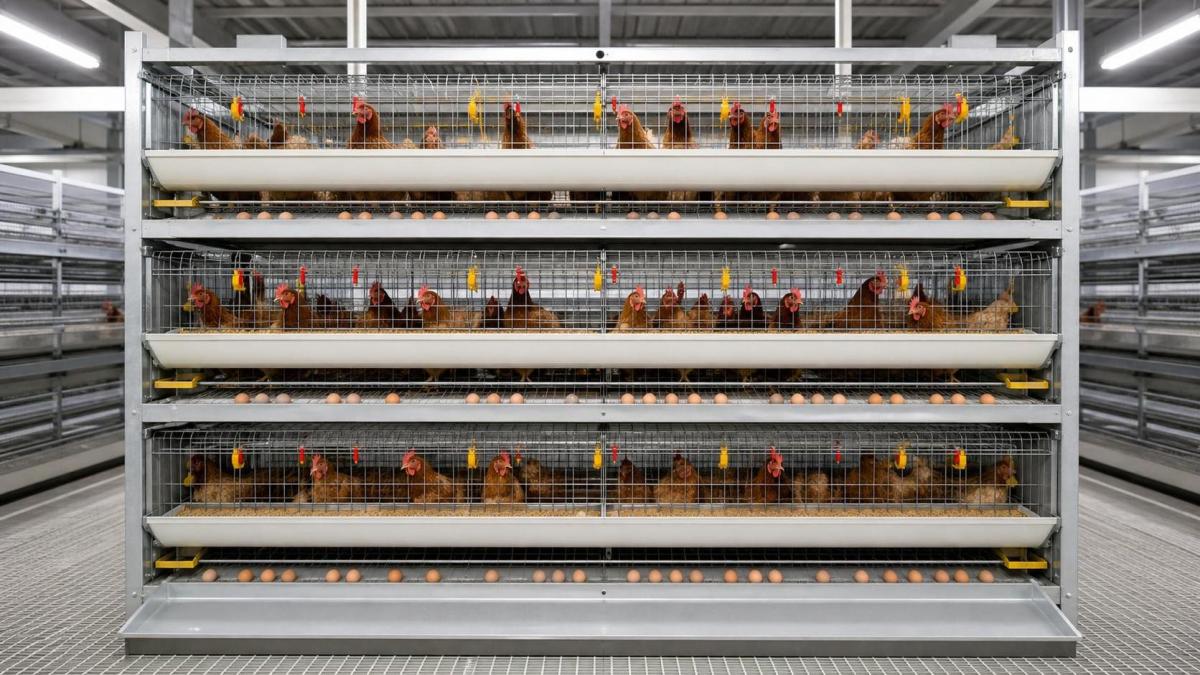
The system places laying hens in cage units arranged in rows. Feed troughs run along the front, drinking nipples or cups supply water, eggs roll toward collection points, and manure falls below the birds for manual or automatic removal. The goal is to make daily management more organized than loose-floor production.
Good cage planning helps workers inspect birds, collect eggs, manage feed, check water, and clean manure. Poor cage planning can create narrow aisles, difficult repairs, heat stress, and weak cleaning routines. That is why the cage should be treated as part of a farm system rather than a standalone product.
Cage System vs Deep Litter
Selection Factors for Nigerian Farms
For battery cage for layers in Nigeria, buyers should consider climate, building size, power reliability, labor availability, and water quality. A hot area needs better ventilation planning. A location with unstable electricity should avoid automation choices that cannot run safely with backup power. Farms with hard or dirty water need filters and routine line flushing.
The quotation should show cage material, dimensions, bird capacity, tier design, troughs, drinkers, frames, manure equipment, optional automation, spare parts, and installation accessories. If any of these are missing, comparison becomes unclear.
Using the Product Page During Review
Buyers reviewing cage options can use supplier product pages to check model structure, material notes, and configuration choices. When comparing offers, keep one practical reference open and view poultry equipment details alongside the house drawing, item list, and capacity calculation. This makes it easier to spot whether a quotation is complete.
Layout and House Fit
The cage system must fit the house. Buyers should confirm row count, aisle width, roof height, ventilation path, water line direction, manure route, and service end space. If the cage is ordered before these items are checked, installation may require changes to the building or reduce usable capacity.
A drawing should show the whole layout, not only cage dimensions. Workers need space to feed, inspect, repair, remove weak birds, and clean. The farm also needs a route for eggs and a separate route for manure where possible.
Water, Feed and Manure Basics
Three routines decide whether a cage house remains manageable: water, feed, and manure. Water lines should deliver steady pressure and should be easy to flush. Leaking nipples create wet manure, odor, and cleaning difficulty. Feed troughs should be reachable and should not waste feed through poor alignment or careless handling.
Manure handling should be decided before installation. A small farm may clean manually, but the aisle and under-cage access must still be realistic. A larger house may use belts or scrapers, which require motors, alignment, discharge space, and maintenance access. If manure leaves the cage row but drops in the wrong place, workers still face heavy manual work.
What Nigerian Buyers Should Ask Suppliers
Buyers should ask suppliers to explain the cage material, galvanizing, frame strength, trough type, drinker configuration, bird capacity, and installation accessories. They should also ask whether the system is suitable for the local house design and whether spare parts can be supplied quickly. A cage system without spare parts planning can stop being efficient when small components fail.
Another important question is training. Workers should know how to inspect birds, adjust drinker lines, find leaks, clean manure, and report damaged cage doors or frames. A simple training routine protects the investment because cage systems perform best when small problems are corrected early.
Installation Readiness
Before the cages arrive, the house should be measured again. Internal width, length, roof height, floor level, door position, drainage, and electrical access should match the final drawing. If the floor is uneven or the house is narrower than expected, the cage rows may not align properly.
The buyer should also prepare workers, tools, and storage space for installation. Small parts should be counted and kept safely. Motors, drinkers, troughs, bolts, and frames should not be mixed or left exposed to rain. Good installation preparation reduces delays and helps the farm identify missing parts early.
After installation, run a short inspection before birds are placed. Walk every aisle, open cage doors, check drinker alignment, confirm trough access, and test any moving parts. This first inspection is easier before the house is stocked and can prevent small installation errors from becoming daily farm problems. Keep the checklist with the daily farm project records.
Basic Buyer Checklist
- Confirm layer bird capacity by cage, row, tier, and house.
- Check cage wire, frame, trough, drinker, and accessory specifications.
- Review aisle width and service access.
- Match ventilation to house size and local heat conditions.
- Plan manure removal before installation.
- Ask for spare parts and installation guidance.
- Separate equipment cost from civil work, transport, electrical work, and local labor.
- Make sure workers can maintain the system without unsafe shortcuts.
FAQ
Is a cage system always better than deep litter?
No. A cage system can improve organization, but it needs proper installation, ventilation, water, cleaning, and maintenance.
What should a cage quote include?
It should include cage model, material, capacity, dimensions, accessories, optional automation, installation support, spare parts, and exclusions.
Can a small farm start with cages?
Yes, if the house layout, ventilation, water supply, manure handling, and labor routine are planned before ordering.
Editorial Review Note
This article is buyer-facing basic guidance. It avoids fabricated prices, unsupported production claims, and invented case numbers.
Recommended News
- Where Semi-Automatic Poultry Farms Fit Between Manual and Smart SystemsOct 09, 2026Semi automatic poultry farm solutions bridge manual labor and smart systems, improving feeding, watering, waste handling, and control. Explore the right upgrade path for your farm.
- Layer Battery Cage System Selection: Capacity, Access, and Welfare FactorsSep 22, 2026Poultry cage system selection guide: compare capacity, access, automation, and welfare factors to build a reliable, efficient layer operation.
- How to Specify Energy-Efficient Poultry Ventilation for Broiler HousesSep 20, 2026Energy efficient poultry ventilation systems: learn how to specify fans, inlets, controls, and cooling for lower energy use, healthier broilers, and reliable airflow.
- Which Broiler Chicken Farming Equipment Manufacturer Fits Your Farm Scale?Sep 16, 2026Recommend a broiler chicken farming equipment manufacturer by matching automation, reliability, engineering support, and service to your farm scale.
- Layer Cage Selection Criteria for Small-Scale Poultry Farms in NigeriaSep 12, 2026poultry cages for sale in Nigeria — discover durable, climate-tested layer cages optimized for small-scale farms: corrosion resistance, space efficiency & real-world TCO savings.
- What Drives the Cost of Technical Specification Analysis Before Procurement?Oct 14, 2026Understand technical specification analysis cost before procurement. Explore key cost drivers, compare review scopes, and reduce unnecessary spend without compromising purchasing confidence.
- CE Prefab Houses: Which Components Require CE Marking Before Project Approval?Oct 10, 2026CE prefab houses: learn which components need CE marking before approval, from structural steel and windows to fire protection and MEP systems.
- How to Evaluate Technology Options Against Inspection Standards for Project ApprovalOct 07, 2026Technology option analysis inspection standards: compare evidence, testing, compliance, and lifecycle risk to make faster, approval-ready project decisions.
- How to Specify Manufacturing Equipment Systems for Throughput, Uptime, and SafetyOct 05, 2026Manufacturing equipment systems: learn how to specify sustained throughput, uptime, safety, controls, and acceptance tests for dependable production.
- How to Define Technical Buying Criteria for Reliable Category ResearchSep 28, 2026Technical buying criteria for category research: build measurable requirements, assess risk, compliance, and lifecycle value for smarter supplier decisions.
- Vietnam Precast Concrete Market: Demand Drivers, Capacity, and Buyer RisksOct 09, 2026Vietnam precast concrete market insights: assess demand drivers, production capacity, logistics, quality compliance, and buyer risks for smarter sourcing and investment decisions.
- Technology Advancements Dashboards: What Metrics Reveal Emerging Industry Shifts?Oct 02, 2026Technology advancements dashboard insights reveal investment, adoption, supply-chain, and policy signals—helping leaders spot real industry shifts before competitors.
- How to Compare Global Sourcing Information Before Shortlisting Overseas SuppliersSep 30, 2026Global sourcing information comparison made practical: verify suppliers, assess compliance, capacity, landed cost, and delivery risk before building a confident overseas shortlist.
- Battery Cage Price in Nigeria: Cost Drivers for Farm Project BudgetsSep 22, 2026Battery cage price in Nigeria explained: compare installed costs, steel quality, logistics, water systems and project budget risks before choosing poultry housing.
- How to Build a Poultry Equipment Price List for a New Farm SetupSep 22, 2026Poultry equipment price list guide for new farm setups: compare systems, uncover hidden costs, assess quality, and plan installation with confidence.
All Categories
Hot Articles
- What Drives the Cost of Technical Specification Analysis Before Procurement?Oct 14, 2026Understand technical specification analysis cost before procurement. Explore key cost drivers, compare review scopes, and reduce unnecessary spend without compromising purchasing confidence.
- 400V Three-Phase Grid Integration: Inverter and Protection RequirementsOct 13, 2026Explore grid integration 400V requirements for three-phase inverters, anti-islanding, earthing, and fault protection. Learn what to verify for compliant, reliable connections.
- Will a power distribution automation solution fit your SCADA system?Oct 12, 2026Will a power distribution automation solution fit your SCADA system? Explore protocol compatibility, control safety, and testing essentials to avoid costly gaps and choose with confidence.