
Which production automation solutions improve uptime on bottleneck lines?
TIME
Click count
A bottleneck line does not need a major breakdown to miss its target. A short sensor fault, an empty infeed, a slow manual reset, a quality hold, or a downstream accumulation problem can interrupt the one process that sets the pace for everything else. Because lost time at the constraint cannot usually be recovered later in the shift, the most useful production automation solutions to improve uptime are not simply the most advanced systems. They are the ones that expose the real cause of lost minutes and help operators restore stable flow quickly.
This distinction matters across packaging, machining, assembly, food processing, battery production, building-material manufacturing, and many other environments. A plant may have robots, PLCs, and a dashboard already, yet still suffer frequent stops on its critical line. The gap is often not a lack of technology. It is a lack of connection between machine condition, material movement, operator action, maintenance response, and production scheduling.
Start with the bottleneck, not the automation catalogue
The bottleneck is the operation that limits actual line output under current conditions. It may be a curing oven, a filling head, a press, a CNC cell, a test station, a palletizer, or a manual inspection point. It can also move during a shift when product mix, staffing, material quality, or machine condition changes. Installing automation around a non-constraint process may reduce local effort while doing little for total throughput.
Before choosing a solution, teams should separate planned downtime from unplanned loss, then classify recurring interruptions. Useful categories include equipment faults, starved or blocked conditions, changeovers, micro-stops, quality-related holds, utility interruptions, and waiting for assistance. The goal is not to create perfect codes on day one. It is to identify which events repeatedly consume the bottleneck’s available time and which are vague enough to hide the real problem.
A line that stops because cartons arrive late needs a different response from one that stops because a servo drive overheats. Both may be recorded as “downtime,” but one points to intralogistics and buffer design while the other calls for condition monitoring, electrical diagnosis, or maintenance planning. Good automation makes these differences visible rather than compressing them into one generic alarm.
Real-time monitoring that operators can act on
The foundation is usually machine connectivity combined with an event model that reflects how the line actually runs. PLC signals, machine alarms, drive status, safety states, cycle counters, and operator inputs can feed a supervisory system, manufacturing execution layer, or focused downtime application. The technology stack varies, but the practical question is simple: when the bottleneck stops, can the team see what happened, where it happened, how long it lasted, and whether it is recurring?
A useful screen should not bury the operator in a wall of trends. It should show the current operating state, the immediate reason for the stop where available, upstream and downstream conditions, and the next action expected. In some lines, a simple stack-light or Andon escalation remains more effective than a sophisticated dashboard because it prompts a fast, understood response. Digital tools work best when they shorten the path from abnormal condition to action.
Alarm rationalization is often overlooked. If every warning receives the same visual priority, the critical event is easily missed. Review nuisance alarms, duplicate messages, unclear text, and alarms that can only be interpreted by a specialist. For bottleneck equipment, an alert should distinguish between a condition that needs observation and one that will stop production within the next few cycles.
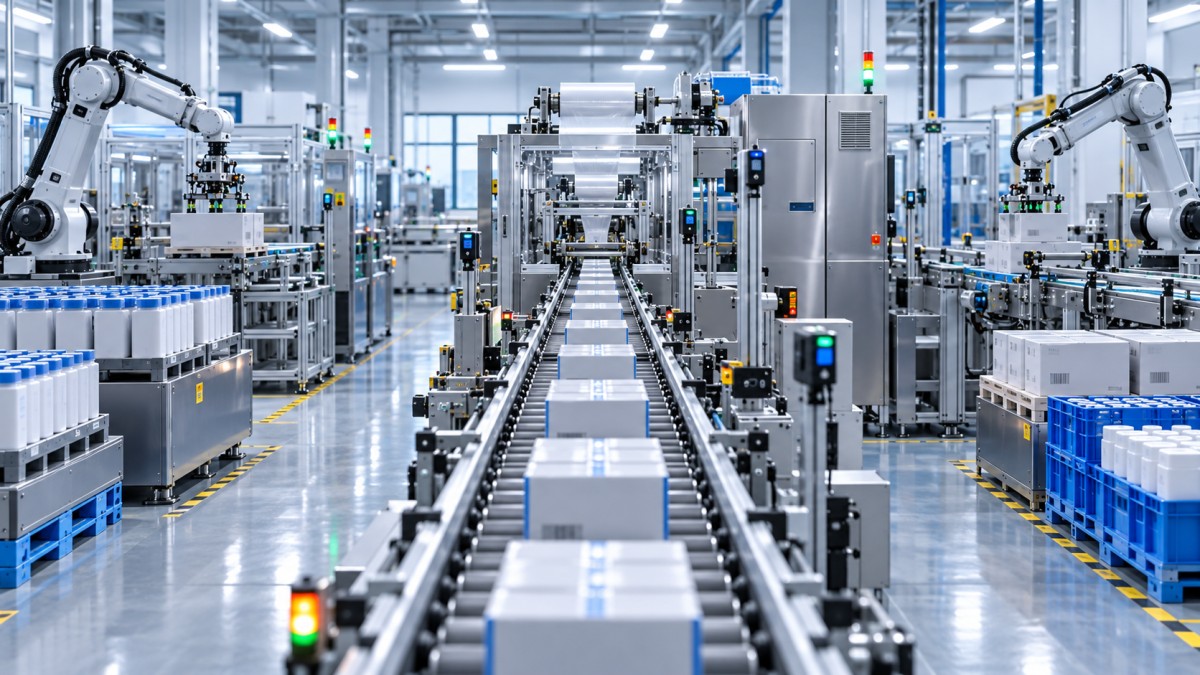
Automation options and the uptime problems they address
Condition monitoring deserves careful framing. Collecting vibration, temperature, current, pressure, or lubrication data does not automatically create predictive maintenance. A signal becomes valuable when it is linked to a known asset, a plausible failure mode, an alert threshold or trend rule, and a work process. If maintenance staff receive alerts without enough context to prioritize and inspect the asset, the project may add another source of noise.
For material-dependent bottlenecks, automated replenishment can be more influential than another machine upgrade. Barcode or RFID-based tracking, conveyor controls, automated guided vehicles, autonomous mobile robots, pick-to-light systems, and electronic Kanban can reduce uncertainty in supply. Yet transport automation should be sized around real routes, loading points, traffic conflicts, battery or charging strategy, safety zoning, and exception handling. A vehicle that cannot recover from a blocked aisle does not protect uptime.
Use buffers deliberately, not as a way to hide instability
Small buffers before and after a bottleneck can absorb normal variation. An upstream buffer protects the constraint from short supply interruptions; a downstream buffer prevents it from stopping when the next operation slows down. Automated accumulation, buffer sensors, and release logic can make this protection more reliable. But excess inventory can also conceal chronic faults, increase handling damage, complicate traceability, and delay the discovery of quality problems.
The right buffer is therefore a production-control decision, not just a storage decision. Its capacity and rules should reflect cycle-time variation, product sensitivity, changeover behavior, and what happens when a defect is detected. In regulated or highly traceable processes, mixing rules and batch controls may matter as much as physical space. Teams should test whether the buffer improves bottleneck availability without creating unacceptable process risk.
Reduce recovery time, not only failure frequency
Many uptime programmes focus on preventing failure, which is necessary but incomplete. On a bottleneck line, the time needed to diagnose, access, reset, verify, and restart equipment is often just as important. Production automation solutions to improve uptime should therefore support recovery: clear fault location, guided reset steps, safe remote diagnostics where appropriate, automatic parameter backup, and rapid confirmation that the process is running within acceptable conditions.
Digital work instructions are particularly useful where a stop requires several checks in a specific order. They can present machine-state-dependent steps, diagrams, inspection points, escalation contacts, and confirmation records. That does not replace technical skill. It reduces avoidable variation between shifts and helps preserve knowledge when experienced personnel are unavailable. Instructions should be written with the people who perform the recovery, not imposed as a generic engineering document.
Remote access also requires discipline. It can speed specialist support, especially across dispersed operations, but it must be designed around cybersecurity, access roles, change control, and local safety procedures. A remote technician should not be able to create an unsafe machine condition simply because a line is under pressure to restart. The necessary controls depend on the site architecture, equipment supplier requirements, and applicable local obligations.
Avoid the common “dashboard first” mistake
A new dashboard can make losses visible, but visibility alone does not remove them. The usual failure pattern is familiar: data are collected, charts are reviewed in meetings, and the same stop codes return week after week. A better approach creates a closed loop. Each significant recurring loss needs an owner, a defined investigation method, an expected corrective action, and a way to verify whether the change held under normal production conditions.
It is also wise to begin with a narrow scope. Connect the actual bottleneck and its immediate dependencies before attempting a plant-wide rollout. Validate signal quality, confirm that timestamps are synchronized, test operator inputs, and agree on what counts as a stop. If the line has frequent product changes, include changeover states from the beginning rather than treating them as an afterthought. This produces a more trustworthy baseline for later expansion.
A practical selection path
When comparing options, ask suppliers and internal stakeholders to demonstrate the abnormal path rather than only the normal cycle. What happens when a component is missing, a sensor gives an invalid reading, a barcode cannot be read, a quality check fails, a communication link is lost, or an operator needs a manual override? The quality of exception handling often determines whether an automation project improves uptime in real production.
Integration should be assessed early. Existing controls may use different PLC generations, industrial protocols, historian systems, maintenance platforms, or enterprise software. Data ownership, cybersecurity boundaries, spare-part availability, service access, and responsibility for software changes should be clarified before commissioning. A technically capable solution can still become difficult to sustain if only one external party understands its configuration.
For teams evaluating technologies across markets, GISN follows the intersection of industrial machinery, digital SaaS solutions, renewable-energy operations, and related supply chains. That wider view is useful because bottleneck reliability increasingly depends on more than the machine itself: power quality, component availability, digital infrastructure, service capability, and regional operating conditions can all affect the final result.
Build the system around the next recoverable minute
The strongest uptime projects are usually modest in their first claim: they make the bottleneck easier to observe, protect it from predictable interruptions, and help people recover faster when something goes wrong. Once the team can trust the event data and response process, more advanced tools—condition analytics, automated transport, vision inspection, or optimization software—have a clear role.
Before committing to a solution, map the constraint’s top stop patterns, confirm which signals can be collected reliably, and walk through the operator’s recovery sequence in detail. That exercise often reveals whether the priority is maintenance intelligence, material-flow automation, better alerts, safer guided recovery, or a combination of several measures. The right choice is the one that protects the critical process under real operating conditions, not the one with the longest feature list.
Recommended News
- What should I look for when evaluating factory automation solutions?Sep 22, 2026What should I look for when evaluating factory automation solutions? Explore key criteria for integration, reliability, safety, scalability, data, and lifecycle ROI.
- Which production automation solutions improve uptime on bottleneck lines?Sep 22, 2026Production automation solutions to improve uptime: discover practical ways to protect bottleneck lines, cut downtime, speed recovery, and sustain reliable throughput.
- Is Machine Learning Practical for Small-Batch Manufacturing Quality Control?Sep 16, 2026Is machine learning practical for small batch manufacturing quality control? Explore cost-effective use cases, data needs, and human-guided inspection strategies.
- What Factory Automation Cost Factors Should Manufacturers Include in a Project Budget?Sep 07, 2026Factory automation cost factors go beyond equipment. Learn how to budget integration, site readiness, safety, software, commissioning, and lifecycle support.
- Where are industrial automation systems the most cost-effective?Sep 03, 2026Industrial automation systems cost effective solutions: discover where automation delivers the strongest ROI in manufacturing, logistics, inspection, and energy control.
- How to Define Technical Buying Criteria for Reliable Category ResearchSep 28, 2026Technical buying criteria for category research: build measurable requirements, assess risk, compliance, and lifecycle value for smarter supplier decisions.
- B2B Market Analysis Compliance Guide: How to Validate Data, Claims, and SourcesSep 25, 2026B2B market analysis compliance guide: learn to validate data, supplier claims, methodologies, and cross-border sources for credible, decision-ready market intelligence.
- When R&D in manufacturing is ready to move beyond the pilot stageSep 22, 2026R&D in manufacturing: discover the five signs your pilot is ready to scale, from process control and quality to integration, ownership, and real-world economics.
- How R&D in the manufacturing industry reduces scale-up riskSep 22, 2026r&d in manufacturing industry reduces scale-up risk with pilot builds, process validation, supplier alignment, and workforce readiness for more reliable launches.
- The most common supplier compliance requirements before onboardingSep 21, 2026Explore the most common supplier compliance requirements before onboarding, from legal checks and quality to ESG, cybersecurity, and supply continuity.
- Technology Advancements Dashboards: What Metrics Reveal Emerging Industry Shifts?Oct 02, 2026Technology advancements dashboard insights reveal investment, adoption, supply-chain, and policy signals—helping leaders spot real industry shifts before competitors.
- How to Compare Global Sourcing Information Before Shortlisting Overseas SuppliersSep 30, 2026Global sourcing information comparison made practical: verify suppliers, assess compliance, capacity, landed cost, and delivery risk before building a confident overseas shortlist.
- Battery Cage Price in Nigeria: Cost Drivers for Farm Project BudgetsSep 22, 2026Battery cage price in Nigeria explained: compare installed costs, steel quality, logistics, water systems and project budget risks before choosing poultry housing.
- How to Build a Poultry Equipment Price List for a New Farm SetupSep 22, 2026Poultry equipment price list guide for new farm setups: compare systems, uncover hidden costs, assess quality, and plan installation with confidence.
- Which digital export channels fit products with longer sales cycles?Sep 21, 2026Digital export channels for long sales cycles: learn how websites, industry platforms, marketplaces, and targeted outreach build trust, qualify buyers, and drive complex B2B export deals.
All Categories
Hot Articles
- Technology Advancements Dashboards: What Metrics Reveal Emerging Industry Shifts?Oct 02, 2026Technology advancements dashboard insights reveal investment, adoption, supply-chain, and policy signals—helping leaders spot real industry shifts before competitors.
- How to Compare Eco-Friendly Flooring Materials for High-Traffic Commercial SpacesOct 01, 2026Compare eco-friendly flooring materials for high-traffic commercial spaces with practical insights on durability, maintenance, lifecycle impact, and smarter specification choices.
- How to Compare Global Sourcing Information Before Shortlisting Overseas SuppliersSep 30, 2026Global sourcing information comparison made practical: verify suppliers, assess compliance, capacity, landed cost, and delivery risk before building a confident overseas shortlist.