
For procurement teams managing high-volume distribution centers, the lowest equipment price rarely tells the full cost story. Reliable capacity and total operating cost matter more.
To compare automated packing solutions for high-volume distribution centers, assess sustained throughput, staffing, packaging consumption, maintenance, and integration against your actual order mix and peak demand.
The strongest investment usually removes a verified bottleneck while reducing cost per shipped order. Advertised machine speed alone cannot establish either outcome with sufficient confidence.
This comparison explains which technologies fit different workloads, how to calculate usable capacity, and what evidence suppliers should provide before procurement teams approve an investment.
Which Packing Approach Fits Your Order Profile?
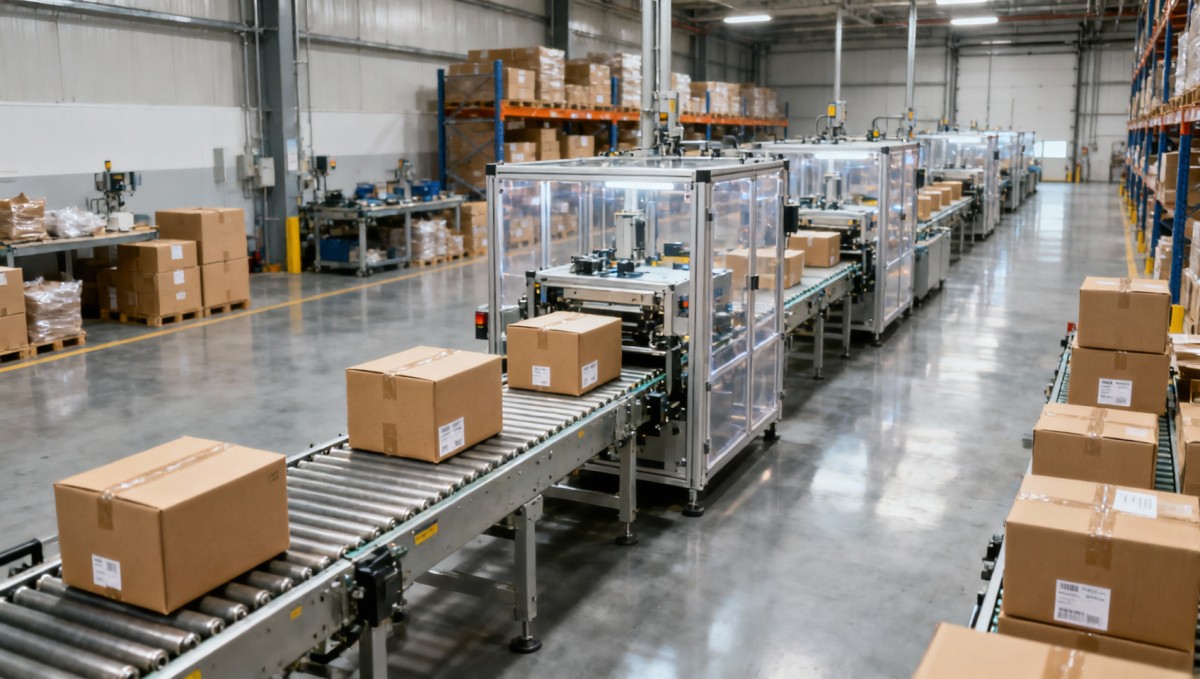
Start by segmenting orders by dimensions, weight, fragility, item count, and packaging restrictions. These characteristics determine automation eligibility more reliably than total daily shipment volume.
A facility shipping standardized cartons faces different economics from one processing apparel, oversized equipment, and fragile mixed orders. Compare solutions against clearly defined order segments.
Treat these categories as starting points, because supplier configurations differ substantially. A right-size system may automate carton creation while still requiring operators to load products.
Ask each supplier to map every remaining manual touch, including item orientation, inserts, exceptions, replenishment, and rework. These tasks often explain differences between competing proposals.
Also calculate the share of orders each proposal can process. A fast machine serving a narrow segment may leave most facility labor and congestion unchanged.
How Much Throughput Will the System Actually Deliver?
Procurement should distinguish mechanical speed, demonstrated sustained throughput, and saleable output. Only correctly packed, labeled, and routed orders contribute directly to shipping capacity and service.
Require throughput commitments for your representative product mix, including difficult packages and frequent format changes. A demonstration using uniform cartons provides limited evidence for variable operations.
A useful planning model multiplies rated throughput by availability, operating-speed performance, and first-pass yield. Define these factors consistently so losses are counted exactly once overall.
For example, a hypothetical line rated at 2,400 packages hourly delivers approximately 1,800 good packages with 90% availability, 85% performance, and 98% first-pass yield assumptions.
This calculation illustrates capacity derating, not a market benchmark. If a supplier already quotes sustained good output, applying the same losses again would understate capacity.
Compare validated output with the busiest relevant shipping window. Daily averages can conceal late order releases, carrier deadlines, promotional surges, and concentrated waves of work.
Inspect the entire flow, including induction, weighing, dimensioning, labeling, sortation, and outbound staging. Increasing packing speed creates little value when another process blocks completed parcels.
Specify buffer requirements and recovery behavior after stoppages. A line must clear accumulated work before dispatch deadlines, even when its average hourly capacity appears sufficient.
What Belongs in the Total Cost Comparison?
Request a common quotation template covering equipment, controls, conveyors, guarding, installation, commissioning, training, and initial spares. Otherwise, apparently comparable prices may represent materially different scopes.
Include site preparation such as electrical supply, compressed air, network connections, floor modifications, and fire protection changes where applicable. Establish responsibility for each required expense.
Integration costs should cover warehouse management interfaces, warehouse execution software where used, carrier labeling, data validation, exception logic, testing, and support after software changes occur.
Recurring costs include operators, technicians, consumables, utilities, licenses, preventive maintenance, spare parts, and external service. Model scheduled maintenance separately from unplanned downtime and emergency repairs.
Measure staffing across the full packing process. Operators removed from carton sealing may still be needed for induction, replenishment, quality checks, or handling rejected orders.
Packaging savings require an equally careful baseline. Compare corrugate, film, tape, labels, and protective fill per eligible order, accounting for scrap during startup and changeovers.
Right-sizing may reduce freight charges when dimensions affect the applicable tariff. Validate savings against actual carrier contracts, rounding rules, minimum charges, and shipment destination patterns.
Include transition costs, too: temporary labor, parallel operation, training time, commissioning losses, and contingency arrangements. These expenses can materially affect the first year of ownership.
Does the Business Case Survive Conservative Assumptions?
Compare proposals over the same evaluation period and shipment forecast. Use cost per shipped order alongside payback, because rapid repayment alone does not establish long-term value.
Calculate ownership cost per order by dividing relevant lifetime costs by expected good shipments. Document treatment of financing, discounting, residual value, and shared operating expenses.
The following hypothetical example illustrates the method. Its figures are assumptions for analysis, rather than supplier quotations or typical returns available across distribution center projects.
Annual labor savings equal five positions multiplied by 4,000 hours and $28, producing $560,000. Packaging savings add $120,000, bringing gross annual benefits to $680,000 total.
After $140,000 in additional operating expenses, annual net savings reach $540,000. Simple payback is approximately 2.2 years, excluding financing, taxes, discounting, and implementation ramp-up effects.
Over five years, undiscounted net benefits total $1.5 million after the initial investment. Confirm that the assumed equipment life and support arrangements cover that period.
Labor benefits require particular scrutiny: redeploying employees creates capacity, but does not automatically reduce payroll. Separate cash savings, avoided hiring, and operational improvements within the proposal.
Then test lower volume, slower commissioning, reduced staffing savings, and higher maintenance costs. A project dependent on every optimistic assumption deserves closer scrutiny before approval.
Keep savings categories distinct to prevent double counting. For example, packaging reductions and freight reductions can coexist, but each needs separate evidence from operating data.
Can the Proposed Design Handle Growth and Disruption?
Scalability depends on more than adding another machine. Future expansion may require additional conveyor capacity, software licenses, electrical infrastructure, floor space, and outbound handling resources.
Ask suppliers to price realistic expansion stages and identify when shared components become constraints. This makes the cost of future capacity visible during initial selection.
Two parallel lines may provide useful resilience, although they can duplicate staffing and maintenance requirements. One larger line may offer lower cost but concentrate downtime exposure.
Evaluate both arrangements against the financial impact of missed shipping deadlines. Redundancy has greater value when downtime creates penalties, premium freight, or lost customer orders.
Plan a workable fallback for equipment failures and excluded products. Manual bypasses need sufficient space, trained staff, packaging stock, and compatible labeling processes to function.
Service coverage should match operating hours and location. Examine response commitments, remote diagnostics, local technician availability, critical spare lead times, and responsibility for software faults.
Also assess consumable sourcing and technical access. Proprietary materials, restricted settings, or unavailable replacement components can increase lifecycle costs and complicate otherwise straightforward operating changes.
What Evidence Should Suppliers Provide Before You Commit?
Build one evaluation pack for every bidder, using the same order sample, operating calendar, growth assumptions, labor rates, and acceptance criteria. Consistency improves commercial comparisons.
Request a representative trial that includes dimensional extremes, fragile items, multi-item orders, replenishment events, and packaging changes. Record quality, staffing, downtime, and output together consistently.
- Define sustained good output over an agreed test duration and representative order mix.
- Specify packaging integrity, label readability, dimensional accuracy, and acceptable reject rates.
- Document required staffing, replenishment duties, consumable usage, and changeover times.
- Agree interface responsibilities, recovery procedures, training deliverables, and service coverage.
- Link acceptance and payment milestones to measurable contractual deliverables.
Separate factory testing from site acceptance. Factory results demonstrate equipment behavior, while site testing establishes performance with your interfaces, workforce, upstream supply, and shipping processes.
Document test exclusions and retest procedures before signing. Define what happens when throughput, quality, or integration requirements are missed, including corrective work and commercial remedies.
Reference checks should involve facilities with comparable products and operating patterns. Ask specifically about sustained output, maintenance workload, implementation delays, and supplier responsiveness after commissioning.
Choose the Lowest Sustainable Cost at the Capacity You Need
The best automated packing solution delivers sufficient good output at a defensible ownership cost, with practical arrangements for exceptions, maintenance, demand growth, and equipment failures.
Shortlist systems by order eligibility first, validate sustained capacity second, and compare financial outcomes third. This sequence prevents attractive quotations from obscuring poor operational fit.
Approve the investment when representative trials, conservative economics, and enforceable supplier commitments support the same conclusion. That evidence gives procurement a stronger basis for selection.