
Petrochemical Industry's '15th Five-Year' Digitalization Guide Released
TIME
Click count
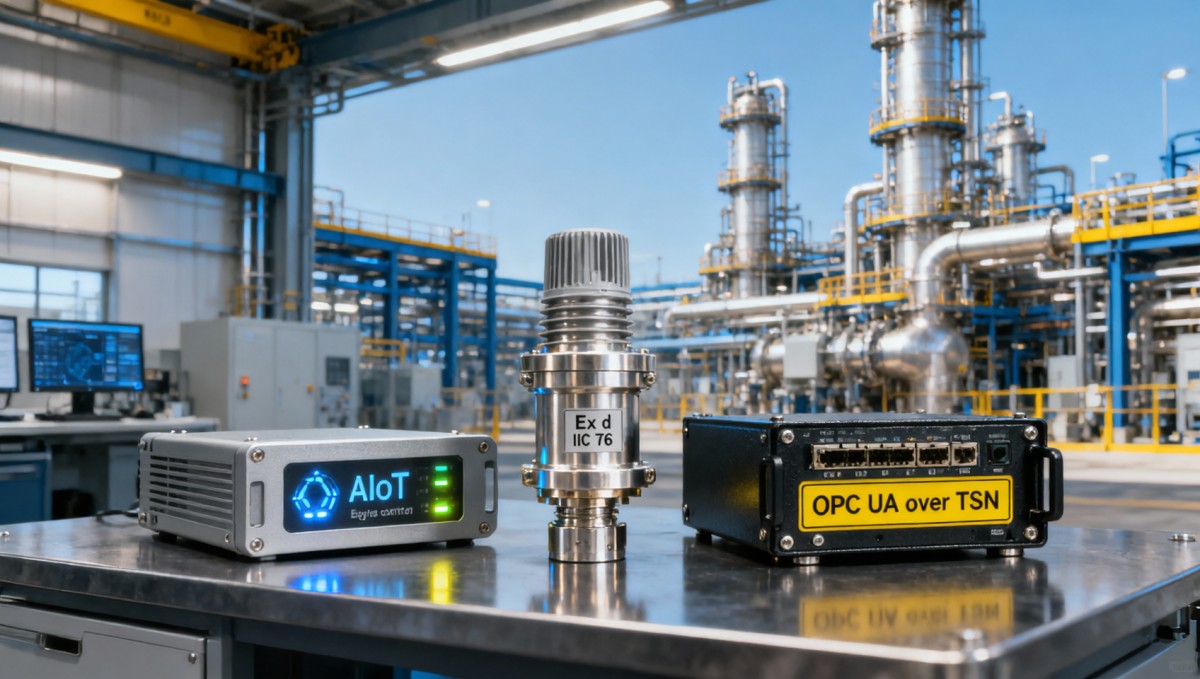
On May 15, 2026, the China Petroleum and Chemical Industry Federation released the Petrochemical Industry's '15th Five-Year' Digitalization Development Guide, introducing for the first time a systematic domestic technology adaptation roadmap for 12 categories of AIoT equipment intended for overseas smart factories—including edge controllers, explosion-proof industrial sensors, and digital twin platform interfaces. The Guide mandates that exported equipment must support OPC UA over TSN and comply with IEC 62443-4-2 security certification starting in 2027. This development directly affects global petrochemical and chemical EPC contractors’ technical vendor selection and pre-compliance reviews—making it especially relevant for exporters of industrial automation hardware, system integrators serving international projects, and certification service providers.
Event Overview
On May 15, 2026, the China Petroleum and Chemical Industry Federation published the Petrochemical Industry's '15th Five-Year' Digitalization Development Guide. The document outlines a technical adaptation roadmap for 12 categories of domestically produced AIoT devices—including AIoT edge controllers, explosion-proof industrial sensors, and digital twin platform interfaces—targeting interoperability with international smart factory standards. It specifies that from 2027 onward, exported equipment must support OPC UA over TSN and meet IEC 62443-4-2 cybersecurity certification requirements. The Guide is publicly available and issued by a national industry association.
Impact on Specific Subsectors
Export-Oriented Industrial Equipment Manufacturers
These companies supply AIoT hardware—including edge controllers and explosion-proof sensors—to global EPC contractors. They are affected because the Guide establishes mandatory technical and certification benchmarks for export eligibility. Impact manifests in product redesign cycles, testing timelines, and compliance documentation required for tender submissions in overseas petrochemical projects.
System Integrators Serving International EPC Projects
Integrators deploying automation solutions for overseas refineries, chemical plants, or gas processing facilities rely on certified hardware to meet client specifications. The Guide increases pre-deployment validation requirements, particularly around real-time communication (OPC UA over TSN) and embedded security (IEC 62443-4-2), affecting integration architecture design and supplier qualification processes.
Certification and Testing Service Providers
Third-party labs and certification bodies supporting Chinese manufacturers face increased demand for IEC 62443-4-2 conformance assessments and OPC UA over TSN interoperability testing. Impact includes workload scaling, need for updated test benches, and potential capacity constraints if adoption accelerates ahead of infrastructure readiness.
Global Petrochemical EPC Contractors
International engineering, procurement, and construction firms sourcing equipment from China must now incorporate the Guide’s requirements into early-stage vendor pre-qualification and technical bid evaluation. This affects procurement lead times, risk allocation in contracts, and may shift sourcing decisions toward suppliers demonstrating early alignment with the specified standards.
What Enterprises and Practitioners Should Monitor and Do Now
Track official implementation guidance and timeline clarifications
The Guide sets a 2027 effective date but does not yet specify transitional arrangements, enforcement mechanisms, or scope exclusions. Enterprises should monitor follow-up notices from the Federation or related standardization bodies—particularly regarding phased rollout, grandfathering provisions, or pilot program announcements.
Assess exposure across priority product lines and target markets
Manufacturers should identify which of their current or planned exports fall under the 12 listed device categories—and whether those products are destined for markets where EPC contractors explicitly reference IEC/OPC standards (e.g., EU, Middle East, Southeast Asia). Prioritizing adaptation efforts by revenue impact and regulatory sensitivity is advisable.
Distinguish between policy signal and operational requirement
While the Guide carries strong normative weight within China’s petrochemical sector, it is not yet a legally binding regulation. Its immediate effect lies in shaping EPC contractor expectations—not statutory import controls. Enterprises should treat it as a de facto technical gate for major tenders, rather than an enforceable customs barrier at this stage.
Initiate internal alignment on certification readiness and interface documentation
Engineering and compliance teams should begin reviewing existing product documentation against OPC UA over TSN implementation profiles and IEC 62443-4-2 assurance level requirements. Preparing interface specification sheets, security architecture diagrams, and test reports in advance can accelerate formal certification once labs scale capacity.
Editorial Perspective / Industry Observation
Observably, this Guide functions primarily as a coordinated industry signal—not yet a regulatory mandate. Its significance lies less in immediate enforcement and more in consolidating technical expectations across China’s upstream automation supply chain and downstream international project stakeholders. Analysis shows that its influence will likely grow through market-driven adoption: EPC contractors, seeking reduced integration risk and audit burden, may begin requiring compliance even before 2027. From an industry perspective, it reflects a strategic pivot toward embedding interoperability and security by design—rather than retrofitting—into export-oriented industrial hardware. Current attention should focus on how quickly ecosystem actors (test labs, component suppliers, software vendors) align their roadmaps to support the stated targets.
Conclusion
This Guide marks a structured effort to align China’s AIoT equipment exports with internationally recognized smart factory infrastructure standards. It does not introduce new laws, but it materially reshapes technical pre-qualification criteria for global petrochemical projects. Currently, it is best understood as a forward-looking framework guiding R&D, certification planning, and commercial strategy—not as an immediate compliance deadline. Stakeholders benefit most from treating it as a multi-year capability-building milestone, rather than a binary go/no-go checkpoint.
Source: China Petroleum and Chemical Industry Federation (publicly issued document, May 15, 2026)
Note: Implementation details—including enforcement procedures, exemptions, and verification protocols—remain subject to further clarification and are currently under observation.
Recommended News
- Do AI Manufacturing Inspection Tools Actually Reduce Inspection Time?Sep 16, 2026Do AI tools for manufacturing actually reduce inspection time? Discover where AI vision saves time, what affects ROI, and how to pilot smarter quality control.
- How Intelligent Data Analysis Dashboards Turn Operational Data Into Actionable DecisionsAug 30, 2026Intelligent data analysis dashboard: turn project data into clear, timely actions. Spot risks, control costs, protect schedules, and improve operational decisions.
- EU AI Act Article 50 Takes Effect, Requiring Clear Labels on AI-Generated ContentAug 15, 2026EU AI Act Article 50 now requires clear labels on AI-generated content in EU markets—learn what this means for listings, customer service, and compliance risks.
- How to Choose AI Business Solutions: Key Features, Integration Risks, and ROIJul 17, 2026AI business solutions: learn how to compare key features, avoid integration risks, and calculate real ROI so you can choose the right platform with confidence.
- AI Automation Tools for Procurement: Key Features to Compare Before You BuyJul 14, 2026AI automation tools for procurement compared clearly: discover the key features to evaluate before you buy, from integration and accuracy to scalability, governance, and ROI.
- How to Define Technical Buying Criteria for Reliable Category ResearchSep 28, 2026Technical buying criteria for category research: build measurable requirements, assess risk, compliance, and lifecycle value for smarter supplier decisions.
- B2B Market Analysis Compliance Guide: How to Validate Data, Claims, and SourcesSep 25, 2026B2B market analysis compliance guide: learn to validate data, supplier claims, methodologies, and cross-border sources for credible, decision-ready market intelligence.
- When R&D in manufacturing is ready to move beyond the pilot stageSep 22, 2026R&D in manufacturing: discover the five signs your pilot is ready to scale, from process control and quality to integration, ownership, and real-world economics.
- How R&D in the manufacturing industry reduces scale-up riskSep 22, 2026r&d in manufacturing industry reduces scale-up risk with pilot builds, process validation, supplier alignment, and workforce readiness for more reliable launches.
- The most common supplier compliance requirements before onboardingSep 21, 2026Explore the most common supplier compliance requirements before onboarding, from legal checks and quality to ESG, cybersecurity, and supply continuity.
- Technology Advancements Dashboards: What Metrics Reveal Emerging Industry Shifts?Oct 02, 2026Technology advancements dashboard insights reveal investment, adoption, supply-chain, and policy signals—helping leaders spot real industry shifts before competitors.
- How to Compare Global Sourcing Information Before Shortlisting Overseas SuppliersSep 30, 2026Global sourcing information comparison made practical: verify suppliers, assess compliance, capacity, landed cost, and delivery risk before building a confident overseas shortlist.
- Battery Cage Price in Nigeria: Cost Drivers for Farm Project BudgetsSep 22, 2026Battery cage price in Nigeria explained: compare installed costs, steel quality, logistics, water systems and project budget risks before choosing poultry housing.
- How to Build a Poultry Equipment Price List for a New Farm SetupSep 22, 2026Poultry equipment price list guide for new farm setups: compare systems, uncover hidden costs, assess quality, and plan installation with confidence.
- Which digital export channels fit products with longer sales cycles?Sep 21, 2026Digital export channels for long sales cycles: learn how websites, industry platforms, marketplaces, and targeted outreach build trust, qualify buyers, and drive complex B2B export deals.
All Categories
Hot Articles
- How to Choose Translation Services for Technical Documents and Global ProjectsOct 03, 2026Translationservices guide for technical documents and global projects: evaluate expertise, terminology control, quality assurance, security, and delivery for reliable results.
- Technology Advancements Dashboards: What Metrics Reveal Emerging Industry Shifts?Oct 02, 2026Technology advancements dashboard insights reveal investment, adoption, supply-chain, and policy signals—helping leaders spot real industry shifts before competitors.
- How to Compare Eco-Friendly Flooring Materials for High-Traffic Commercial SpacesOct 01, 2026Compare eco-friendly flooring materials for high-traffic commercial spaces with practical insights on durability, maintenance, lifecycle impact, and smarter specification choices.