
China Releases AI Terminal Intelligence Grading Standard
TIME
Click count
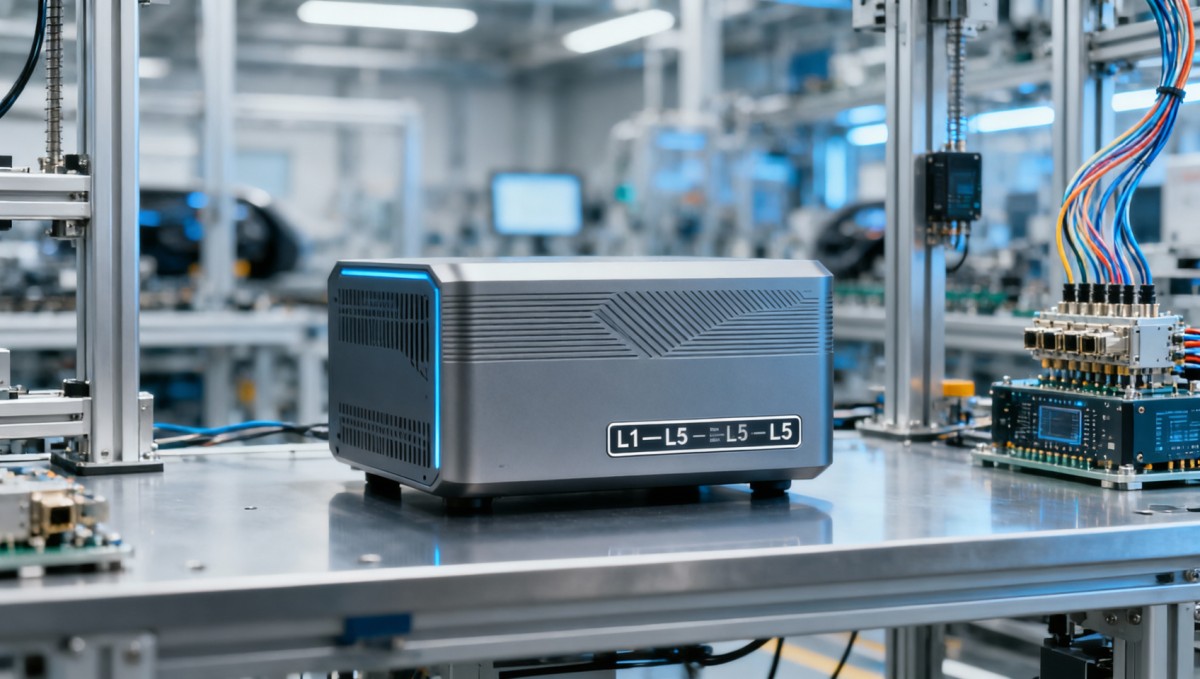
On May 16, 2026, China’s Standardization Administration approved and published the Intelligence Grading Standard for Artificial Intelligence Terminals (GB/T 45289–2026), marking the first national standard to systematically classify AI-enabled hardware across four capability dimensions — perception, decision-making, interaction, and security — into five levels (L1–L5). With explicit applicability to eight export-oriented product categories including automotive intelligent cockpits, the standard is poised to reshape technical alignment, compliance pathways, and global market access for China’s AI hardware industry.
Event Overview
On May 16, 2026, the Standardization Administration of the People’s Republic of China officially released GB/T 45289–2026. The standard defines a unified grading framework for AI terminals based on quantifiable performance thresholds in perception, decision-making, interaction, and security capabilities. It explicitly covers eight hardware categories: intelligent vehicle cockpits, industrial AI controllers, edge AI servers, smart home hubs, AI-powered medical devices, AI-enabled retail kiosks, AI-based surveillance terminals, and AI-integrated educational hardware. The standard has received preliminary mutual recognition intent from the IEC/TC100 Working Group, indicating early international acknowledgment of its technical coherence and export relevance.
Industries Affected
Export-Oriented Hardware Manufacturers
These enterprises face immediate implications: product labeling, technical documentation, and pre-market conformity assessments must now align with L1–L5 grading criteria. For example, a vehicle cockpit system marketed as ‘L4’ must demonstrate validated performance across all four dimensions per Annex B of the standard — not merely meet functional expectations. Export certification timelines may extend due to new test protocols, especially where third-party validation is required under future regulatory enforcement.
Raw Material & Component Suppliers
Suppliers of AI-accelerator chips, multimodal sensors (e.g., 4D radar, time-of-flight cameras), and secure element modules will see shifting demand signals. Higher-grade terminals (L4–L5) require components certified for real-time low-latency inference and hardware-enforced trust zones — specifications previously optional in many supply agreements. Contracts may soon include clause references to GB/T 45289–2026 conformance, increasing technical due diligence during procurement.
Contract Manufacturing & System Integrators
Manufacturers performing final assembly, firmware integration, or OTA update orchestration must now embed grading-specific verification checkpoints into production line testing. For instance, L3+ systems require closed-loop validation of decision-making logic under edge-degraded conditions — a capability not routinely tested in current QA workflows. Process revalidation and staff retraining are likely prerequisites before June 2027, when enforcement guidance is expected to be issued.
Supply Chain Compliance & Certification Services
Firms offering CE/UKCA marking support, IEC 62443 gap analysis, or ISO/IEC 17065 accreditation services must expand their scope to include GB/T 45289–2026 grading audits. Notably, the standard does not prescribe a single certification body — instead enabling accredited labs to issue grading statements. This opens competitive opportunity but also raises interoperability concerns if lab-specific test interpretations diverge.
Key Focus Areas and Recommended Actions
Conduct Internal Product Grading Gap Assessment by Q3 2026
Enterprises should benchmark existing products against the standard’s Annex A (test methods) and Annex C (grading boundary tables). Prioritize products with >30% export exposure, particularly those targeting EU, ASEAN, and GCC markets where regulatory harmonization efforts are underway.
Engage Early with Accredited Testing Labs
As of May 2026, only six labs in China hold provisional accreditation for GB/T 45289–2026 testing. Proactive engagement allows firms to influence test protocol refinement and avoid bottlenecks once mandatory conformity declarations begin.
Update Technical Documentation and Marketing Claims
All public-facing materials — datasheets, white papers, website copy — must reflect accurate grading level attribution. Misrepresentation (e.g., claiming ‘L4’ without full dimension validation) may trigger penalties under China’s newly amended Product Quality Law, effective January 2027.
Editorial Perspective / Industry Observation
Observably, this standard is less a technical specification than a strategic infrastructure layer — designed to consolidate China’s fragmented AI hardware ecosystem under a single, export-ready taxonomy. Analysis shows it deliberately avoids prescribing architecture (e.g., no mandate for specific chip vendors or OS stacks), preserving design flexibility while enforcing outcome-based accountability. From an industry perspective, its real impact lies not in raising technical bars, but in shifting compliance responsibility upstream: from end-product OEMs to component suppliers and silicon providers. Current more critical than grading itself is the emergence of cross-tier traceability requirements — a feature already referenced in draft enforcement guidelines circulated to pilot provinces.
Conclusion
The release of GB/T 45289–2026 represents a structural inflection point — not merely a new test requirement, but a foundational mechanism for aligning domestic innovation cycles with global market expectations. Its success will hinge less on technical rigor and more on consistent interpretation across labs, regulators, and trade partners. A rational observation is that early adopters who treat grading as a design constraint — rather than a post-hoc label — will gain measurable advantage in time-to-market and cross-border scalability.
Source Attribution
Official publication: Standardization Administration of the PRC, GB/T 45289–2026 (May 16, 2026). Draft enforcement guidance remains pending; formal implementation timeline and mandatory application scope to be announced by the State Administration for Market Regulation. IEC/TC100 mutual recognition status is preliminary and non-binding; final alignment outcomes subject to ongoing WG meetings through Q4 2026.
Recommended News
- Do AI Manufacturing Inspection Tools Actually Reduce Inspection Time?Sep 16, 2026Do AI tools for manufacturing actually reduce inspection time? Discover where AI vision saves time, what affects ROI, and how to pilot smarter quality control.
- How Intelligent Data Analysis Dashboards Turn Operational Data Into Actionable DecisionsAug 30, 2026Intelligent data analysis dashboard: turn project data into clear, timely actions. Spot risks, control costs, protect schedules, and improve operational decisions.
- EU AI Act Article 50 Takes Effect, Requiring Clear Labels on AI-Generated ContentAug 15, 2026EU AI Act Article 50 now requires clear labels on AI-generated content in EU markets—learn what this means for listings, customer service, and compliance risks.
- How to Choose AI Business Solutions: Key Features, Integration Risks, and ROIJul 17, 2026AI business solutions: learn how to compare key features, avoid integration risks, and calculate real ROI so you can choose the right platform with confidence.
- AI Automation Tools for Procurement: Key Features to Compare Before You BuyJul 14, 2026AI automation tools for procurement compared clearly: discover the key features to evaluate before you buy, from integration and accuracy to scalability, governance, and ROI.
- How to Define Technical Buying Criteria for Reliable Category ResearchSep 28, 2026Technical buying criteria for category research: build measurable requirements, assess risk, compliance, and lifecycle value for smarter supplier decisions.
- B2B Market Analysis Compliance Guide: How to Validate Data, Claims, and SourcesSep 25, 2026B2B market analysis compliance guide: learn to validate data, supplier claims, methodologies, and cross-border sources for credible, decision-ready market intelligence.
- When R&D in manufacturing is ready to move beyond the pilot stageSep 22, 2026R&D in manufacturing: discover the five signs your pilot is ready to scale, from process control and quality to integration, ownership, and real-world economics.
- How R&D in the manufacturing industry reduces scale-up riskSep 22, 2026r&d in manufacturing industry reduces scale-up risk with pilot builds, process validation, supplier alignment, and workforce readiness for more reliable launches.
- The most common supplier compliance requirements before onboardingSep 21, 2026Explore the most common supplier compliance requirements before onboarding, from legal checks and quality to ESG, cybersecurity, and supply continuity.
- Technology Advancements Dashboards: What Metrics Reveal Emerging Industry Shifts?Oct 02, 2026Technology advancements dashboard insights reveal investment, adoption, supply-chain, and policy signals—helping leaders spot real industry shifts before competitors.
- How to Compare Global Sourcing Information Before Shortlisting Overseas SuppliersSep 30, 2026Global sourcing information comparison made practical: verify suppliers, assess compliance, capacity, landed cost, and delivery risk before building a confident overseas shortlist.
- Battery Cage Price in Nigeria: Cost Drivers for Farm Project BudgetsSep 22, 2026Battery cage price in Nigeria explained: compare installed costs, steel quality, logistics, water systems and project budget risks before choosing poultry housing.
- How to Build a Poultry Equipment Price List for a New Farm SetupSep 22, 2026Poultry equipment price list guide for new farm setups: compare systems, uncover hidden costs, assess quality, and plan installation with confidence.
- Which digital export channels fit products with longer sales cycles?Sep 21, 2026Digital export channels for long sales cycles: learn how websites, industry platforms, marketplaces, and targeted outreach build trust, qualify buyers, and drive complex B2B export deals.
All Categories
Hot Articles
- How to Choose Translation Services for Technical Documents and Global ProjectsOct 03, 2026Translationservices guide for technical documents and global projects: evaluate expertise, terminology control, quality assurance, security, and delivery for reliable results.
- Technology Advancements Dashboards: What Metrics Reveal Emerging Industry Shifts?Oct 02, 2026Technology advancements dashboard insights reveal investment, adoption, supply-chain, and policy signals—helping leaders spot real industry shifts before competitors.
- How to Compare Eco-Friendly Flooring Materials for High-Traffic Commercial SpacesOct 01, 2026Compare eco-friendly flooring materials for high-traffic commercial spaces with practical insights on durability, maintenance, lifecycle impact, and smarter specification choices.