
China Releases AI Terminal Intelligence Grading Standard
TIME
Click count
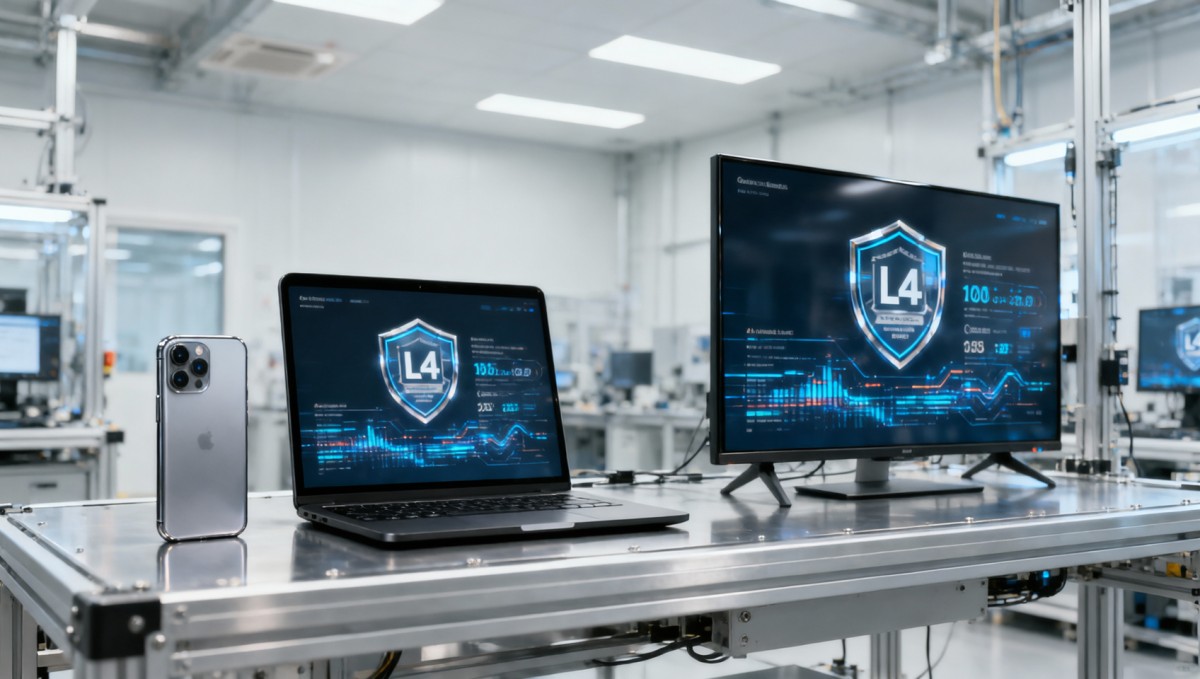
On May 15, 2026, four Chinese regulatory departments jointly issued the Series of National Standards for Artificial Intelligence Terminal Intelligence Grading, establishing the first standardized L1–L5 evaluation framework for AI capabilities in consumer and industrial terminals—including smartphones, laptops, and smart TVs. The standard directly affects China’s AI hardware exports to RCEP member countries, introducing new technical transparency requirements, certification protocols, and market access conditions for AI-integrated devices.
Event Overview
On May 15, 2026, China’s State Administration for Market Regulation, Ministry of Industry and Information Technology, Ministry of Science and Technology, and Cyberspace Administration jointly released the Series of National Standards for Artificial Intelligence Terminal Intelligence Grading. The standard defines five intelligence levels (L1–L5) based on 17 objective, testable metrics—including inference latency, on-device model parameter count, multimodal interaction accuracy, energy efficiency per inference, and real-time response consistency under network-constrained conditions. It explicitly mandates that AI terminals exported to RCEP markets must display their certified intelligence level and submit third-party verification reports prior to customs clearance.
Industries Affected
Direct Export Enterprises: These companies face revised pre-shipment compliance obligations. Labeling requirements and third-party testing add lead time and cost—especially for mid-tier OEMs lacking in-house AI validation labs. Export documentation now requires granular technical disclosures previously treated as proprietary, increasing administrative burden and exposing design trade-offs to regional regulators.
Raw Material Procurement Enterprises: Suppliers of AI-acceleration chips (e.g., NPU SoCs), memory modules optimized for edge inference (LPDDR5X, HBM2e), and multimodal sensor arrays (time-of-flight cameras, far-field microphone arrays) will see shifting demand signals. L3+ certification increasingly drives procurement toward components with documented latency/accuracy benchmarks—not just nominal specs—making vendor qualification more rigorous and longer-cycle.
Contract Manufacturing & ODM Enterprises: Factories producing AI marketing kiosks, industrial vision boxes, or AI-powered inspection tablets must now integrate standardized test fixtures into production lines and retain traceable calibration logs. Firmware version control becomes critical: a single software update may shift a device’s certified level, requiring retesting and label revision—even post-manufacturing.
Supply Chain Service Providers: Certification agencies, logistics firms offering pre-clearance documentation review, and technical translation services specializing in AI test reports are seeing increased inbound inquiries. However, service scalability is constrained: only 12 accredited labs in China currently hold full scope accreditation for all 17 metrics—and none yet offer RCEP-recognized cross-border report reciprocity.
Key Focus Areas and Recommended Actions
Verify current product alignment against L1–L5 definitions
Manufacturers should conduct internal gap assessments using the standard’s publicly released metric thresholds—not rely on legacy performance claims. For example, an L4 rating requires sub-80ms end-to-end multimodal response (vision + voice + touch) under 30% CPU load; many existing ‘AI-enabled’ tablets meet only L2 on this single axis.
Prioritize third-party lab engagement early in product planning
Testing capacity is constrained and lead times exceed 11 weeks for full L3+ validation. Companies launching RCEP-bound products before Q4 2026 should initiate lab scoping discussions by Q3 2026—especially if targeting Japan or South Korea, where local customs authorities have signaled strict enforcement from January 2027.
Update technical documentation and labeling workflows
Export packaging, user manuals, and firmware UIs must now include standardized intelligence-level icons and QR-linked test report summaries. This requires coordination across engineering, regulatory affairs, and localization teams—particularly for multilingual markets where terminology consistency (e.g., ‘inference latency’ vs. ‘response delay’) remains unharmonized.
Editorial Perspective / Industry Observation
Analysis shows this standard is less about restricting exports and more about codifying technical interoperability—effectively creating a shared vocabulary for AI capability across fragmented regional markets. Observably, it mirrors EU’s upcoming AI Act conformity pathways but focuses narrowly on terminal behavior rather than system-wide risk classification. From an industry perspective, the L1–L5 framework may accelerate consolidation among mid-tier AI hardware vendors unable to absorb recurring certification costs. Current more noteworthy is how quickly ASEAN national standards bodies begin referencing or aligning with this grading structure—a trend already visible in preliminary drafts from Thailand’s NBTC and Vietnam’s MIC.
Conclusion
This standard does not raise absolute technical barriers—but lowers the threshold for *verifiable* differentiation. It shifts competitive advantage from marketing-led ‘AI’ claims toward auditable, repeatable performance. For global buyers, it offers clearer comparability; for Chinese suppliers, it demands deeper integration of metrology-grade validation into development lifecycles. A rational interpretation is that it marks the transition of AI hardware from novelty-driven adoption to specification-driven procurement—particularly across B2B and industrial segments.
Source Attribution
Official release published by China’s State Administration for Market Regulation (SAMR) on May 15, 2026 (Document No.: GB/T 45289–45293-2026). Supporting technical annexes available via the National Standards Information Public Service Platform. Ongoing monitoring recommended for: (1) RCEP national implementation timelines; (2) Accreditation expansion plans for third-party labs; (3) Potential alignment announcements from Japan’s METI and Korea’s MSIT.
Recommended News
- Do AI Manufacturing Inspection Tools Actually Reduce Inspection Time?Sep 16, 2026Do AI tools for manufacturing actually reduce inspection time? Discover where AI vision saves time, what affects ROI, and how to pilot smarter quality control.
- How Intelligent Data Analysis Dashboards Turn Operational Data Into Actionable DecisionsAug 30, 2026Intelligent data analysis dashboard: turn project data into clear, timely actions. Spot risks, control costs, protect schedules, and improve operational decisions.
- EU AI Act Article 50 Takes Effect, Requiring Clear Labels on AI-Generated ContentAug 15, 2026EU AI Act Article 50 now requires clear labels on AI-generated content in EU markets—learn what this means for listings, customer service, and compliance risks.
- How to Choose AI Business Solutions: Key Features, Integration Risks, and ROIJul 17, 2026AI business solutions: learn how to compare key features, avoid integration risks, and calculate real ROI so you can choose the right platform with confidence.
- AI Automation Tools for Procurement: Key Features to Compare Before You BuyJul 14, 2026AI automation tools for procurement compared clearly: discover the key features to evaluate before you buy, from integration and accuracy to scalability, governance, and ROI.
- How to Define Technical Buying Criteria for Reliable Category ResearchSep 28, 2026Technical buying criteria for category research: build measurable requirements, assess risk, compliance, and lifecycle value for smarter supplier decisions.
- B2B Market Analysis Compliance Guide: How to Validate Data, Claims, and SourcesSep 25, 2026B2B market analysis compliance guide: learn to validate data, supplier claims, methodologies, and cross-border sources for credible, decision-ready market intelligence.
- When R&D in manufacturing is ready to move beyond the pilot stageSep 22, 2026R&D in manufacturing: discover the five signs your pilot is ready to scale, from process control and quality to integration, ownership, and real-world economics.
- How R&D in the manufacturing industry reduces scale-up riskSep 22, 2026r&d in manufacturing industry reduces scale-up risk with pilot builds, process validation, supplier alignment, and workforce readiness for more reliable launches.
- The most common supplier compliance requirements before onboardingSep 21, 2026Explore the most common supplier compliance requirements before onboarding, from legal checks and quality to ESG, cybersecurity, and supply continuity.
- Technology Advancements Dashboards: What Metrics Reveal Emerging Industry Shifts?Oct 02, 2026Technology advancements dashboard insights reveal investment, adoption, supply-chain, and policy signals—helping leaders spot real industry shifts before competitors.
- How to Compare Global Sourcing Information Before Shortlisting Overseas SuppliersSep 30, 2026Global sourcing information comparison made practical: verify suppliers, assess compliance, capacity, landed cost, and delivery risk before building a confident overseas shortlist.
- Battery Cage Price in Nigeria: Cost Drivers for Farm Project BudgetsSep 22, 2026Battery cage price in Nigeria explained: compare installed costs, steel quality, logistics, water systems and project budget risks before choosing poultry housing.
- How to Build a Poultry Equipment Price List for a New Farm SetupSep 22, 2026Poultry equipment price list guide for new farm setups: compare systems, uncover hidden costs, assess quality, and plan installation with confidence.
- Which digital export channels fit products with longer sales cycles?Sep 21, 2026Digital export channels for long sales cycles: learn how websites, industry platforms, marketplaces, and targeted outreach build trust, qualify buyers, and drive complex B2B export deals.
All Categories
Hot Articles
- How to Choose Translation Services for Technical Documents and Global ProjectsOct 03, 2026Translationservices guide for technical documents and global projects: evaluate expertise, terminology control, quality assurance, security, and delivery for reliable results.
- Technology Advancements Dashboards: What Metrics Reveal Emerging Industry Shifts?Oct 02, 2026Technology advancements dashboard insights reveal investment, adoption, supply-chain, and policy signals—helping leaders spot real industry shifts before competitors.
- How to Compare Eco-Friendly Flooring Materials for High-Traffic Commercial SpacesOct 01, 2026Compare eco-friendly flooring materials for high-traffic commercial spaces with practical insights on durability, maintenance, lifecycle impact, and smarter specification choices.