
Do AI Manufacturing Inspection Tools Actually Reduce Inspection Time?
Do AI tools for manufacturing actually reduce inspection time? For manufacturers facing rising quality demands, labor constraints, and complex production lines, the answer depends on deployment quality.
Computer vision can accelerate defect detection, but only when the system matches the production process, inspection standard, data quality, and response workflow.
This analysis helps operations leaders evaluate realistic time savings, implementation risks, measurement methods, and the manufacturing environments where AI inspection produces meaningful operational value.
The Short Answer: AI Can Reduce Inspection Time, but Not Automatically
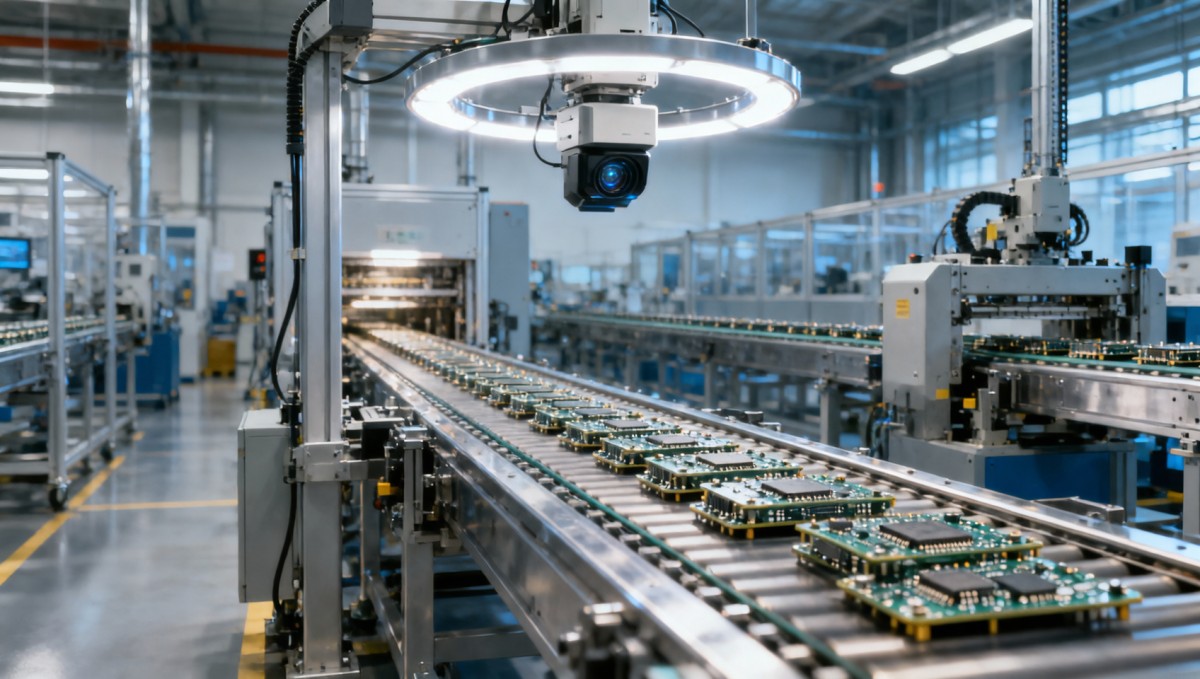
AI manufacturing inspection tools can reduce inspection time significantly when they replace repetitive visual checks, support high-speed production, and provide consistent decisions across every shift.
However, purchasing a camera and an AI model does not automatically create faster quality control. Poor lighting, unclear defect definitions, and weak workflows can erase expected gains.
The strongest results usually occur when AI handles first-pass screening while trained quality staff investigate exceptions, approve borderline cases, and improve process controls.
In practical terms, AI reduces the time required to inspect each unit, but manufacturers should also measure review time, rework time, downtime, and false-alarm handling.
A manual inspector may need several seconds or minutes to examine a complex component. A properly configured vision system can assess relevant features within milliseconds.
That speed difference matters most where production volumes are high, defects are visually detectable, and missed quality issues create expensive downstream consequences.
For lower-volume production, AI may still help, but the business case often depends more on traceability, consistency, labor availability, and customer compliance requirements than raw speed.
The useful question is therefore not whether AI is faster in theory. It is whether the complete inspection process becomes faster, more reliable, and less costly.
Where AI Inspection Delivers the Largest Time Savings
High-volume, repetitive inspection is usually the clearest opportunity. Examples include packaging verification, surface checks, label reading, assembly confirmation, and dimensional visual assessment.
Consumer electronics manufacturers often use AI vision to identify scratches, missing parts, incorrect connector positions, coating defects, and cosmetic inconsistencies before final packing.
Automotive suppliers can apply similar systems to weld inspection, component orientation, fastener presence, paint quality, and defect patterns on stamped or molded parts.
In food and beverage operations, machine vision can inspect fill levels, cap placement, seals, labels, dates, foreign objects, and packaging integrity at line speed.
These use cases benefit because the inspection criteria can be translated into visible signals. The system repeatedly compares live images against learned acceptable and unacceptable conditions.
AI also reduces inspection time when human reviewers currently spend effort sorting obvious good products from a smaller group requiring closer attention.
Instead of reviewing every product equally, quality teams can focus on flagged units, recurring defect clusters, and process changes that may indicate a broader production issue.
This triage model is often more valuable than full labor replacement. It preserves human judgment while allowing quality personnel to spend less time on routine verification.
Facilities operating continuously may benefit especially because AI inspection maintains the same pace overnight, during shift transitions, and when experienced inspectors are unavailable.
How Much Faster Can Inspection Become?
There is no universal percentage reduction because inspection tasks vary widely. A simple presence-or-absence check may become nearly instantaneous, while subtle defects require more review.
Manufacturers should avoid vendor claims that discuss only image-processing speed. An inspection decision is useful only when it triggers the correct operational action.
For example, a system may classify an image in 100 milliseconds, yet the line may still require several seconds to reject, route, record, and replace a failed item.
The relevant metric is cycle-time impact: how long quality control adds to each product, batch, or production stage before the product can proceed.
Measure the current baseline carefully. Include product positioning, image capture, manual examination, documentation, supervisor review, quarantine, and final disposition for defective units.
Then test the AI system under normal production conditions rather than only with curated demonstration samples. Real environments contain vibration, dust, variation, and changing operator behavior.
A credible pilot should compare throughput, first-pass yield, defect escape rate, false rejects, review workload, and unplanned downtime before and after deployment.
AI creates the most meaningful time savings when it removes a bottleneck. Faster inspection has limited value if another downstream process already restricts total output.
Operations leaders should ask whether quality inspection currently limits line speed, delays shipment release, requires overtime, or creates a growing queue of units awaiting review.
Why Some AI Inspection Projects Fail to Save Time
Many projects underperform because manufacturers treat AI inspection as a standalone software purchase instead of a combined imaging, process, data, and change-management initiative.
Image quality is the first common failure point. Cameras cannot reliably identify defects when lighting varies, products move unpredictably, or critical features are partially obscured.
AI models also need representative examples. A training set containing only clean products and a few obvious defects will not reflect normal factory variation.
Rare but important defects are particularly difficult. The business may care deeply about them, yet historical production records may contain too few examples for robust model training.
False positives can become a major source of wasted time. If the system rejects too many good products, inspectors may spend hours reviewing unnecessary alerts.
False negatives present a different risk. Missing true defects can create warranty claims, recalls, customer penalties, safety concerns, and damaged confidence in the inspection process.
Another issue is unclear ownership. When maintenance, engineering, IT, production, and quality teams each assume another department manages the system, improvement work slows down.
Successful facilities define who adjusts lighting, validates model changes, reviews exceptions, maintains equipment, tracks performance, and approves revised inspection thresholds.
Without those operating rules, an initially accurate solution can drift over time as suppliers change materials, tools wear, product designs evolve, or production settings shift.
What Decision-Makers Should Measure Before Investing
Before approving an AI inspection project, establish a baseline that reflects both quality performance and operational effort. Time savings alone are not an adequate investment measure.
Start with inspection labor hours per shift, including direct inspection, documentation, reinspection, escalations, training, and the administrative work associated with quality records.
Next, calculate the current cost of defects. Include scrap, rework, returns, warranty exposure, customer chargebacks, shipment delays, and lost capacity caused by corrective action.
Measure defect escape rate whenever possible. A system that shortens inspection but allows more defective products to reach customers may create a negative overall return.
Track false-reject rates as well. Excessive false alarms consume labor, reduce yield, increase material handling, and can make production teams distrust the technology.
Line availability should be part of the analysis. A highly accurate system has limited operational value if frequent camera failures or integration issues stop production.
For regulated or export-oriented industries, traceability may carry independent value. Image records and automated inspection logs can support audits, customer reports, and dispute resolution.
Finally, estimate the cost of ongoing ownership. This includes hardware maintenance, model retraining, software licenses, data storage, cybersecurity, validation, and internal technical support.
A useful business case presents best-case, expected, and conservative scenarios. It should show which assumptions most affect payback instead of relying on one optimistic calculation.
How to Run a Pilot That Produces Reliable Evidence
A focused pilot is usually the best way to answer whether AI tools for manufacturing actually reduce inspection time in a specific facility.
Select one inspection point with clear pain: high manual workload, frequent inconsistency, a measurable defect category, and sufficient volume to generate meaningful production data.
Do not begin with the most complicated product family. Start where defect definitions are stable and where existing inspectors already understand the acceptable quality standard.
Document the current process before installing equipment. Record cycle times, staffing levels, defect decisions, escalation patterns, rework cost, and the physical conditions surrounding inspection.
During the pilot, run AI results alongside human inspection long enough to identify disagreement patterns. This parallel period helps validate accuracy without immediately increasing escape risk.
Review disagreements by category. Determine whether the cause is poor image capture, ambiguous specifications, labeling errors, product variation, or a model decision threshold needing adjustment.
Define success criteria before the test begins. For example, require reduced review time, maintained defect detection, acceptable false rejects, and no increase in line stoppages.
Include frontline inspectors in the evaluation. Their practical knowledge often reveals handling issues, product variation, and edge cases that are invisible in a conference-room project plan.
Scale only after the pilot proves repeatable performance across shifts, operators, environmental conditions, and normal changes in material batches or production schedules.
Choosing the Right Level of Automation
Not every manufacturer needs fully autonomous rejection. The appropriate level of automation depends on product risk, defect severity, production speed, and confidence in the inspection criteria.
Assistive inspection is often suitable for complex products. AI highlights suspicious regions, retrieves comparable cases, and helps inspectors reach decisions faster and more consistently.
Semi-automated inspection works well when AI can reliably classify common outcomes while people review uncertain cases or defects that would carry serious consequences.
Fully automated inspection is most appropriate for stable, high-volume processes with tightly controlled imaging conditions and simple, well-defined pass-or-fail quality requirements.
Manufacturers should also consider integration depth. A standalone inspection station may solve a local problem, while connected systems can trigger rejects, update records, and support root-cause analysis.
Integration with manufacturing execution systems, quality platforms, and enterprise resource planning tools may strengthen traceability, but it also increases implementation complexity and cybersecurity requirements.
For many organizations, the practical first step is limited integration: capture inspection outcomes, preserve images for exceptions, and provide dashboards for quality and production managers.
That approach creates evidence for future investment without forcing the business to redesign every production system before it has demonstrated measurable value.
The Bottom Line for Manufacturing Leaders
AI inspection can materially reduce inspection time, especially in high-volume environments where visual checks are repetitive, standards are clear, and manual review constrains output.
Its value is broader than speed. Well-managed systems can improve consistency, create stronger traceability, reveal defect trends earlier, and allow experienced quality staff to focus on exceptions.
Yet the technology should be evaluated as an operational system, not a demonstration of artificial intelligence. Cameras, lighting, data, workflows, maintenance, and accountability all affect results.
Manufacturers should invest when they can identify a specific bottleneck, establish a measurable baseline, test under production conditions, and define acceptable quality and financial outcomes.
The most defensible conclusion is straightforward: AI inspection reduces time when it is designed around a real manufacturing decision and measured against complete operational performance.