
Saudi SASO AI Screening Cuts Green Materials Review to 48 Hours
TIME
Click count
On July 14, 2026, Saudi Arabia’s Standards, Metrology and Quality Organization (SASO) launched the Green Materials AI pre-screening platform, G-MAP v2.1, for green certification filings in building materials. The update is worth close attention from exporters, manufacturers, compliance teams, and supply chain service providers involved in shipments to Saudi Arabia, because it does not simply shorten review time for qualified submissions; it also creates a clearer filter for files that fail the AI check and are then treated as higher-risk cases.
What SASO has formally put into operation
According to the confirmed event details, SASO officially brought G-MAP v2.1 online on July 14, 2026. The platform supports automated parsing of green certification documents for building materials, cross-verification of carbon footprint reports, and preliminary compliance screening for localized labeling.
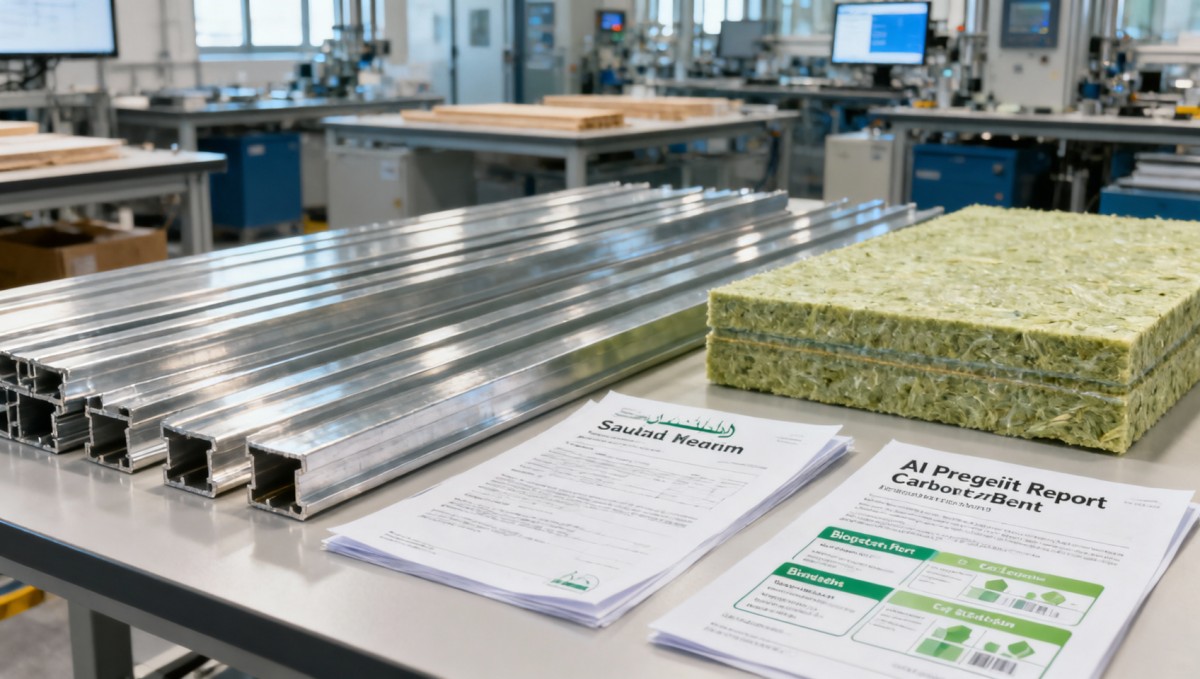
The pilot phase already covers 12 product categories exported from China, including recycled aluminum profiles and bio-based insulation boards. For submissions that pass the AI pre-screening stage, the subsequent manual review period has been reduced from an average of 14 days to within 48 hours.
For submissions that do not pass the AI pre-screening stage, the application will be returned and marked as a “high-risk item.” In those cases, a third-party LCA report must be added before the process can move forward.
Where the operational impact is likely to be felt
Export filing teams will face a sharper documentation threshold
From an industry perspective, direct exporters of covered green building materials are likely to feel the first impact in document preparation and filing workflow. The faster 48-hour response window is relevant only after passing AI pre-screening, so the practical issue is no longer just how fast a file is submitted, but whether the file can be consistently parsed, matched, and cleared in the first screening step.
What deserves closer attention is the increased importance of document consistency across certification materials, carbon footprint reporting, and localized labeling content. A filing that is incomplete, inconsistent, or difficult for the system to recognize may now create delay by triggering a return instead of entering the shorter manual review path.
Manufacturers may need tighter coordination between product data and compliance records
For processing and manufacturing enterprises, the effect is likely to show up in the handoff between factory-side technical data and export-side compliance documentation. Because the platform includes carbon footprint report cross-verification and localized label screening, product information used in commercial exports may need to align more closely with the underlying green certification and reporting materials.
Analysis shows that this is especially relevant for manufacturers in the pilot categories such as recycled aluminum profiles and bio-based insulation boards, as these products are already within the current trial coverage and therefore more exposed to the new filing logic.
Supply chain and service providers may see changes in lead-time planning
For compliance consultants, documentation service providers, and broader supply chain support teams, the change matters because review timing may become more polarized. Files that pass AI screening can move much faster, while files flagged as high risk may need additional third-party LCA support before resubmission.
Observably, this creates a practical need to separate routine cases from potentially delayed cases earlier in the shipment planning process. The issue is not only regulatory interpretation, but also whether delivery schedules, customer communication, and submission sequencing can absorb the difference between a fast-track file and a returned one.
What companies should watch now
Track whether product scope and review language change further
The confirmed information shows that the pilot phase covers 12 product categories exported from China, but it does not provide the full category list in the input. Companies currently dealing with Saudi-bound green materials should therefore watch for any further official wording on scope, category expansion, or procedural clarification, because operational exposure may depend on whether a specific product falls inside or outside the pilot range.
Prepare for stricter scrutiny of carbon footprint documentation
The event summary explicitly states that carbon footprint reports are subject to cross-verification and that failed AI pre-screening can require a third-party LCA report. In practical terms, companies should focus on the readiness, consistency, and traceability of these documents rather than assuming that prior filing habits will automatically fit the new process.
Do not treat faster response time as a universal outcome
Analysis shows that the 48-hour response improvement should be understood as conditional, not automatic. It applies after passing the AI pre-screening stage. For business teams, that means delivery promises, customer quotations, and shipment planning should distinguish between submissions likely to clear pre-screening and submissions that may be sent back for additional materials.
Check localized labels before submission, not after rejection
Because localized label compliance is part of the preliminary screening, labeling should be treated as an early-stage filing issue rather than a final packaging detail. What deserves closer attention is the interaction between product documentation and local-market presentation requirements, since the platform is screening both in the same front-end process.
Why this looks like more than a simple speed upgrade
Observably, this development is not only about administrative efficiency. It also signals a more structured front-end review model in which machine screening determines whether a file can enter a faster manual channel or be pushed into a higher-risk path. That distinction matters for the industry because it changes the value of preparation quality at the point of submission.
It is more appropriate to understand this as a near-term operational change with longer-term signaling value, rather than as a fully settled outcome. The pilot is already affecting defined product categories, but the broader impact will depend on how consistently the system is applied, how scope evolves, and whether companies can adapt their documentation practices to the new screening logic.
How this update is best understood for now
At this stage, the SASO move points to a more selective and data-driven filing process for green materials entering Saudi Arabia. The immediate takeaway is clear: filings that meet the AI pre-screening threshold may move much faster, while filings that fail it face a more burdensome follow-up route.
From an industry perspective, this should be read neither as a universal acceleration of approvals nor as a final verdict on long-term market access conditions. It is better understood as a practical shift in compliance handling that already affects covered product categories and still warrants close monitoring as the pilot develops.
Basis of this report and follow-up points
This article is generated based on the user-provided news title, event date, and event summary. Information of this kind is typically checked against sources such as official notices, company statements, industry association updates, authoritative media reporting, and documents issued by standards organizations.
No specific official source link was provided in the input, so the exact official publication record still needs ongoing verification. Follow-up attention should focus on whether SASO releases further clarification on covered product categories, filing criteria, documentation requirements, and any adjustments to the pilot process for G-MAP v2.1.
Recommended News
- Designing Carbon-Neutral Glass Insulation for High-Performance Building FacadesOct 09, 2026Carbon neutral glass insulation building façade strategies for balancing embodied carbon, thermal performance, solar control, durability, and credible lifecycle verification.
- How to Compare Eco-Friendly Flooring Materials for High-Traffic Commercial SpacesOct 01, 2026Compare eco-friendly flooring materials for high-traffic commercial spaces with practical insights on durability, maintenance, lifecycle impact, and smarter specification choices.
- How to Specify Eco-Friendly Construction Materials for European Building ProjectsSep 29, 2026Eco-friendly construction materials Europe: learn how to specify durable, compliant, low-impact products with whole-life evidence, practical procurement checks, and buildable performance criteria.
- When is a bentonite membrane suitable for below-grade waterproofing?Sep 22, 2026Bentonite membrane suitability for below-grade waterproofing: assess confinement, groundwater pressure, soil chemistry, and installation details.
- Eco Construction for Warehouses: How to Cut Energy Use Without Disrupting OperationsSep 22, 2026Eco construction for warehouses: cut energy use with phased upgrades, smarter controls, and resilient materials—without disrupting logistics or daily operations.
- What Drives the Cost of Technical Specification Analysis Before Procurement?Oct 14, 2026Understand technical specification analysis cost before procurement. Explore key cost drivers, compare review scopes, and reduce unnecessary spend without compromising purchasing confidence.
- CE Prefab Houses: Which Components Require CE Marking Before Project Approval?Oct 10, 2026CE prefab houses: learn which components need CE marking before approval, from structural steel and windows to fire protection and MEP systems.
- How to Evaluate Technology Options Against Inspection Standards for Project ApprovalOct 07, 2026Technology option analysis inspection standards: compare evidence, testing, compliance, and lifecycle risk to make faster, approval-ready project decisions.
- How to Specify Manufacturing Equipment Systems for Throughput, Uptime, and SafetyOct 05, 2026Manufacturing equipment systems: learn how to specify sustained throughput, uptime, safety, controls, and acceptance tests for dependable production.
- How to Define Technical Buying Criteria for Reliable Category ResearchSep 28, 2026Technical buying criteria for category research: build measurable requirements, assess risk, compliance, and lifecycle value for smarter supplier decisions.
- Vietnam Precast Concrete Market: Demand Drivers, Capacity, and Buyer RisksOct 09, 2026Vietnam precast concrete market insights: assess demand drivers, production capacity, logistics, quality compliance, and buyer risks for smarter sourcing and investment decisions.
- Technology Advancements Dashboards: What Metrics Reveal Emerging Industry Shifts?Oct 02, 2026Technology advancements dashboard insights reveal investment, adoption, supply-chain, and policy signals—helping leaders spot real industry shifts before competitors.
- How to Compare Global Sourcing Information Before Shortlisting Overseas SuppliersSep 30, 2026Global sourcing information comparison made practical: verify suppliers, assess compliance, capacity, landed cost, and delivery risk before building a confident overseas shortlist.
- Battery Cage Price in Nigeria: Cost Drivers for Farm Project BudgetsSep 22, 2026Battery cage price in Nigeria explained: compare installed costs, steel quality, logistics, water systems and project budget risks before choosing poultry housing.
- How to Build a Poultry Equipment Price List for a New Farm SetupSep 22, 2026Poultry equipment price list guide for new farm setups: compare systems, uncover hidden costs, assess quality, and plan installation with confidence.
All Categories
Hot Articles
- What Drives the Cost of Technical Specification Analysis Before Procurement?Oct 14, 2026Understand technical specification analysis cost before procurement. Explore key cost drivers, compare review scopes, and reduce unnecessary spend without compromising purchasing confidence.
- 400V Three-Phase Grid Integration: Inverter and Protection RequirementsOct 13, 2026Explore grid integration 400V requirements for three-phase inverters, anti-islanding, earthing, and fault protection. Learn what to verify for compliant, reliable connections.
- Will a power distribution automation solution fit your SCADA system?Oct 12, 2026Will a power distribution automation solution fit your SCADA system? Explore protocol compatibility, control safety, and testing essentials to avoid costly gaps and choose with confidence.