
SASO Adds AI Pre-Screen for Green Building Imports
TIME
Click count
On July 13, 2026, Saudi Arabia’s standards body SASO put a new AI-based checkpoint into the import path for green building materials. Before a SASO CoC submission can proceed, covered products such as recycled aggregates, low-carbon cement, and bio-based insulation boards must first pass a localized AI review covering material composition, carbon intensity, and Halal sustainability. For exporters shipping into the Saudi market, and for distributors planning stock across the Middle East, this is worth close attention because it moves compliance review further upstream and extends the pre-audit timeline for Chinese green materials exports to 10–14 working days.
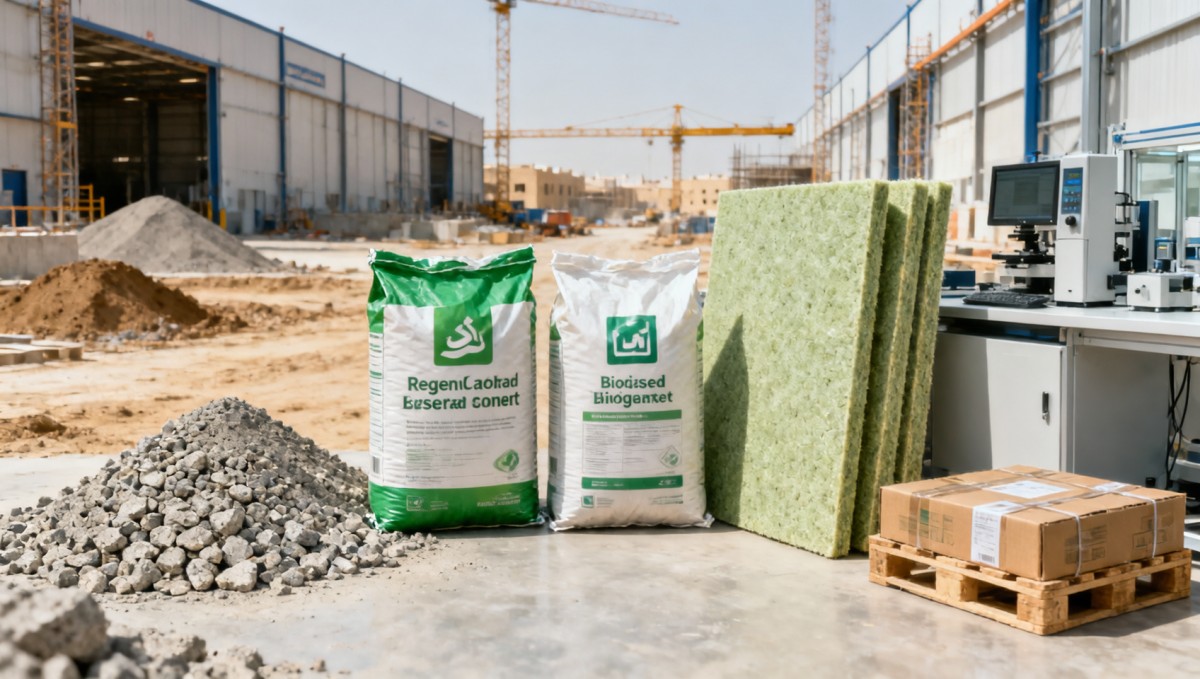
What the new GreenCert AI requirement changes
SASO officially launched the “GreenCert AI” platform on July 13, 2026. Under the announced mechanism, all imported green building materials must complete an AI-driven preliminary screening before the submission of a SASO CoC.
The screening covers three areas: material composition, carbon intensity, and Halal sustainability. The product scope mentioned in the provided information includes recycled aggregates, low-carbon cement, and bio-based insulation boards.
The announced change also means the front-end review cycle for Chinese Green Materials exports is extended to 10–14 working days. The provided information further states that this is affecting inventory preparation plans among Middle East channel partners.
Where the pressure is likely to appear first
Exporters face a longer compliance lead time
From an industry perspective, direct trading companies and exporters are the first group likely to feel the operational impact. The reason is straightforward: the AI screening now sits before the CoC submission stage, so compliance preparation begins earlier in the shipment process. The main pressure points are likely to be document readiness, internal approval sequencing, and shipment scheduling.
What deserves closer attention is whether current export workflows were built around CoC timing alone. If so, the added 10–14 working days may affect quote validity, production release timing, and expected shipping windows.
Distributors and channel partners may need to adjust stocking plans
For channel circulation businesses in the Middle East, the issue is less about the certification procedure itself and more about inventory coordination. The provided information already indicates an effect on stocking plans, which suggests that distributors may need to revisit replenishment timing, order buffers, and communication with downstream buyers.
Analysis shows that the practical risk here is timing mismatch: products may still be sellable, but not on the originally expected schedule if upstream screening is not built into procurement planning.
Manufacturers and material suppliers may be drawn deeper into compliance preparation
Processing manufacturers and upstream material suppliers may also be affected because the AI engine reviews product composition and carbon intensity, while Halal sustainability is also part of the screening. Even without additional published detail in the provided information, this implies that product-related evidence and supporting declarations could become more central in export preparation.
Observably, the impact for this group is concentrated in technical documentation support, coordination with exporters, and responsiveness when screening-related questions arise before CoC filing.
What companies should watch now
Track whether official wording or screening practice evolves
Analysis shows that the most immediate task is to follow how SASO continues to describe and operate the GreenCert AI process after launch. The core announced rule is clear, but businesses should separate the confirmed requirement from later implementation details that may still develop in practice.
Review high-priority product lines first
Companies dealing in recycled aggregates, low-carbon cement, and bio-based insulation boards should examine these lines first, because they are explicitly named in the provided information. This is the most practical starting point for checking whether current compliance files, product descriptions, and export timelines still match the new pre-screen sequence.
Rebuild delivery promises around the added 10–14 working days
For sales, logistics, and account teams, one immediate concern is customer communication. The announced extension in the front-end review cycle means delivery commitments, stocking discussions, and replenishment calendars may need to be reset around the added processing window rather than around CoC timing alone.
Prepare for tighter coordination across suppliers, exporters, and buyers
What deserves closer attention is the handoff between commercial and compliance teams. Where shipments previously moved quickly into CoC preparation, the new model may require earlier supplier input, earlier internal review, and earlier notice to customers in Saudi Arabia and the wider Middle East channel network.
Why this looks bigger than a routine process update
Observably, this development is not only about one more step in certification. It signals that localized AI review is being inserted into market-access control for imported green building materials. That matters because the screening is tied not just to product identity, but also to carbon intensity and Halal sustainability, which broadens the compliance lens around these goods.
It is more appropriate to understand this as an early operational signal rather than a fully settled market outcome. The confirmed facts already show a direct timing effect on exports and stocking plans, but the broader business consequences will depend on how consistently the platform is applied across product categories and cases.
How to read the current signal
At this stage, the news is best read as a concrete short-term workflow change with possible longer-term implications. The short-term part is already visible in the added 10–14 working days and the impact on channel inventory planning. The longer-term part still requires observation, particularly around whether AI-led pre-screening becomes a more entrenched gateway for green materials entering the Saudi market.
A neutral reading is that companies should not treat this as a symbolic announcement. At the same time, it is too early to draw broad market conclusions beyond the compliance and scheduling effects already identified in the provided information.
Basis of this report and what still needs verification
This article is based on the user-provided news title, event date, and event summary concerning SASO’s launch of the GreenCert AI platform on July 13, 2026 and the new pre-screening requirement for imported green building materials.
For this type of development, relevant source categories would usually include official announcements, standards organization documents, company disclosures, industry association updates, and reporting by authoritative trade media. A specific official source link was not provided in the input, so the underlying wording and any subsequent implementation updates still need continuous verification.
Further observation should focus on whether SASO issues additional clarifications on operating rules, product scope, or procedural expectations tied to the GreenCert AI screening step before CoC submission.
Recommended News
- Designing Carbon-Neutral Glass Insulation for High-Performance Building FacadesOct 09, 2026Carbon neutral glass insulation building façade strategies for balancing embodied carbon, thermal performance, solar control, durability, and credible lifecycle verification.
- How to Compare Eco-Friendly Flooring Materials for High-Traffic Commercial SpacesOct 01, 2026Compare eco-friendly flooring materials for high-traffic commercial spaces with practical insights on durability, maintenance, lifecycle impact, and smarter specification choices.
- How to Specify Eco-Friendly Construction Materials for European Building ProjectsSep 29, 2026Eco-friendly construction materials Europe: learn how to specify durable, compliant, low-impact products with whole-life evidence, practical procurement checks, and buildable performance criteria.
- When is a bentonite membrane suitable for below-grade waterproofing?Sep 22, 2026Bentonite membrane suitability for below-grade waterproofing: assess confinement, groundwater pressure, soil chemistry, and installation details.
- Eco Construction for Warehouses: How to Cut Energy Use Without Disrupting OperationsSep 22, 2026Eco construction for warehouses: cut energy use with phased upgrades, smarter controls, and resilient materials—without disrupting logistics or daily operations.
- CE Prefab Houses: Which Components Require CE Marking Before Project Approval?Oct 10, 2026CE prefab houses: learn which components need CE marking before approval, from structural steel and windows to fire protection and MEP systems.
- How to Evaluate Technology Options Against Inspection Standards for Project ApprovalOct 07, 2026Technology option analysis inspection standards: compare evidence, testing, compliance, and lifecycle risk to make faster, approval-ready project decisions.
- How to Specify Manufacturing Equipment Systems for Throughput, Uptime, and SafetyOct 05, 2026Manufacturing equipment systems: learn how to specify sustained throughput, uptime, safety, controls, and acceptance tests for dependable production.
- How to Define Technical Buying Criteria for Reliable Category ResearchSep 28, 2026Technical buying criteria for category research: build measurable requirements, assess risk, compliance, and lifecycle value for smarter supplier decisions.
- B2B Market Analysis Compliance Guide: How to Validate Data, Claims, and SourcesSep 25, 2026B2B market analysis compliance guide: learn to validate data, supplier claims, methodologies, and cross-border sources for credible, decision-ready market intelligence.
- Vietnam Precast Concrete Market: Demand Drivers, Capacity, and Buyer RisksOct 09, 2026Vietnam precast concrete market insights: assess demand drivers, production capacity, logistics, quality compliance, and buyer risks for smarter sourcing and investment decisions.
- Technology Advancements Dashboards: What Metrics Reveal Emerging Industry Shifts?Oct 02, 2026Technology advancements dashboard insights reveal investment, adoption, supply-chain, and policy signals—helping leaders spot real industry shifts before competitors.
- How to Compare Global Sourcing Information Before Shortlisting Overseas SuppliersSep 30, 2026Global sourcing information comparison made practical: verify suppliers, assess compliance, capacity, landed cost, and delivery risk before building a confident overseas shortlist.
- Battery Cage Price in Nigeria: Cost Drivers for Farm Project BudgetsSep 22, 2026Battery cage price in Nigeria explained: compare installed costs, steel quality, logistics, water systems and project budget risks before choosing poultry housing.
- How to Build a Poultry Equipment Price List for a New Farm SetupSep 22, 2026Poultry equipment price list guide for new farm setups: compare systems, uncover hidden costs, assess quality, and plan installation with confidence.
All Categories
Hot Articles
- 400V Three-Phase Grid Integration: Inverter and Protection RequirementsOct 13, 2026Explore grid integration 400V requirements for three-phase inverters, anti-islanding, earthing, and fault protection. Learn what to verify for compliant, reliable connections.
- Grid Modernization for Utilities: A Practical Roadmap for Integrating DERsOct 12, 2026Grid modernization for utilities: explore a practical roadmap to integrate DERs, improve feeder visibility, manage voltage and protection risks, and prioritize high-value grid upgrades.
- Eco-Friendly Construction: How Project Teams Cut Carbon Without Compromising PerformanceOct 11, 2026Eco-friendly Construction strategies that help project teams cut lifecycle carbon, control costs and risk, improve procurement, and deliver high-performing assets.