
Shanghai-Rotterdam Heavy Cargo Rates Jump 32%
TIME
Click count
On July 20, 2026, the market is absorbing an Ocean Alliance adjustment that follows its July 14 announcement to raise dedicated freight rates for heavy equipment moving from Shanghai to Rotterdam. The move matters because the current 32% spot premium, expected to last until mid-August, directly affects delivery windows for cargo such as wind turbine towers and construction machinery, putting exporters, importers, and project planners under immediate pressure as they review third-quarter shipment timing, insurance coverage, and port delay exposure.
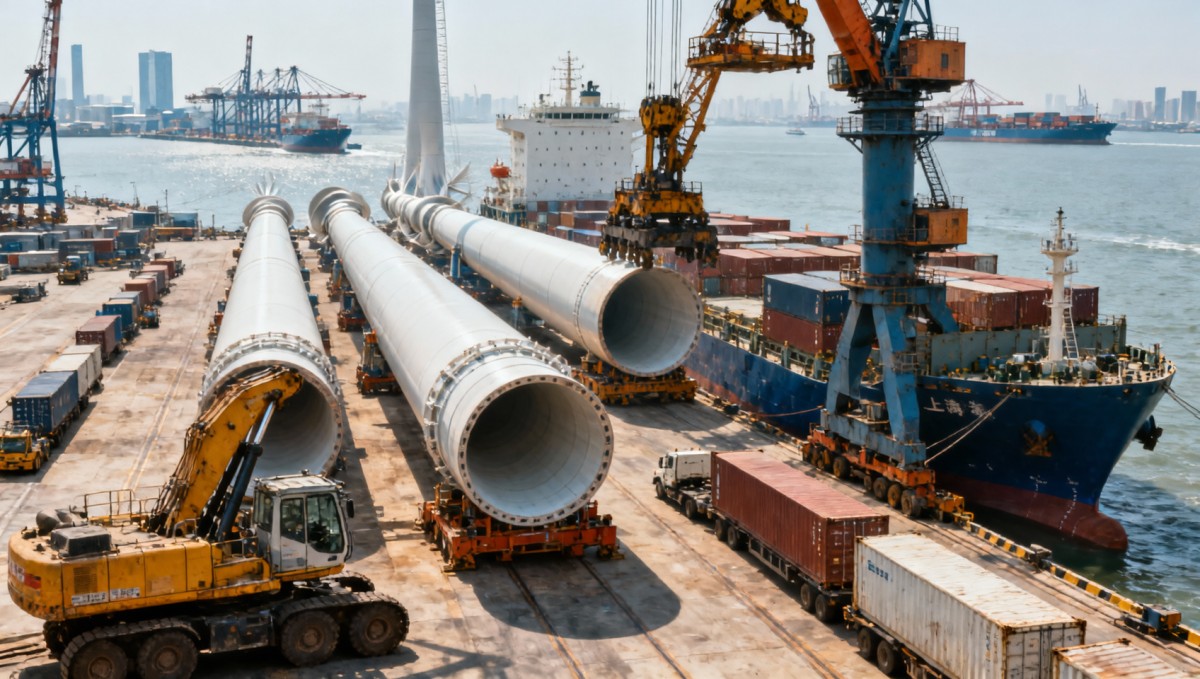
What has been confirmed on the Shanghai-Rotterdam route
According to the information provided, Ocean Alliance announced on July 14, 2026 that it would increase rates for dedicated heavy equipment slots from Shanghai Port to Rotterdam Port starting July 20. The stated reasons are tighter deck space caused by vessel upsizing and saturated lifting resources at the port. The current spot premium for this capacity has reached 32%, and the adjustment is expected to remain in place until mid-August.
The confirmed impact described in the event summary is concentrated on Heavy Equipment export schedules, especially for products such as wind turbine towers and construction machinery. Importers are also identified as parties that need to reassess third-quarter project scheduling and consider additional marine insurance and port detention clauses.
Where the pressure is likely to appear across the chain
Export deliveries tied to oversized cargo windows
From an industry perspective, exporters of heavy and oversized equipment may feel the effect first because their shipments depend on specialized vessel space and coordinated lifting resources. The main pressure point is not only freight cost, but also whether cargo can move within the planned delivery window when premium capacity is tight through mid-August.
Import-side project scheduling and contract timing
Importers may be affected through project sequencing rather than transport pricing alone. Analysis shows that when a route adjustment directly changes the availability and cost of dedicated heavy cargo slots, buyers handling third-quarter installations or equipment handovers may need to revisit milestone dates, internal acceptance plans, and delivery-linked contract terms.
Logistics and service providers managing execution risk
Supply chain service providers, including those involved in shipping coordination and port handling, are likely to focus on execution risk around space confirmation, loading arrangements, and delay-related clauses. What deserves closer attention is the interaction between limited deck space and saturated lifting resources, because both factors can influence booking certainty and operational timing.
What companies should review now
Check whether shipment timing still matches Q3 commitments
Companies with planned heavy equipment exports on the Shanghai-Rotterdam corridor should review whether shipment dates falling between July 20 and mid-August still support committed delivery schedules. This is especially relevant where contracts are tied to installation windows or staged project progress.
Revisit insurance scope and delay-related terms
The event summary specifically points to added marine insurance and port detention clauses. In practical terms, this means companies should examine whether current coverage and contract language reflect the increased risk of timing disruption and added port-side cost exposure during the affected period.
Confirm documentation and customer communication early
For heavy cargo movements, timing issues often become harder to manage once vessel space is constrained. Observably, firms may need earlier confirmation of shipment documents, booking arrangements, and customer-facing delivery updates so that schedule changes do not escalate into broader performance disputes.
Watch for any further carrier or route-specific clarification
Because the current information identifies a defined rate adjustment period and stated operational causes, companies should keep tracking whether any follow-up clarification changes the scope, duration, or applicable cargo conditions. That distinction matters for execution planning more than for headline interpretation alone.
How this development is best understood at this stage
Analysis shows that this is best read first as a targeted operational and pricing signal on a specific heavy cargo lane, rather than as proof of a broader structural shift across all shipping segments. The immediate concern is concentrated: dedicated heavy equipment capacity between Shanghai and Rotterdam has become more expensive and operationally tighter for a limited period.
At the same time, the reasons cited in the event summary deserve continued attention. Observably, the combination of vessel upsizing, deck space constraints, and saturated lifting resources points to a logistics bottleneck that can matter more for Heavy Equipment than for standard containerized cargo. That makes this a development worth monitoring beyond the rate increase itself.
Why the market should keep this in proportion
The significance of this update lies in its direct effect on delivery rhythm for heavy industrial cargo, not in any confirmed long-term market conclusion. It is more appropriate to understand this as a near-term operational pressure point with clear consequences for scheduling, cost control, and contract risk management during the current window through mid-August.
For companies exposed to this route, the practical issue is whether existing third-quarter plans still align with actual shipping conditions. For the wider market, the more cautious interpretation is that this remains a route-specific and time-bound development that still requires follow-up verification.
Basis of this article and what still needs verification
This article is based on the user-provided news title, event date, and event summary. For this type of industry update, commonly relevant source categories may include official carrier notices, company announcements, industry association updates, authoritative media reporting, and standard-setting or port-related operational documents.
A specific official source link was not provided in the input, so the underlying announcement and any later clarification still need ongoing verification. Follow-up attention should focus on whether the rate adjustment period changes, whether operational conditions at the relevant port handling points improve, and whether further route guidance affects Heavy Equipment shipment planning.
Recommended News
- Heavy Equipment Sourcing: A Due-Diligence Checklist for Reliable SuppliersOct 06, 2026Heavy equipment sourcing information: use this due-diligence checklist to verify suppliers, compare true costs, control delivery risks, and secure reliable equipment support.
- What to Evaluate When Selecting a Radiator Manufacturer for Heavy-Duty EquipmentSep 27, 2026Radiators manufacturer selection guide for heavy-duty equipment: evaluate thermal performance, durability, quality control, supply reliability, and lifecycle value.
- What Hidden Costs Should Buyers Expect When Importing Excavators to Africa?Sep 16, 2026What are the hidden costs of importing excavators to Africa? Explore freight, customs, port delays, inland delivery, insurance, and after-sales risks before you buy.
- Should You Rent or Buy a Bulldozer for a Short-Term Infrastructure Project?Sep 03, 2026Should I rent or buy a bulldozer for short-term infrastructure projects? Compare total costs, utilization, flexibility, and fleet needs to make a smarter decision.
- Industrial Machinery Selection: Matching Capacity, Duty Cycle, and Lifecycle CostAug 29, 2026Industrial machinery selection made practical: match capacity, duty cycle, operating conditions, and lifecycle cost to reduce downtime and improve long-term reliability.
- What Drives the Cost of Technical Specification Analysis Before Procurement?Oct 14, 2026Understand technical specification analysis cost before procurement. Explore key cost drivers, compare review scopes, and reduce unnecessary spend without compromising purchasing confidence.
- CE Prefab Houses: Which Components Require CE Marking Before Project Approval?Oct 10, 2026CE prefab houses: learn which components need CE marking before approval, from structural steel and windows to fire protection and MEP systems.
- How to Evaluate Technology Options Against Inspection Standards for Project ApprovalOct 07, 2026Technology option analysis inspection standards: compare evidence, testing, compliance, and lifecycle risk to make faster, approval-ready project decisions.
- How to Specify Manufacturing Equipment Systems for Throughput, Uptime, and SafetyOct 05, 2026Manufacturing equipment systems: learn how to specify sustained throughput, uptime, safety, controls, and acceptance tests for dependable production.
- How to Define Technical Buying Criteria for Reliable Category ResearchSep 28, 2026Technical buying criteria for category research: build measurable requirements, assess risk, compliance, and lifecycle value for smarter supplier decisions.
- Vietnam Precast Concrete Market: Demand Drivers, Capacity, and Buyer RisksOct 09, 2026Vietnam precast concrete market insights: assess demand drivers, production capacity, logistics, quality compliance, and buyer risks for smarter sourcing and investment decisions.
- Technology Advancements Dashboards: What Metrics Reveal Emerging Industry Shifts?Oct 02, 2026Technology advancements dashboard insights reveal investment, adoption, supply-chain, and policy signals—helping leaders spot real industry shifts before competitors.
- How to Compare Global Sourcing Information Before Shortlisting Overseas SuppliersSep 30, 2026Global sourcing information comparison made practical: verify suppliers, assess compliance, capacity, landed cost, and delivery risk before building a confident overseas shortlist.
- Battery Cage Price in Nigeria: Cost Drivers for Farm Project BudgetsSep 22, 2026Battery cage price in Nigeria explained: compare installed costs, steel quality, logistics, water systems and project budget risks before choosing poultry housing.
- How to Build a Poultry Equipment Price List for a New Farm SetupSep 22, 2026Poultry equipment price list guide for new farm setups: compare systems, uncover hidden costs, assess quality, and plan installation with confidence.
All Categories
Hot Articles
- What Drives the Cost of Technical Specification Analysis Before Procurement?Oct 14, 2026Understand technical specification analysis cost before procurement. Explore key cost drivers, compare review scopes, and reduce unnecessary spend without compromising purchasing confidence.
- 400V Three-Phase Grid Integration: Inverter and Protection RequirementsOct 13, 2026Explore grid integration 400V requirements for three-phase inverters, anti-islanding, earthing, and fault protection. Learn what to verify for compliant, reliable connections.
- Will a power distribution automation solution fit your SCADA system?Oct 12, 2026Will a power distribution automation solution fit your SCADA system? Explore protocol compatibility, control safety, and testing essentials to avoid costly gaps and choose with confidence.