
China-Laos Rail Hits 100,000 Passenger Trips
TIME
Click count
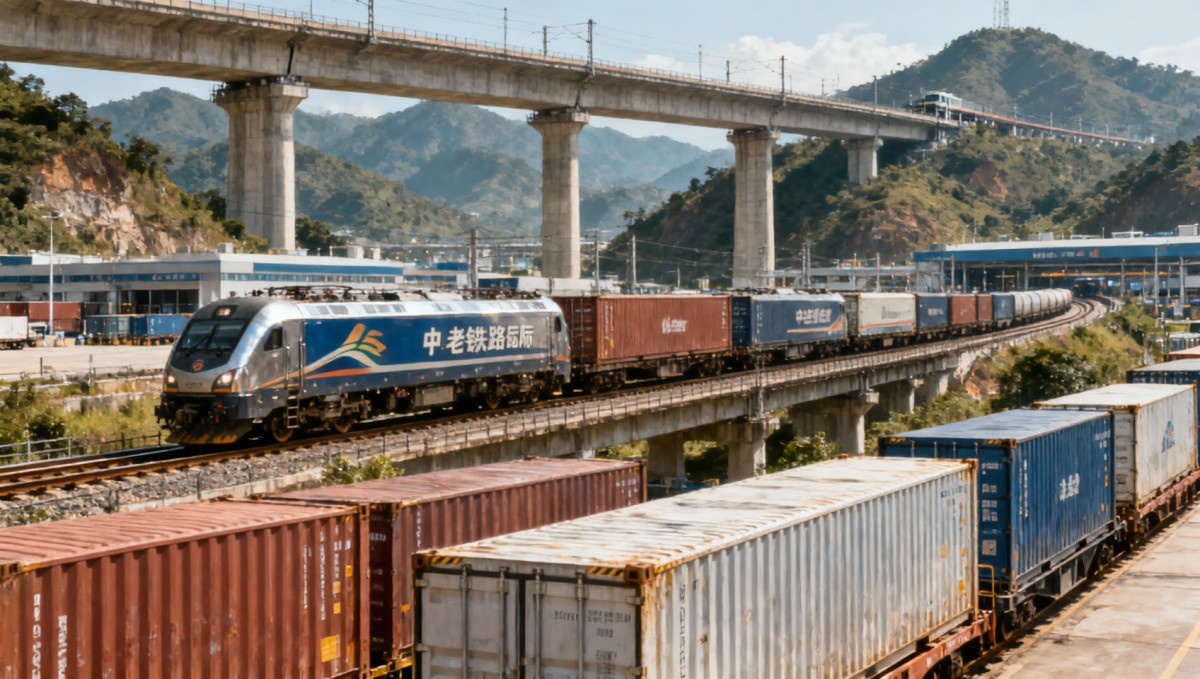
On May 29, 2026, the latest operating update on the China-Laos Railway pointed to more than a traffic milestone: it also signaled an execution shift in cross-border logistics priorities. With passenger services surpassing 100,000 trips, freight train volumes rising at the same time, and an ongoing upgrade built around passenger-freight separation and dedicated cold-chain services, the route is becoming more relevant to exporters, procurement teams, manufacturers, and supply-chain operators that depend on predictable inland delivery into Southeast Asian markets.
What the latest operating update confirms
As of May 29, 2026, cumulative passenger train services on the China-Laos Railway had exceeded 100,000. Over the same period, freight train volumes had increased by 42%, and container capacity utilization on the Kunming-Vientiane section had reached 91%.
The railway authority is also advancing an upgrade described as passenger-freight separation plus dedicated cold-chain trains. According to the event summary, this arrangement is giving time-efficiency priority to Green Materials, including bamboo-based panels, as well as Prefab House modules and Sustainable Tech equipment.
The same summary indicates that the corridor is increasingly being treated as a high-certainty overland export route to Southeast Asian markets and as an alternative to Malacca sea shipping for relevant cargo flows.
Why this matters across delivery and trade execution
Export planning is shifting from route availability to slot certainty
From an industry perspective, exporters are likely to feel the impact first in delivery planning rather than in headline trade strategy. When a corridor moves toward prioritized handling for selected cargo categories, the practical issue becomes whether shipment booking, cargo preparation, packaging, and supporting documents are aligned with the rail service conditions attached to that route.
What deserves closer attention is that a higher-certainty land route can change how export teams sequence orders, reserve transport windows, and communicate delivery commitments to buyers. For firms shipping Green Materials, Prefab House modules, or Sustainable Tech equipment, the immediate operational question is not only speed, but whether cargo readiness and documentation can match the upgraded rail service structure.
Procurement and manufacturing teams may need tighter handoff control
Analysis shows that procurement and manufacturing teams may be affected through production scheduling and shipment release decisions. If logistics capacity is being channeled toward prioritized categories, factories and sourcing teams may need closer coordination on when goods are packed, inspected, and transferred for outbound movement.
This is especially relevant where cargo consists of modular products, engineered materials, or equipment that may require specification records, inspection files, packing lists, or technical documents to move smoothly across trade and delivery checkpoints. The event summary does not provide detailed execution rules, so it is more appropriate to understand this as a signal to review document readiness rather than as proof of a fully settled operating standard.
Supply-chain service providers face a compliance-screening role
For freight organizers, logistics coordinators, and related service providers, the change may be felt in cargo classification, service matching, and handover discipline. Where cold-chain trains and passenger-freight separation are being pushed forward, service providers may need to pay closer attention to whether shipment type, handling conditions, and declared cargo characteristics fit the rail arrangement being used.
Observably, this increases the importance of accurate cargo information, cleaner document packages, and earlier coordination with shippers on product type and delivery expectations. It may also affect how providers assess risk around timing promises, especially when route utilization is already at a high level.
What companies should monitor now
Check whether product files support rail-based delivery claims
Companies moving prioritized categories should review whether product descriptions, technical files, packing information, and any applicable testing or certification materials are consistent with cross-border rail shipment needs. The current information does not define new formal compliance rules, but it does suggest that documentation quality could become more important as cargo prioritization becomes more operationally visible.
Track how prioritization appears in execution language
Analysis shows that businesses should watch for later official wording, service notices, tender documents, transport conditions, or customer-side procurement requirements that reflect this logistics shift. The current event is better read as an execution signal than as a complete rulebook, so later wording changes may matter more than the headline itself.
Reassess delivery promises for targeted product groups
Exporters of bamboo-based materials, modular housing components, and sustainable technology equipment may need to revisit lead-time assumptions, shipment batching, and handover timing. If a route is increasingly used as a high-certainty overland option, commercial teams should make sure sales commitments are supported by realistic internal release schedules and supplier coordination.
Prepare for stronger traceability expectations
What deserves closer attention is the link between transport certainty and post-shipment accountability. When delivery windows become a selling point, buyers may expect clearer traceability on shipment status, cargo condition, and supporting documents. Companies should therefore review whether after-sales, quality, and shipment recordkeeping processes can support that expectation.
How this development should be interpreted
Observably, this update is less about a new published regulation text and more about a visible operating signal in cross-border logistics. The combination of higher freight activity, high container utilization on the Kunming-Vientiane section, and the move toward passenger-freight separation plus dedicated cold-chain service suggests that logistics rules are becoming more execution-oriented for specific product categories.
At the same time, it would be premature to treat the event as evidence of fully standardized, settled, or universally applied implementation details. Analysis shows that the market still needs to observe how service priorities are expressed in operational notices, cargo acceptance practice, procurement documentation, and customer delivery requirements.
What the market can reasonably take from this
The industry significance of this event lies in the strengthening of a cross-border rail corridor that appears increasingly relevant to delivery certainty, product prioritization, and inland export execution. For affected businesses, the practical takeaway is not to assume a complete rule change has already been finalized, but to recognize that route choice, cargo preparation, and document discipline may now carry greater commercial weight.
It is more appropriate to understand this development as a meaningful execution signal with potential trade and compliance consequences, while continuing to watch for more specific operating language, implementation details, and market feedback.
Basis of this article and points still requiring verification
This article is generated from the user-provided news title, event date, and event summary. For events of this kind, relevant source types often include official notices, regulator or transport authority releases, customs or trade administration information, industry association updates, standards-related documents, and reporting by authoritative media.
No specific official source link was provided in the input, so the exact official publication path remains to be verified. Further observation is still needed regarding detailed implementation language, compliance interpretation, cargo acceptance practice, tender-document changes, and how companies across the supply chain respond in actual execution.
Recommended News
- Sustainable Home Decor: How to Choose Materials That Are Safer and Built to LastSep 15, 2026Sustainable home decor made simple: discover safer, durable materials, low-emission finishes, and practical tips for creating a beautiful home built to last.
- Technical Buying Criteria for Green Materials in High-Performance Building ProjectsSep 09, 2026Technical buying criteria for green materials: evaluate carbon data, durability, fire safety, lifecycle cost, circularity, and supply risk for high-performance building projects.
- How to Select Green Building Products for Low-Carbon Commercial ProjectsSep 08, 2026Green building products guide for low-carbon commercial projects: compare EPDs, lifecycle carbon, performance, procurement risk, and durable system fit.
- What Are Green Construction Systems in the UAE and Which Projects Need Them?Aug 15, 2026Green construction systems UAE help cut energy, water, and operating costs. Discover which UAE projects need them most and why they matter.
- How to Choose Moisture Resistant Building Materials for Wet-Area Projects?Aug 05, 2026Moisture resistant building materials: learn how to choose the right systems for bathrooms, kitchens, basements, and other wet areas to reduce risk, improve durability, and avoid costly failures.
- Can Bulldozers Be Adapted for Precision Agriculture Applications?Sep 16, 2026Can bulldozers be converted for precision agriculture applications? Discover how guided grading, soil protection, and data-driven planning improve farm infrastructure.
- REACH Compliance in B2B Market Analysis: Assessing Supplier Risk and Market AccessSep 12, 2026B2B market analysis REACH compliance: assess supplier risk, strengthen evidence controls, and protect EEA market access with practical sourcing insights.
- Analyzing Pressure Ratings in Technical Specifications for Safe Equipment SelectionSep 10, 2026Technical specifications analysis for pressure rating selection: learn how to assess temperature, materials, transients, and connections for safer equipment choices.
- How Often Should Heavy Excavators Be Serviced in Mining Operations?Sep 03, 2026What are the maintenance intervals for heavy excavators in mining? Discover practical service schedules, severe-duty adjustments, oil analysis, and uptime-focused maintenance tips.
- Which mining equipment performance standards matter most on site?Sep 03, 2026Mining equipment performance industry standards: assess availability, payload, fuel efficiency, durability, and safety to improve on-site productivity.
- Prefab Building Cost Factors: How to Budget for Design, Transport, and Site WorkSep 17, 2026Explore prefab building cost factors and learn how to budget smarter for design, transport, foundations, utilities, installation, and approvals.
- Which Emerging Destinations Offer the Best Manufacturing Tax Incentives in 2026?Sep 03, 2026What emerging destinations offer the best manufacturing tax incentives 2026? Compare Vietnam, India, Morocco, Egypt, and Gulf zones for tax, duty, and export advantages.
- Can Data Analysis Tools Detect Supplier Fraud in Procurement Data?Sep 03, 2026Can data analysis tools detect supplier fraud in procurement data? Discover key red flags, analytics methods, and practical controls to investigate risks sooner.
- What are the current pricing structures for industrial automation solutions?Sep 03, 2026What are the current pricing structures for industrial automation solutions? Compare upfront, subscription, usage-based, RaaS, and lifecycle costs to make smarter investment decisions.
- How German bulk pricing changes the cost of industrial machinerySep 03, 2026Industrial machinery and supplies price list and bulk purchase costs in Germany: uncover real savings across equipment, logistics, service, and compliance.
All Categories
Hot Articles
- How to Specify Energy-Efficient Poultry Ventilation for Broiler HousesSep 20, 2026Energy efficient poultry ventilation systems: learn how to specify fans, inlets, controls, and cooling for lower energy use, healthier broilers, and reliable airflow.
- How to Choose Business Travel Services in Europe for Multi-Country TeamsSep 19, 2026Business travel services Europe: learn how to select the right provider for multi-country teams, with policy control, rail access, duty of care, payment visibility, and 24/7 support.
- How to Document a B2B Market Analysis for Clear, Decision-Ready InsightsSep 18, 2026B2B market analysis documentation guide: learn to organize evidence, assess competitors, map buyers, and turn market research into clear, decision-ready growth actions.