
South Sudan Mandates Electronic Import Permit (e-IPL) from May 2026
TIME
Click count
Starting 1 May 2026, South Sudan will enforce a mandatory electronic Import Permit (e-IPL) system for all imported goods. The free, online platform requires importers to obtain permits in advance and link them to corresponding bills of lading. This shift significantly increases customs transparency—but introduces new coordination demands for sectors handling oversized or modular cargo, including prefabricated housing, green building materials, and solar photovoltaic (PV) equipment.
Event Overview
As confirmed by South Sudan Customs Authority announcements, the nationwide rollout of the electronic Import Permit (e-IPL) system begins on 1 May 2026. The system is provided at no cost and requires all importers to apply online prior to shipment arrival. Each e-IPL must be digitally bound to its associated bill of lading. No physical or paper-based import permits will be accepted after this date.
Industries Affected
Direct Trading Enterprises
Importers of prefabricated houses, green construction materials, and solar/PV systems face immediate operational impact: these goods often ship as disassembled kits or oversized consignments requiring multi-leg logistics and consolidated documentation. Under the e-IPL system, permit issuance must precede vessel departure—and delays in application or data mismatches between permit and bill of lading may halt customs clearance entirely.
Supply Chain & Logistics Service Providers
Freight forwarders and customs brokers servicing South Sudan-bound shipments must now verify real-time e-IPL status before accepting bookings. Since e-IPL validation depends on accurate alignment with shipping documents—including container numbers, HS codes, and declared values—service providers need updated internal workflows to flag discrepancies early, especially for non-standard cargo like structural steel frames or PV panel pallets.
Manufacturers & Exporters Based in China
Chinese suppliers exporting to South Sudan must ensure their national single-window data interface can exchange required shipment data (e.g., commercial invoice, packing list, origin certificate) with South Sudan’s e-IPL platform. While integration is not yet mandated at the supplier level, analysis shows that timely e-IPL issuance increasingly depends on upstream data availability—making supplier-side digital readiness a de facto prerequisite for reliable delivery schedules.
Key Considerations and Recommended Actions
Monitor official implementation guidance from South Sudan Customs
The full technical specifications of the e-IPL portal—including API documentation, acceptable file formats, and fallback procedures for connectivity failures—are still pending formal publication. Importers should subscribe to official notifications and track updates via the South Sudan Revenue Authority (SSRA) website.
Validate data alignment across all shipment documents
For prefabricated housing and solar equipment, where one order may involve dozens of SKUs across multiple containers and bills of lading, ensure consistency in product descriptions, quantities, and tariff classifications between the e-IPL application and supporting trade documents. Mismatches are the most common cause of permit rejection observed in pilot phases.
Distinguish between policy launch and operational readiness
Although enforcement begins 1 May 2026, observation shows that port-level system uptime, staff training, and cross-agency data sharing (e.g., between customs and standards bodies) may evolve gradually. Importers should treat the first quarter post-implementation as a transition period—not a fully stabilized environment—and plan buffer time into delivery timelines.
Coordinate proactively with Chinese suppliers on data-sharing protocols
Since e-IPL applications require verified commercial data originating from exporters, importers should initiate discussions now with Chinese manufacturers about document handover timelines, format standardization (e.g., XML vs. PDF), and authorized signatory access. Current more suitable understanding is that supplier cooperation is not optional—it is embedded in the functional logic of the e-IPL workflow.
Editorial Perspective / Industry Observation
This mandate is less a standalone regulatory change and more an infrastructure signal: it reflects South Sudan’s broader move toward digitized trade governance. Analysis shows that while the e-IPL itself does not alter tariff rates or product eligibility, it reshapes accountability—shifting verification responsibility upstream to exporters and freight partners. Observably, the requirement for Chinese suppliers to align with national single-window interfaces suggests growing interoperability expectations across African customs ecosystems. From an industry perspective, this is best understood not as a compliance hurdle alone, but as an early indicator of how regional digital trade corridors may increasingly condition market access on cross-border data readiness.
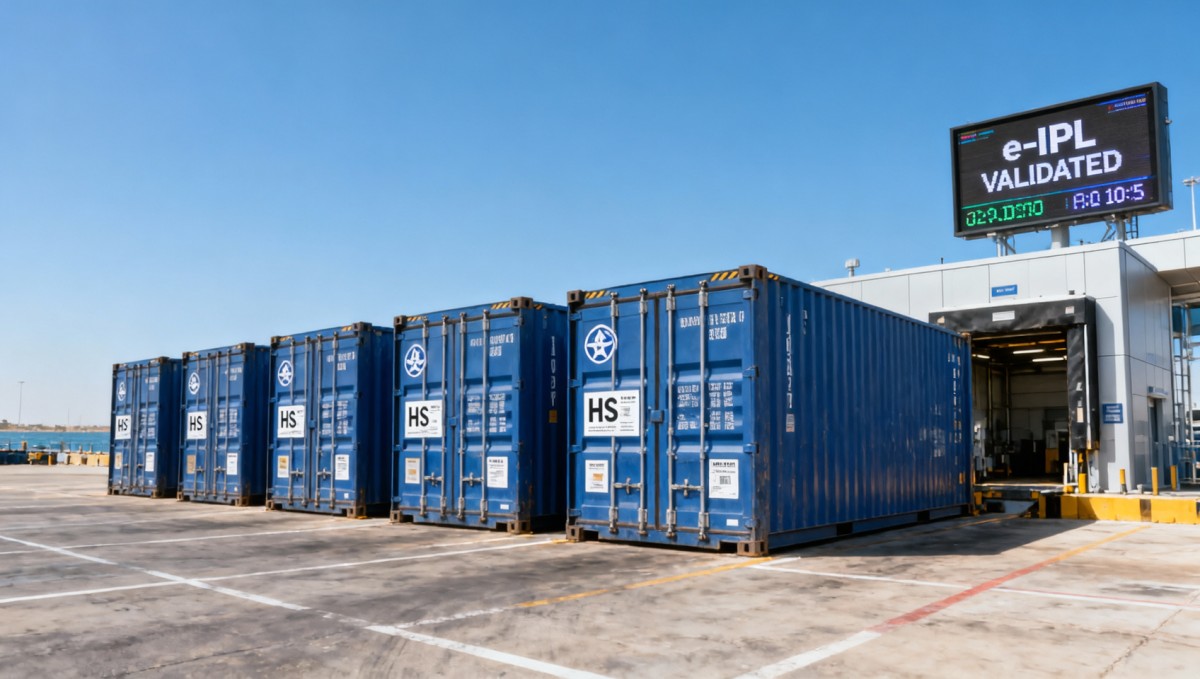
In summary, South Sudan’s e-IPL mandate marks a procedural inflection point—not a tariff or policy shift—whose primary consequence is heightened dependency on synchronized, digital documentation across the import value chain. For affected sectors, the current priority is not speculation about future rules, but practical alignment with verifiable, real-time data flows between origin and destination. The measure is better interpreted as a foundational step in trade digitization, rather than a temporary administrative adjustment.
Source: Official notices issued by the South Sudan Revenue Authority (SSRA), confirmed via public statements dated Q4 2025. Note: Technical integration guidelines for foreign single-window systems remain under development and are subject to further clarification.
Recommended News
- What Drives the Cost of Technical Specification Analysis Before Procurement?Oct 14, 2026Understand technical specification analysis cost before procurement. Explore key cost drivers, compare review scopes, and reduce unnecessary spend without compromising purchasing confidence.
- 400V Three-Phase Grid Integration: Inverter and Protection RequirementsOct 13, 2026Explore grid integration 400V requirements for three-phase inverters, anti-islanding, earthing, and fault protection. Learn what to verify for compliant, reliable connections.
- Will a power distribution automation solution fit your SCADA system?Oct 12, 2026Will a power distribution automation solution fit your SCADA system? Explore protocol compatibility, control safety, and testing essentials to avoid costly gaps and choose with confidence.
- How automation in power distribution systems shortens outagesOct 12, 2026Discover the importance of automation in power distribution system reliability: learn how FLISR isolates faults and restores healthy sections faster to shorten outages.
- What Makes a Heritage Site Eligible for Tourism Investment?Oct 12, 2026What makes a heritage site eligible for commercial tourism investment? Explore legal rights, conservation rules, demand, and financial risks to assess opportunities before committing capital.
- What Drives the Cost of Technical Specification Analysis Before Procurement?Oct 14, 2026Understand technical specification analysis cost before procurement. Explore key cost drivers, compare review scopes, and reduce unnecessary spend without compromising purchasing confidence.
- CE Prefab Houses: Which Components Require CE Marking Before Project Approval?Oct 10, 2026CE prefab houses: learn which components need CE marking before approval, from structural steel and windows to fire protection and MEP systems.
- How to Evaluate Technology Options Against Inspection Standards for Project ApprovalOct 07, 2026Technology option analysis inspection standards: compare evidence, testing, compliance, and lifecycle risk to make faster, approval-ready project decisions.
- How to Specify Manufacturing Equipment Systems for Throughput, Uptime, and SafetyOct 05, 2026Manufacturing equipment systems: learn how to specify sustained throughput, uptime, safety, controls, and acceptance tests for dependable production.
- How to Define Technical Buying Criteria for Reliable Category ResearchSep 28, 2026Technical buying criteria for category research: build measurable requirements, assess risk, compliance, and lifecycle value for smarter supplier decisions.
- Vietnam Precast Concrete Market: Demand Drivers, Capacity, and Buyer RisksOct 09, 2026Vietnam precast concrete market insights: assess demand drivers, production capacity, logistics, quality compliance, and buyer risks for smarter sourcing and investment decisions.
- Technology Advancements Dashboards: What Metrics Reveal Emerging Industry Shifts?Oct 02, 2026Technology advancements dashboard insights reveal investment, adoption, supply-chain, and policy signals—helping leaders spot real industry shifts before competitors.
- How to Compare Global Sourcing Information Before Shortlisting Overseas SuppliersSep 30, 2026Global sourcing information comparison made practical: verify suppliers, assess compliance, capacity, landed cost, and delivery risk before building a confident overseas shortlist.
- Battery Cage Price in Nigeria: Cost Drivers for Farm Project BudgetsSep 22, 2026Battery cage price in Nigeria explained: compare installed costs, steel quality, logistics, water systems and project budget risks before choosing poultry housing.
- How to Build a Poultry Equipment Price List for a New Farm SetupSep 22, 2026Poultry equipment price list guide for new farm setups: compare systems, uncover hidden costs, assess quality, and plan installation with confidence.
All Categories
Hot Articles
- What Drives the Cost of Technical Specification Analysis Before Procurement?Oct 14, 2026Understand technical specification analysis cost before procurement. Explore key cost drivers, compare review scopes, and reduce unnecessary spend without compromising purchasing confidence.
- 400V Three-Phase Grid Integration: Inverter and Protection RequirementsOct 13, 2026Explore grid integration 400V requirements for three-phase inverters, anti-islanding, earthing, and fault protection. Learn what to verify for compliant, reliable connections.
- Will a power distribution automation solution fit your SCADA system?Oct 12, 2026Will a power distribution automation solution fit your SCADA system? Explore protocol compatibility, control safety, and testing essentials to avoid costly gaps and choose with confidence.