
Ukraine Opens AD Probe Into Chinese Wire Rod
TIME
Click count
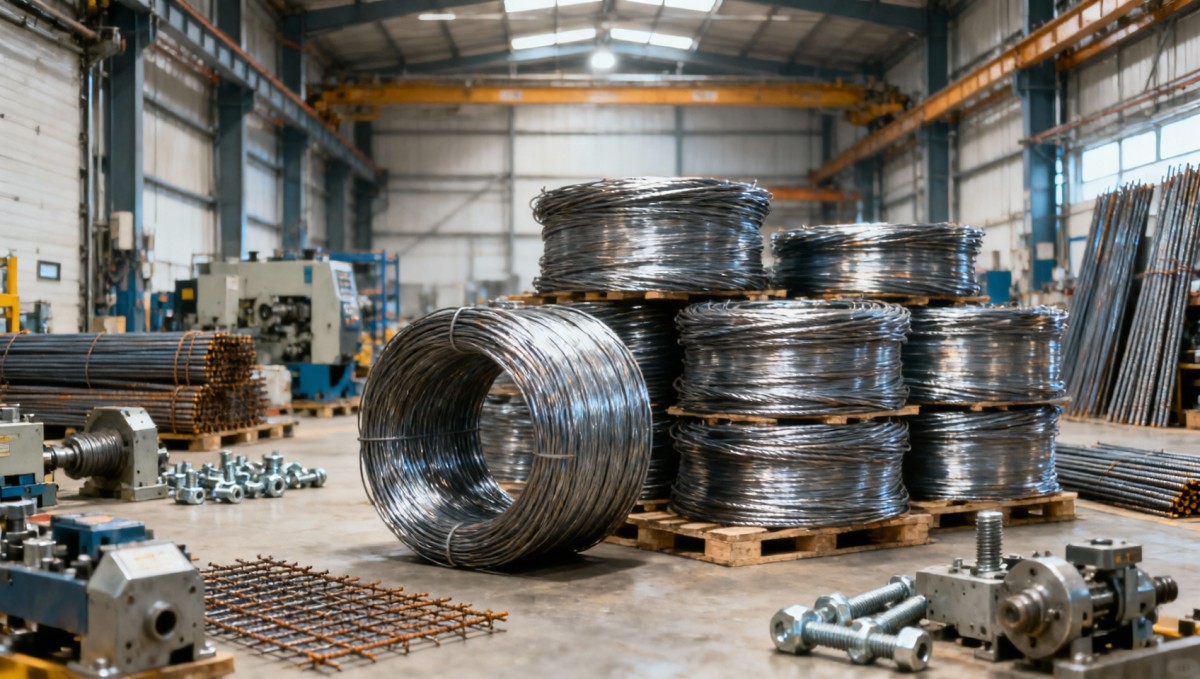
On May 26, 2026, Ukraine’s Ministry of Economy opened an anti-dumping investigation into hot-rolled wire rod originating in China after a petition from domestic producers. The case covers carbon steel and alloy steel wire rod with diameters from 5 mm to 32 mm under eight tariff codes including 7213911000. Because this material is widely used in fasteners, welding materials, reinforcing mesh, and parts for industrial automation equipment, the development deserves close attention from exporters, manufacturers, procurement teams, and supply chain operators involved in machinery, auto parts, and smart grid-related shipments to Ukraine.
What has been officially confirmed so far
The confirmed information is limited but commercially important. According to the provided event summary, the investigation was initiated by Ukraine’s Ministry of Economy on May 26, 2026, based on an application from domestic producers in Ukraine.
The products covered are hot-rolled wire rod originating in China, including goods classified under tariff code 7213911000 and seven other related tariff codes. The scope described in the provided information includes carbon steel and alloy steel wire rod with diameters ranging from 5 mm to 32 mm.
The summary also confirms the main downstream uses of the product: fasteners, welding materials, reinforcing mesh, and components used in industrial automated equipment. In trade terms, the case directly relates to Chinese exports to Ukraine connected with machinery, automotive parts, and smart grid supporting products.
Where the pressure may appear along the supply chain
Direct exporters may face product-scope and order execution questions
From an industry perspective, the first group affected may be Chinese companies directly exporting the covered wire rod to Ukraine. The immediate concern is not only whether a product falls within the listed tariff scope, but also whether existing quotations, delivery schedules, and customer discussions need to be revisited. What deserves closer attention is the match between declared product specifications and the investigation scope covering 5–32 mm carbon steel and alloy steel wire rod.
Processors and manufacturers may see indirect cost and supply effects
Companies using this wire rod as an input for fasteners, welding materials, reinforcing mesh, or industrial equipment parts may also be affected indirectly. Analysis shows that even when a business is not exporting wire rod itself, it may still feel the impact through raw material sourcing, product pricing, delivery planning, or customer communication tied to Ukraine-related orders.
Machinery, auto parts, and smart grid-linked exports warrant closer review
The provided information specifically notes potential effects on Chinese exports to Ukraine in machinery, auto parts, and smart grid support applications. Observably, businesses in these segments should pay attention to whether their products depend on the covered wire rod in key components, assemblies, or supporting materials. The practical issue is less about broad market sentiment and more about whether the investigated product sits inside the actual bill of materials for export orders.
Supply chain and trade service providers may need to track documentation risks
Logistics providers, customs teams, traders, and other service participants may also need to monitor the case. Their exposure is likely to center on tariff code verification, product descriptions, documentary consistency, and shipment timing. If customers begin asking for more detailed specification support, these service roles may become more involved in compliance and communication workflows.
Practical points companies should watch now
Follow official wording on covered products
Analysis shows that businesses should closely review any future official wording related to the covered tariff codes and product definitions. For companies dealing in multiple grades, diameters, or end uses, the practical distinction between included and non-included goods may become highly relevant in contract review and customs classification.
Check Ukraine-bound product lines and customer commitments
Companies with shipments or negotiations involving Ukraine should identify whether covered wire rod is being sold directly or embedded in downstream goods. What deserves closer attention is the difference between exposure at the raw material level and exposure through finished or semi-finished products tied to machinery, automotive parts, or smart grid support items.
Prepare internal records and specification files
From an operational perspective, firms may want to organize product specifications, tariff classifications, order records, and shipment documents related to the affected product range. This is not a prediction of outcome, but a practical response to a formally opened investigation where documentation quality can become an important business issue.
Keep customer and supplier communication aligned with facts
Observably, companies should be careful not to treat the opening of an investigation as a final result. Customer communication, supplier coordination, and delivery planning should stay tied to confirmed facts while leaving room for later procedural developments. The key is to separate what has already happened from what may still change.
Why this matters beyond a single trade notice
Analysis shows that this development is best understood as an active trade remedy process rather than a completed market outcome. At this stage, the confirmed fact is the launch of an anti-dumping investigation, not a final determination. Even so, the case matters because the covered product sits upstream of several manufacturing chains, making the effect potentially wider than primary steel trade alone.
It is more appropriate to understand this as both a near-term operational issue and a signal worth monitoring. In the short term, companies need to focus on scope, documents, and Ukraine-related order exposure. In a broader sense, the case shows how upstream steel trade measures can quickly become relevant to downstream industrial exporters when the material is used in components and support products.
How the industry may best read the development for now
At present, the most balanced reading is that Ukraine’s move introduces a concrete compliance and trade-risk variable for businesses linked to Chinese hot-rolled wire rod exports and related downstream manufacturing. It should not yet be read as a final restriction outcome, but it also should not be dismissed as routine noise, given the product’s use across fastening, welding, mesh, and industrial equipment applications.
For the industry, the immediate value lies in early identification of exposure: which product lines, which customers, which specifications, and which Ukraine-facing contracts may be touched. Until more official detail becomes available, this remains a developing trade case that calls for continued observation rather than firm conclusions.
Basis of this article and what still needs verification
This article is based on the user-provided news title, event date, and event summary concerning Ukraine’s anti-dumping investigation into Chinese hot-rolled wire rod. No additional unverified data, company names, case numbers, market figures, or external links have been introduced.
For this type of industry development, commonly relevant source types may include official government notices, company disclosures, industry association updates, authoritative media reporting, and tariff or standards-related documents. A specific official source link was not provided in the input, so the underlying notice and any later procedural updates still require ongoing verification. What deserves continued attention is whether subsequent official documents clarify scope, procedures, or impacts on related trade flows.
Recommended News
- Sizing an automation and power distribution system for future loadsOct 21, 2026Size your automation and power distribution system for future loads. Discover practical ways to forecast demand, scale controls, and plan expansion without costly oversizing.
- Should automation and power distribution share a control network?Oct 21, 2026Should automation and power distribution share a control network? Explore when integration makes sense, where risks arise, and how to protect uptime with smarter network boundaries.
- Linking industrial automation and power distribution to cut downtimeOct 21, 2026Link industrial automation and power distribution to cut downtime. Discover proven approaches to fault isolation, power resilience, and safe restart sequences that keep production moving.
- Procurement Automation Tools Compared: ERP Fit, Controls, and ScalabilityOct 21, 2026Use our procurement automation tools comparison to assess ERP fit, audit controls, scalability, and hidden costs. Discover practical tests to shortlist the right platform.
- Industrial Automation Trends: What They Mean for Legacy Factory UpgradesOct 15, 2026Explore industrial automation insights for legacy factory upgrades. Discover how connectivity, AI maintenance, and robotics can reduce risk and guide smarter, phased investments.
- TBEA’s 29 New Energy and Power Equipment Products Pass National-Level AppraisalOct 26, 2026TBEA’s 29 new energy and power equipment products reportedly passed national-level appraisal. Explore the results and key checks for smarter procurement decisions.
- Baby Sleeping Bags: Choosing the Right TOG Rating and a Safe FitOct 25, 2026Choosing babysleepingbags? Discover how to match TOG ratings to room temperature, check for a safe fit, and avoid overheating with practical tips to help you shop confidently.
- Eco Building Solutions in the UAE: Estidama vs. Al Sa'fat RequirementsOct 21, 2026Explore eco building solutions UAE projects need. Compare Estidama and Al Sa’fat ratings, technical requirements and compliance evidence to reduce approval risks and choose with confidence.
- CE Marking: How to Identify Your Product Category and Applicable EU RulesOct 19, 2026Explore product category analysis CE assessors can use to identify applicable EU rules, resolve overlapping obligations, and plan conformity assessment before costly testing.
- What Drives the Cost of Technical Specification Analysis Before Procurement?Oct 14, 2026Understand technical specification analysis cost before procurement. Explore key cost drivers, compare review scopes, and reduce unnecessary spend without compromising purchasing confidence.
- Outdoor Furniture Prices by Material: Purchase, Delivery, and Upkeep CostsOct 27, 2026Compare outdoor furniture price by material, including purchase, delivery, and upkeep costs. Discover how to evaluate supplier quotes and choose better long-term value.
- Real-Time Industrial Trend Analysis: Which Indicators Signal Demand Shifts?Oct 23, 2026Use real time industrial trend analysis to spot demand shifts early. Discover how orders, inventory, and factory activity reveal buying signals and guide smarter business decisions.
- Global Sourcing for Procurement: How to Compare Total Landed CostsOct 22, 2026Optimize global sourcing for procurement by comparing total landed costs, from freight and duties to quality risks. Discover how to uncover hidden costs and choose suppliers with confidence.
- How Can Data Analysis Compare Global Supplier Pricing Trends?Oct 12, 2026How to use data analysis to compare global supplier pricing trends? Learn to align quotes, track currency impacts, and compare landed costs for smarter sourcing decisions.
- Vietnam Precast Concrete Market: Demand Drivers, Capacity, and Buyer RisksOct 09, 2026Vietnam precast concrete market insights: assess demand drivers, production capacity, logistics, quality compliance, and buyer risks for smarter sourcing and investment decisions.
All Categories
Hot Articles
- Outdoor Furniture Prices by Material: Purchase, Delivery, and Upkeep CostsOct 27, 2026Compare outdoor furniture price by material, including purchase, delivery, and upkeep costs. Discover how to evaluate supplier quotes and choose better long-term value.
- Chile’s BESS Cut Curtailment as Projects Under Construction Are Expected to Triple CapacityOct 27, 2026Chile’s BESS are cutting renewable curtailment, while ACERA expects projects under construction to triple storage capacity. Explore what this could mean for developers and suppliers.
- Energy Management in North America: Using Demand Response to Cut Facility CostsOct 26, 2026Explore energy management North America facilities can use to cut costs with demand response. Learn to assess programs, protect operations, and unlock reliable savings.