
China's Oil & Gas Infrastructure Boom Drives Smart Inspection Robot Orders
TIME
Click count
Amid accelerating national energy infrastructure development in the early phase of China’s 15th Five-Year Plan, Chinese industrial robot manufacturers have secured bulk orders for intelligent pipeline inspection systems from major Middle Eastern EPC projects — including contracts with Saudi Aramco and ADNOC. Though the exact timing remains unconfirmed, the convergence of domestic project momentum and overseas contract wins signals a pivotal shift in global supply chain positioning for China’s smart industrial automation sector.
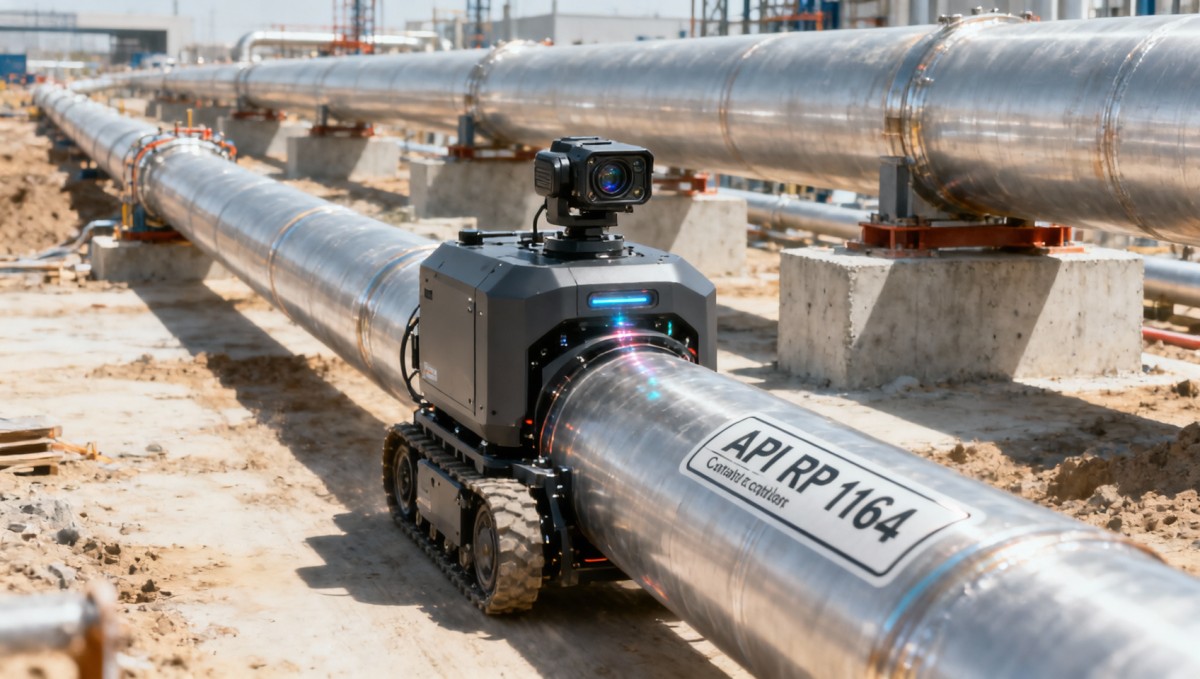
Event Overview
In the opening year of the 15th Five-Year Plan, construction on key oil and gas infrastructure projects — including the Central Asia Gas Pipeline Line D and the third phase of Tangshan LNG Terminal — has significantly accelerated. Concurrently, multiple Chinese industrial robotics firms announced winning large-scale EPC contracts for intelligent inspection systems from Saudi Aramco and Abu Dhabi National Oil Company (ADNOC). Delivery timelines are stipulated at under eight months. Technical requirements mandate compliance with IEC 61511 (functional safety) and API RP 1164 (pipeline communication protocols), prompting domestic vendors to rapidly align their hardware, software, and certification processes with these international standards.
Impact on Specific Industry Segments
Direct Trade Enterprises
Export-oriented robotics integrators and system vendors face heightened demand for certified, turnkey inspection solutions tailored to Middle Eastern operational environments. The impact manifests in compressed quotation-to-delivery cycles, increased pre-shipment testing burdens, and greater exposure to foreign regulatory audits — particularly around cybersecurity and hazardous-area certifications (e.g., ATEX/IECEx).
Raw Material Procurement Enterprises
Suppliers of high-reliability components — such as explosion-proof cameras, radiation-tolerant sensors, and certified embedded controllers — are experiencing rising order volumes and stricter traceability requirements. Because IEC 61511 mandates full lifecycle documentation for safety-related components, procurement teams must now verify not only material conformity but also supplier quality management system (QMS) alignment with ISO 9001 and IEC 61508-derived practices.
Manufacturing Enterprises
OEMs producing robotic chassis, navigation modules, or AI-powered anomaly detection units face intensified pressure to revalidate designs against API RP 1164 interoperability benchmarks. This includes adapting data models, message structures, and real-time telemetry interfaces — not merely adding protocol stacks. Manufacturing process validation (e.g., FAT/SAT procedures) must now include third-party witnessed tests per ISA-84 or IEC 62443 where applicable.
Supply Chain Service Providers
Certification agencies, logistics operators specializing in hazardous goods, and technical translation/localization services report growing demand for expedited IEC/ISO audit support, Class I Div 1 shipping documentation, and Arabic-language HMI/UI localization aligned with ADNOC’s Human Factors Engineering Guidelines. Lead times for functional safety certification have shortened by up to 30% due to surging parallel applications — increasing competition among notified bodies.
Key Focus Areas and Recommended Actions
Prioritize International Certification Readiness
Enterprises should treat IEC 61511 and API RP 1164 not as one-off compliance checkboxes, but as foundational architecture requirements. Allocating cross-functional resources — engineering, QA, and regulatory affairs — to establish internal ‘certification readiness’ review gates ahead of tender submission improves bid success rate and reduces post-award rework.
Strengthen Localized After-Sales Capability
Given the eight-month delivery window and stringent uptime expectations in remote pipeline corridors, manufacturers must co-develop service-level agreements (SLAs) with regional partners — including spare parts warehousing, bilingual technician training, and remote diagnostics integration — rather than relying solely on OEM-led support.
Reassess IP and Data Governance Frameworks
API RP 1164 mandates standardized data exchange across vendor ecosystems, which increases interoperability but also exposes proprietary algorithms and configuration logic. Firms should conduct data flow mapping and implement contractual safeguards — especially regarding cloud-based analytics platforms deployed under ADNOC or Aramco’s sovereign data policies.
Editorial Perspective / Industry Observation
Observably, this wave of orders reflects more than export growth — it marks a structural inflection in how Chinese automation vendors engage with global energy infrastructure. Unlike earlier low-cost hardware exports, these contracts embed deep system integration, safety lifecycle accountability, and long-term service commitments. Analysis shows that the speed of domestic standard adaptation — notably the rapid uptake of IEC 61511 by non-traditional players — suggests maturation of China’s functional safety ecosystem, though gaps remain in independent verification capacity and international accreditation depth.
Conclusion
This development is better understood not as an isolated commercial win, but as an early indicator of China’s evolving role in global critical infrastructure automation: shifting from component supplier to certified system partner. For the industry, the broader significance lies in the tightening linkage between domestic policy-driven investment cycles and overseas technical acceptance — a dynamic that will increasingly define competitiveness beyond price alone.
Source Attribution
Information compiled from official announcements by China National Petroleum Corporation (CNPC), ADNOC’s 2024 Technology Sourcing Bulletin, Saudi Aramco’s Integrated Digital Inspection Roadmap (Q2 2024), and public disclosures by three unnamed Chinese robotics firms (pending formal press releases). Ongoing monitoring is advised for updates on IEC 61511 adoption timelines within China’s GB/T national standard revision process and potential inclusion of API RP 1164 in upcoming NB/T industry guidelines.
Recommended News
- What should I look for when evaluating factory automation solutions?Sep 22, 2026What should I look for when evaluating factory automation solutions? Explore key criteria for integration, reliability, safety, scalability, data, and lifecycle ROI.
- Which production automation solutions improve uptime on bottleneck lines?Sep 22, 2026Production automation solutions to improve uptime: discover practical ways to protect bottleneck lines, cut downtime, speed recovery, and sustain reliable throughput.
- Is Machine Learning Practical for Small-Batch Manufacturing Quality Control?Sep 16, 2026Is machine learning practical for small batch manufacturing quality control? Explore cost-effective use cases, data needs, and human-guided inspection strategies.
- What Factory Automation Cost Factors Should Manufacturers Include in a Project Budget?Sep 07, 2026Factory automation cost factors go beyond equipment. Learn how to budget integration, site readiness, safety, software, commissioning, and lifecycle support.
- Where are industrial automation systems the most cost-effective?Sep 03, 2026Industrial automation systems cost effective solutions: discover where automation delivers the strongest ROI in manufacturing, logistics, inspection, and energy control.
- How to Define Technical Buying Criteria for Reliable Category ResearchSep 28, 2026Technical buying criteria for category research: build measurable requirements, assess risk, compliance, and lifecycle value for smarter supplier decisions.
- B2B Market Analysis Compliance Guide: How to Validate Data, Claims, and SourcesSep 25, 2026B2B market analysis compliance guide: learn to validate data, supplier claims, methodologies, and cross-border sources for credible, decision-ready market intelligence.
- When R&D in manufacturing is ready to move beyond the pilot stageSep 22, 2026R&D in manufacturing: discover the five signs your pilot is ready to scale, from process control and quality to integration, ownership, and real-world economics.
- How R&D in the manufacturing industry reduces scale-up riskSep 22, 2026r&d in manufacturing industry reduces scale-up risk with pilot builds, process validation, supplier alignment, and workforce readiness for more reliable launches.
- The most common supplier compliance requirements before onboardingSep 21, 2026Explore the most common supplier compliance requirements before onboarding, from legal checks and quality to ESG, cybersecurity, and supply continuity.
- Technology Advancements Dashboards: What Metrics Reveal Emerging Industry Shifts?Oct 02, 2026Technology advancements dashboard insights reveal investment, adoption, supply-chain, and policy signals—helping leaders spot real industry shifts before competitors.
- How to Compare Global Sourcing Information Before Shortlisting Overseas SuppliersSep 30, 2026Global sourcing information comparison made practical: verify suppliers, assess compliance, capacity, landed cost, and delivery risk before building a confident overseas shortlist.
- Battery Cage Price in Nigeria: Cost Drivers for Farm Project BudgetsSep 22, 2026Battery cage price in Nigeria explained: compare installed costs, steel quality, logistics, water systems and project budget risks before choosing poultry housing.
- How to Build a Poultry Equipment Price List for a New Farm SetupSep 22, 2026Poultry equipment price list guide for new farm setups: compare systems, uncover hidden costs, assess quality, and plan installation with confidence.
- Which digital export channels fit products with longer sales cycles?Sep 21, 2026Digital export channels for long sales cycles: learn how websites, industry platforms, marketplaces, and targeted outreach build trust, qualify buyers, and drive complex B2B export deals.
All Categories
Hot Articles
- Technology Advancements Dashboards: What Metrics Reveal Emerging Industry Shifts?Oct 02, 2026Technology advancements dashboard insights reveal investment, adoption, supply-chain, and policy signals—helping leaders spot real industry shifts before competitors.
- How to Compare Eco-Friendly Flooring Materials for High-Traffic Commercial SpacesOct 01, 2026Compare eco-friendly flooring materials for high-traffic commercial spaces with practical insights on durability, maintenance, lifecycle impact, and smarter specification choices.
- How to Compare Global Sourcing Information Before Shortlisting Overseas SuppliersSep 30, 2026Global sourcing information comparison made practical: verify suppliers, assess compliance, capacity, landed cost, and delivery risk before building a confident overseas shortlist.