
RCEP PV Energy Labeling Rules Take Effect in June 2026
TIME
Click count
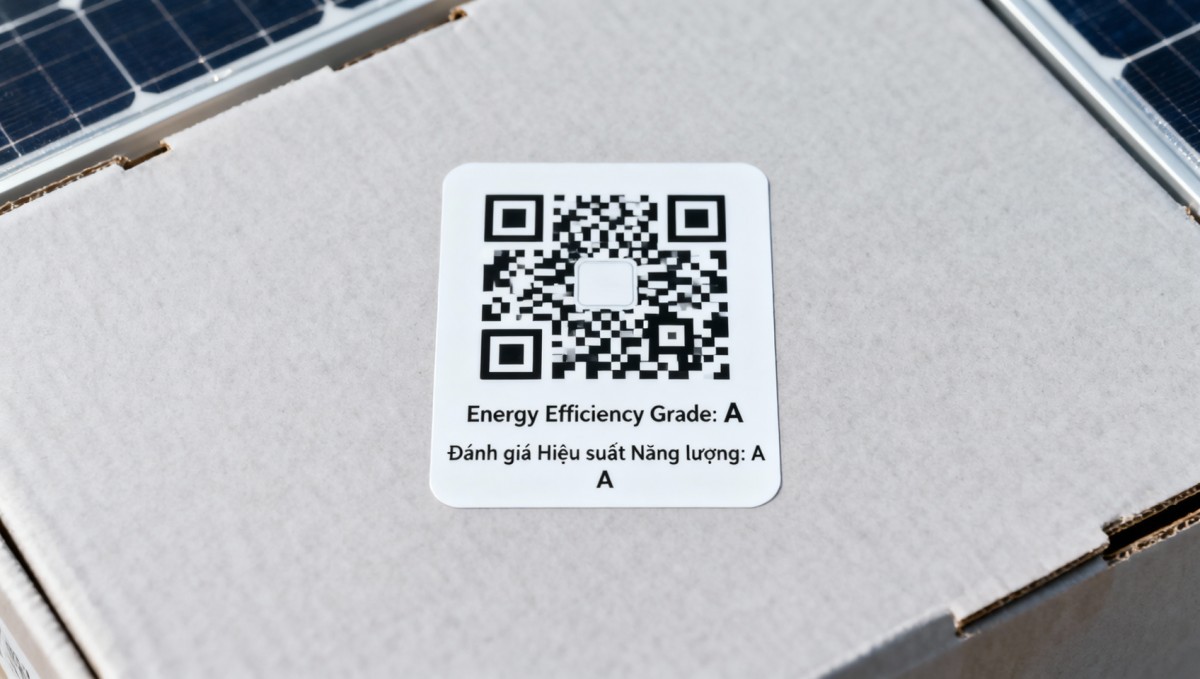
On May 19, 2026, the Regional Comprehensive Economic Partnership (RCEP) formally adopted unified energy labeling requirements for photovoltaic (PV) modules, set to take effect on June 1, 2026. This regulation mandates bilingual (English + target country language) dynamic QR codes on all imported PV products entering 10 major RCEP markets—including Vietnam, Malaysia, and Thailand—covering energy efficiency rating, testing standard, and compliance statement. Exporters of Chinese-made PV modules must now comply to clear customs and gain access to downstream distribution channels. The update directly affects PV module exporters, logistics providers, certification bodies, and regional distributors operating across Southeast Asia and Oceania.
Event Overview
Effective June 1, 2026, RCEP member states will enforce a harmonized PV module energy labeling requirement. As confirmed on May 19, 2026, all PV modules imported into 10 designated RCEP markets must bear a dynamic QR code containing: (i) energy efficiency grade; (ii) applicable test standard; and (iii) official compliance declaration. The QR code must be presented in both English and the official language of the importing country, and must support real-time verification. No exemptions or transitional periods have been announced.
Industries Affected
Direct Exporters (PV Module Manufacturers & Trading Companies)
These entities face immediate operational impact because label compliance is now a mandatory condition for customs clearance and market entry. Non-compliant shipments may be rejected at port or subjected to re-labeling delays, increasing landed cost and delivery risk.
Supply Chain & Logistics Service Providers
Freight forwarders, customs brokers, and warehousing operators must verify label presence and format prior to shipment release. Inaccurate or non-scannable QR codes may trigger documentation hold-ups, especially where local customs authorities deploy automated scanning systems.
Regional Distributors & Channel Partners
Distributors in Vietnam, Malaysia, Thailand, and other covered markets must ensure incoming stock carries valid labels before resale or installation. End customers—including EPC contractors and commercial rooftop developers—may increasingly require proof of label compliance as part of procurement due diligence.
Certification & Testing Bodies
Third-party labs and conformity assessment organizations supporting RCEP exports must align their reporting formats with the new label data fields. Their test reports now serve as direct input for generating the QR code’s embedded compliance statement.
Key Considerations and Recommended Actions
Monitor Official Implementation Guidance from National Authorities
While the RCEP framework sets the rule, national regulators (e.g., Vietnam’s Ministry of Industry and Trade, Malaysia’s SIRIM) will issue technical specifications—including QR code resolution, metadata schema, and verification platform URLs. Exporters should track each target country’s official notices, not rely solely on RCEP-level announcements.
Validate Label Requirements by Market and Product Category
The mandate applies to crystalline silicon PV modules only—not inverters, mounting structures, or BIPV systems—unless explicitly extended later. Firms exporting multi-product bundles should confirm whether auxiliary components fall under scope. Prioritize verification for top-3 export destinations: Vietnam, Malaysia, Thailand.
Distinguish Between Policy Signal and Operational Readiness
As of May 19, 2026, no public implementation toolkit (e.g., QR generator, validation API, or approved lab list) has been released. Current readiness depends on internal labeling capacity—not external infrastructure. Firms should treat June 1 as a hard deadline, not a soft launch.
Prepare Label Integration Across Production and Documentation Workflows
Manufacturers must embed label generation into final assembly or packaging lines. Export documentation—including commercial invoices and packing lists—should reference the unique QR code ID per batch. Internal SOPs and staff training on label verification should be completed before May 25, 2026.
Editorial Perspective / Industry Observation
Observably, this regulation marks the first binding, cross-border product labeling harmonization under RCEP specifically targeting renewable energy hardware. It is less a standalone technical update and more a signal of deeper regulatory convergence in clean energy trade—potentially paving the way for aligned safety, recycling, or carbon labeling rules in future rounds. Analysis shows the QR-based approach prioritizes traceability over static label printing, suggesting future enforcement may integrate with national digital customs platforms. From an industry perspective, this is currently a compliance milestone—not yet a market differentiator—but its enforcement rigor will determine whether it evolves into a de facto quality gate.
Conclusion: This requirement represents a procedural inflection point for PV exporters serving RCEP markets—not a fundamental shift in product standards, but a new operational checkpoint affecting documentation, logistics, and customer-facing materials. It is best understood not as a barrier, but as a standardized interface between manufacturers and multiple national regulatory systems. Continued attention is warranted as national authorities publish technical implementation details in the coming weeks.
Source: Official RCEP Secretariat notice issued May 19, 2026; confirmed scope and timeline via joint statement by ASEAN Centre for Energy and RCEP Joint Committee on Trade in Goods. Note: Technical annexes—including QR code metadata schema and verification platform access—remain pending publication and are under active observation.
Recommended News
- What Does a Solar Module Assembly Line Do From Cell Stringing to Testing?Sep 16, 2026Discover the functional purpose of a solar module assembly line, from precise cell stringing and lamination to EL testing, reliable output, and field-ready panel quality.
- What Warranty Terms Should Buyers Check When Importing Solar Panels?Sep 16, 2026What warranty terms should I look for in solar panel imports? Learn how to assess product coverage, performance guarantees, exclusions, claims, and supplier liability.
- EU Makes EN 63202-1:2026 Mandatory for PV ModulesAug 10, 2026EU Makes EN 63202-1:2026 Mandatory for PV Modules. Learn how the new EU rule impacts testing, certificates, customs clearance, and market access for PV exporters and manufacturers.
- EU Makes Solar Module Carbon Disclosure MandatoryAug 07, 2026EU makes solar module carbon disclosure mandatory from Aug 6, 2026. Learn EN 15804+A2, EU CSRD filing, customs risks, and how exporters can stay compliant.
- EU Enforces Carbon Footprint Filing for PV ModulesAug 06, 2026EU Enforces Carbon Footprint Filing for PV Modules: learn how certified EPDs and recycling-rate data now affect EU customs clearance, product listing, and PV export compliance.
- How to Define Technical Buying Criteria for Reliable Category ResearchSep 28, 2026Technical buying criteria for category research: build measurable requirements, assess risk, compliance, and lifecycle value for smarter supplier decisions.
- B2B Market Analysis Compliance Guide: How to Validate Data, Claims, and SourcesSep 25, 2026B2B market analysis compliance guide: learn to validate data, supplier claims, methodologies, and cross-border sources for credible, decision-ready market intelligence.
- When R&D in manufacturing is ready to move beyond the pilot stageSep 22, 2026R&D in manufacturing: discover the five signs your pilot is ready to scale, from process control and quality to integration, ownership, and real-world economics.
- How R&D in the manufacturing industry reduces scale-up riskSep 22, 2026r&d in manufacturing industry reduces scale-up risk with pilot builds, process validation, supplier alignment, and workforce readiness for more reliable launches.
- The most common supplier compliance requirements before onboardingSep 21, 2026Explore the most common supplier compliance requirements before onboarding, from legal checks and quality to ESG, cybersecurity, and supply continuity.
- Technology Advancements Dashboards: What Metrics Reveal Emerging Industry Shifts?Oct 02, 2026Technology advancements dashboard insights reveal investment, adoption, supply-chain, and policy signals—helping leaders spot real industry shifts before competitors.
- How to Compare Global Sourcing Information Before Shortlisting Overseas SuppliersSep 30, 2026Global sourcing information comparison made practical: verify suppliers, assess compliance, capacity, landed cost, and delivery risk before building a confident overseas shortlist.
- Battery Cage Price in Nigeria: Cost Drivers for Farm Project BudgetsSep 22, 2026Battery cage price in Nigeria explained: compare installed costs, steel quality, logistics, water systems and project budget risks before choosing poultry housing.
- How to Build a Poultry Equipment Price List for a New Farm SetupSep 22, 2026Poultry equipment price list guide for new farm setups: compare systems, uncover hidden costs, assess quality, and plan installation with confidence.
- Which digital export channels fit products with longer sales cycles?Sep 21, 2026Digital export channels for long sales cycles: learn how websites, industry platforms, marketplaces, and targeted outreach build trust, qualify buyers, and drive complex B2B export deals.
All Categories
Hot Articles
- How to Choose Translation Services for Technical Documents and Global ProjectsOct 03, 2026Translationservices guide for technical documents and global projects: evaluate expertise, terminology control, quality assurance, security, and delivery for reliable results.
- Technology Advancements Dashboards: What Metrics Reveal Emerging Industry Shifts?Oct 02, 2026Technology advancements dashboard insights reveal investment, adoption, supply-chain, and policy signals—helping leaders spot real industry shifts before competitors.
- How to Compare Eco-Friendly Flooring Materials for High-Traffic Commercial SpacesOct 01, 2026Compare eco-friendly flooring materials for high-traffic commercial spaces with practical insights on durability, maintenance, lifecycle impact, and smarter specification choices.