
When is manual override needed in automated power distribution?
TIME
Click count
Manual override is needed in automated power distribution when automatic control cannot safely perform a required action, cannot be trusted to interpret the system’s condition, or must be suspended for an authorized operating task. Typical triggers include control-system failures, conflicting equipment status, unsuccessful source transfers, maintenance isolation, and abnormal network conditions outside the approved automation logic.
The deciding question is not whether automation has stopped working. It is whether an authorized manual action offers a safer, verified operating state than leaving the system as it is. A failed screen does not necessarily mean failed protection, and an automatic refusal to close a breaker may be preventing a dangerous operation. Manual control must not become a shortcut around an unexplained trip, an interlock, or an uncertain supply condition.
Manual override changes control authority—not the electrical safety rules
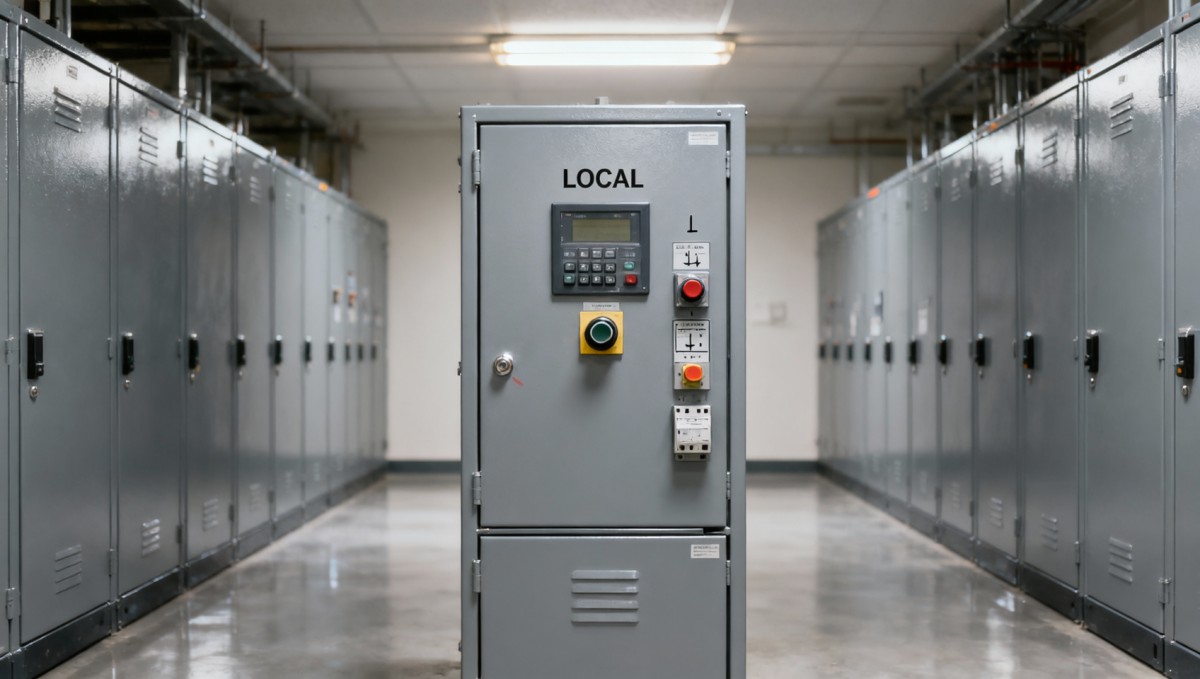
“Manual override” can describe several different arrangements: selecting local instead of remote control, suspending an automatic transfer sequence, issuing an authorized command through a supervisory interface, or using equipment’s designated manual operating mechanism. These actions have different consequences, so the equipment documentation and site operating procedure must define what each mode actually does.
In particular, manual control, maintenance bypass, and electrical isolation are not interchangeable. A transfer switch in manual mode may still have energized terminals. A local selector may block remote commands without disabling automatic reclosing elsewhere. A maintenance bypass may preserve the load supply while leaving parts of the assembly energized.
Manual mode must never be treated as proof that equipment is safe to work on. Work requiring de-energization needs the applicable isolation, lockout/tagout, absence-of-voltage verification, and other protective measures required by the installation and jurisdiction. Protective trips and safety interlocks should remain effective; defeating them is not a routine manual-override action.
When loss of automation justifies taking control
The supervisory system is unavailable, but local control remains functional
A failed human-machine interface, communications link, or supervisory control and data acquisition system can remove visibility without removing electrical protection. Depending on the architecture, local relays and controllers may continue performing their functions independently.
If the distribution system is stable, leaving it in its existing state may be safer than switching simply because the central display is unavailable. Manual intervention becomes relevant when an essential action cannot wait for restoration of supervisory control—for example, an approved load-shedding action or a necessary change to the supply arrangement.
Before transferring control, establish which functions remain active, whether local indications are current, and whether remote commands could still arrive through another path. Loss of communications must not leave two control points assuming they have exclusive authority. Any change to local control needs clear ownership and coordination with the responsible control room or switching authority.
Automatic transfer has failed or stopped partway through
An automatic transfer switch may fail to complete a sequence because of a controller fault, an operating-mechanism problem, an unavailable source, or a correctly applied permissive. These causes require different responses. A manual command cannot correct an unsuitable source or make damaged switching equipment serviceable.
Manual transfer is appropriate only when the cause has been sufficiently established, the intended source is acceptable, and the equipment has an approved means of carrying out the transfer. The required checks depend on the design and may include source voltage and frequency, phase conditions, switch position, and whether the receiving source can accept the connected load.
Transfer arrangements also matter. Open-transition equipment interrupts one source before connecting another; closed-transition equipment can briefly parallel sources under controlled conditions. Manual intervention must preserve the intended transfer method and its permissives. It must not create an improvised parallel connection between a utility supply, generator, or other source.
Status signals or measurements are inconsistent
A breaker shown as open on one display and closed on another presents a state-verification problem, not an immediate reason to issue another command. Possible causes include stale communications data, auxiliary-contact faults, indication-circuit failures, or a mechanism that has not reached its intended position.
Similarly, an implausible voltage reading may reflect a measurement problem rather than an actual loss of supply. Treating that reading as proof of a dead bus could create a backfeed or out-of-phase closing hazard.
The appropriate intervention may be to suspend the affected automatic sequence while authorized personnel establish the equipment state using approved indications and verification methods. Manual switching should follow only after the uncertainty relevant to that action has been resolved. An unverified condition should remain unverified—not be converted into an assumption for convenience.
When the operating situation exceeds the programmed logic
Automation acts on configured inputs, limits, and sequences. It cannot necessarily interpret temporary cable arrangements, a damaged enclosure, water intrusion, an unusual maintenance configuration, or a process condition that changes which loads are safe to energize.
Manual override can therefore be justified even when the controller is functioning correctly. The important distinction is that the installation’s actual condition no longer matches the assumptions under which its automatic actions were approved.
Consider a standby generator supplying essential loads after a utility outage. If some generating capacity is unavailable, the usual automatic load-restoration sequence may no longer be appropriate. An approved manual load-management plan can preserve essential services while withholding lower-priority loads. However, the decision must account for motor starting demand, load steps, and operating reserve—not just the sum of equipment nameplate ratings.
Distributed generation and battery storage add another constraint: loss of utility supply does not establish that a circuit is de-energized. Alternative sources and possible backfeed paths must be considered before any manual reconfiguration. Islanded operation is permissible only where the system is designed and authorized for it.
When an override is the wrong response
A protective trip is evidence of a condition requiring assessment, not simply an interruption to be cancelled. Repeatedly resetting or reclosing into an unresolved fault can increase equipment damage and exposure to electrical hazards. Any restoration must follow the applicable fault-assessment and switching procedure.
The same principle applies when an interlock prevents an operation. The interlock may be enforcing source separation, preventing access to energized equipment, or confirming that another device is in the required position. An unexplained refusal is a reason to investigate, not justification for bypassing the restraint.
Manual control is also unsuitable when equipment condition is uncertain because of smoke, abnormal sound, overheating, visible damage, or evidence of an electrical fault. Approaching a local operating handle can introduce exposure that remote operation would avoid. Designated emergency actions, access restrictions, and the site’s electrical emergency response take priority over restoring service.
Production urgency does not change these boundaries. A delayed restart can have serious operational consequences, but those consequences do not establish that a source is suitable, a fault is cleared, or switchgear is safe to operate.
What must be established before authorizing manual action?
A useful decision starts with a defined objective: hold a feeder out of service, maintain supply from an approved source, prevent automatic restoration, or carry out a specific authorized transfer. “Get the power back” is too broad to establish whether an action is safe or successful.
The supporting checks should establish:
- Authority and scope: Who may approve the action, who has control, and which equipment and functions are affected?
- Actual system state: Are relevant source conditions, switching positions, load conditions, and indications sufficiently verified?
- Protection and interlocks: Which functions remain active, and is the proposed action within their intended operating arrangement?
- Work and supply boundaries: Could the action energize an isolated section, affect a work party, or introduce supply from another source?
- Operating limits: Can the proposed configuration support the load without exceeding equipment ratings or approved protection constraints?
- Stop conditions: What unexpected indication or response requires the action to stop and be escalated?
These are authorization checks, not a universal switching sequence. The actual sequence must come from the installation’s approved procedure and the equipment manufacturer’s instructions, with qualified, authorized personnel carrying out the work. Required shock and arc-flash precautions remain applicable in manual mode.
For complex changes, an approved switching schedule provides a shared record of intended actions, confirmation points, and operating responsibility. Reliable communications matter as much as the control selection: a correct local action can still become unsafe if another party changes the network at the same time.
Temporary manual operation needs boundaries
An override is not complete once the immediate problem is contained. The installation may now lack automatic transfer, load shedding, remote supervision, or another function on which normal operation depends. Those limitations need to be visible to everyone responsible for maintaining supply.
The operating record should identify the reason for the override, affected equipment, control location, functions suspended, authorization, and conditions for review or removal. Shift handovers must communicate the actual operating state rather than merely noting that the original alarm has cleared.
Where manual operation continues, the approved plan must address the lost capability. This might require additional monitoring, restricted loading, or a defined response to source failure. If safe operation depends on intervention faster than people can reliably provide, manual mode is not an adequate substitute for the unavailable automation.
Returning to automatic control is a separate decision
Restoration of communications or disappearance of an alarm does not, by itself, justify re-enabling automatic operation. The initiating cause needs to be addressed, and the controller’s view of the system must agree with the actual configuration.
Depending on the system, restoration checks may include confirming device status, removing authorized temporary inhibits, reconciling local and remote selections, and verifying that no work permit or isolation would be compromised. Pending commands, timers, and source-return logic also need consideration: re-enabling automation may initiate switching immediately rather than leave the current arrangement unchanged.
Automatic control should resume through an approved handback, with the responsible parties aware of what the system is expected to do. Any unresolved discrepancy should remain a stated operating restriction, not disappear from attention because the display looks normal.
The strongest justification for manual override is a specific, verified mismatch between what automation can safely do and what the installation currently requires. Where equipment state, fault condition, or authority remains uncertain, the safer decision may be to hold the system in a controlled state and escalate—not to force the next switching action.
Recommended News
- Energy Management in North America: Using Demand Response to Cut Facility CostsOct 26, 2026Explore energy management North America facilities can use to cut costs with demand response. Learn to assess programs, protect operations, and unlock reliable savings.
- China’s First Regional Electricity Market Begins Formal OperationOct 25, 2026Explore China’s first regional electricity market across five regions. Discover what its trading framework could mean for power procurement, contracts and business planning.
- Fixing timestamp mismatches in distribution automation data integrationOct 21, 2026Fix distribution automation data integration timestamp mismatches. Learn to trace events, resolve clock and time-zone errors, and restore reliable event records.
- When is manual override needed in automated power distribution?Oct 21, 2026When does automated power distribution need manual override? Explore key triggers, safety checks, and control limits to support safer decisions and protect critical power systems.
- 400V Three-Phase Grid Integration: Inverter and Protection RequirementsOct 13, 2026Explore grid integration 400V requirements for three-phase inverters, anti-islanding, earthing, and fault protection. Learn what to verify for compliant, reliable connections.
- TBEA’s 29 New Energy and Power Equipment Products Pass National-Level AppraisalOct 26, 2026TBEA’s 29 new energy and power equipment products reportedly passed national-level appraisal. Explore the results and key checks for smarter procurement decisions.
- Baby Sleeping Bags: Choosing the Right TOG Rating and a Safe FitOct 25, 2026Choosing babysleepingbags? Discover how to match TOG ratings to room temperature, check for a safe fit, and avoid overheating with practical tips to help you shop confidently.
- Eco Building Solutions in the UAE: Estidama vs. Al Sa'fat RequirementsOct 21, 2026Explore eco building solutions UAE projects need. Compare Estidama and Al Sa’fat ratings, technical requirements and compliance evidence to reduce approval risks and choose with confidence.
- CE Marking: How to Identify Your Product Category and Applicable EU RulesOct 19, 2026Explore product category analysis CE assessors can use to identify applicable EU rules, resolve overlapping obligations, and plan conformity assessment before costly testing.
- What Drives the Cost of Technical Specification Analysis Before Procurement?Oct 14, 2026Understand technical specification analysis cost before procurement. Explore key cost drivers, compare review scopes, and reduce unnecessary spend without compromising purchasing confidence.
- Outdoor Furniture Prices by Material: Purchase, Delivery, and Upkeep CostsOct 27, 2026Compare outdoor furniture price by material, including purchase, delivery, and upkeep costs. Discover how to evaluate supplier quotes and choose better long-term value.
- Real-Time Industrial Trend Analysis: Which Indicators Signal Demand Shifts?Oct 23, 2026Use real time industrial trend analysis to spot demand shifts early. Discover how orders, inventory, and factory activity reveal buying signals and guide smarter business decisions.
- Global Sourcing for Procurement: How to Compare Total Landed CostsOct 22, 2026Optimize global sourcing for procurement by comparing total landed costs, from freight and duties to quality risks. Discover how to uncover hidden costs and choose suppliers with confidence.
- How Can Data Analysis Compare Global Supplier Pricing Trends?Oct 12, 2026How to use data analysis to compare global supplier pricing trends? Learn to align quotes, track currency impacts, and compare landed costs for smarter sourcing decisions.
- Vietnam Precast Concrete Market: Demand Drivers, Capacity, and Buyer RisksOct 09, 2026Vietnam precast concrete market insights: assess demand drivers, production capacity, logistics, quality compliance, and buyer risks for smarter sourcing and investment decisions.
All Categories
Hot Articles
- Outdoor Furniture Prices by Material: Purchase, Delivery, and Upkeep CostsOct 27, 2026Compare outdoor furniture price by material, including purchase, delivery, and upkeep costs. Discover how to evaluate supplier quotes and choose better long-term value.
- Chile’s BESS Cut Curtailment as Projects Under Construction Are Expected to Triple CapacityOct 27, 2026Chile’s BESS are cutting renewable curtailment, while ACERA expects projects under construction to triple storage capacity. Explore what this could mean for developers and suppliers.
- Energy Management in North America: Using Demand Response to Cut Facility CostsOct 26, 2026Explore energy management North America facilities can use to cut costs with demand response. Learn to assess programs, protect operations, and unlock reliable savings.