
Zanglongdao Semiconductor Park Land Acquisition Begins in Wuhan
TIME
Click count
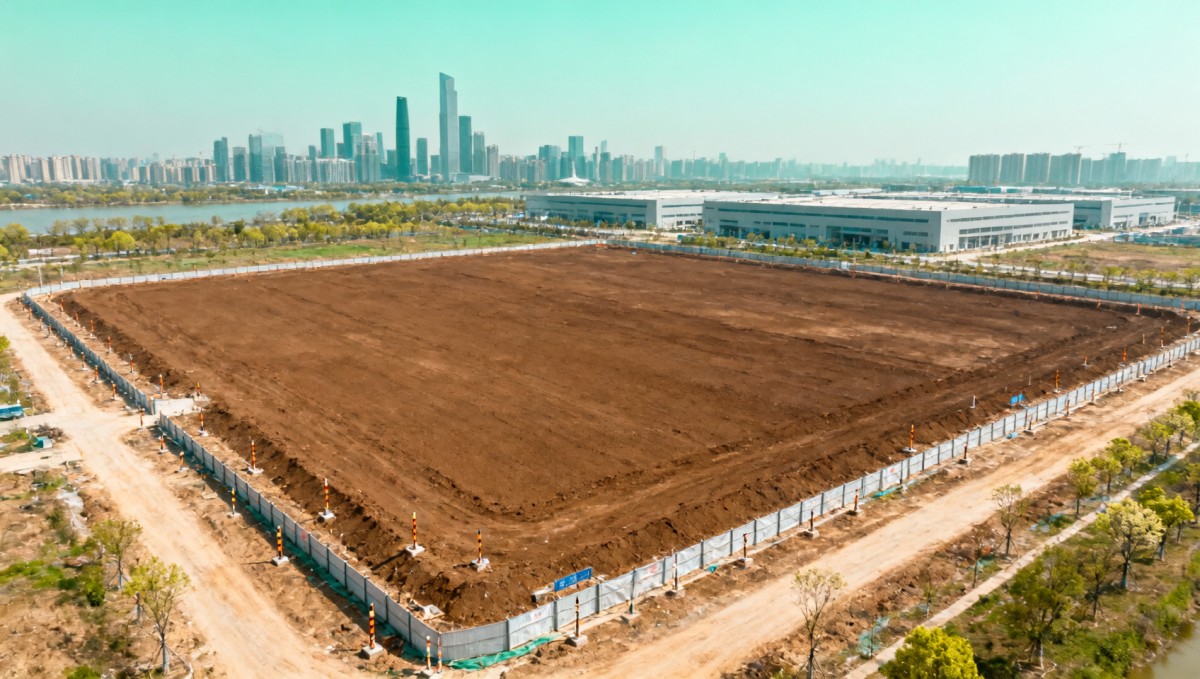
On April 15, 2026, Jiangxia District of Wuhan City publicly announced the call for bids to assess collective land for the Zanglongdao Semiconductor Industrial Park — a move targeting 461 mu (≈30.7 hectares) of land and signaling accelerated domestic capacity expansion for power semiconductors and battery management system (BMS) ICs. This development is particularly relevant for stakeholders in electric vehicle (EV) powertrain systems, energy storage solutions, and automotive-grade chip supply chains — as it directly addresses persistent overseas lead-time volatility and certification alignment bottlenecks.
Event Overview
On April 15, 2026, the Jiangxia District Government issued a public notice inviting qualified institutions to participate in the land value assessment for collective land requisition related to the Zanglongdao Semiconductor Industrial Park. The planned area totals 461 mu. The park’s stated focus includes third-generation semiconductor manufacturing, automotive-grade microcontroller units (MCUs), and battery management integrated circuits (BMS ICs).
Industries Affected by This Development
Power semiconductor fabless design firms and IDMs: With emphasis on third-generation semiconductors (e.g., SiC, GaN) and automotive-grade MCUs, these firms may face intensified competition for local foundry access and packaging-test capacity — especially those without existing partnerships in the Wuhan or central China ecosystem.
BMS module integrators and EV/ESS system manufacturers: Localized BMS IC production could shorten procurement cycles and reduce dependency on overseas-certified chips, but only if new fabs achieve AEC-Q100 qualification and ISO 26262 functional safety compliance — neither of which is confirmed at this stage.
Automotive electronics Tier 2 suppliers (e.g., analog front-end, signal conditioning IC vendors): As the park prioritizes BMS ICs and MCUs — not discrete analog components — demand spillover for supporting analog IPs or reference designs remains speculative and unconfirmed.
Local equipment and materials service providers (e.g., CMP consumables, probe card calibration services): While no fabrication line specifications have been disclosed, early-stage land assessment implies long lead times before equipment installation; near-term impact on service demand is minimal.
What Relevant Enterprises or Practitioners Should Monitor and Act On
Track official project timelines and zoning approvals — not just land assessment notices
The current notice concerns land valuation only. Subsequent milestones — including environmental impact assessments, construction permits, and fab process node disclosures — will determine actual technical scope and timeline. Relying solely on the April 15 announcement risks misreading implementation readiness.
Verify whether target products align with your qualification roadmap
If your business depends on AEC-Q100 Grade 1 or ASIL-B/C certified BMS ICs or MCUs, monitor whether the park’s planned production lines commit to IATF 16949 certification and functional safety validation support. No such commitments appear in the current notice.
Distinguish between policy intent and near-term capacity availability
Land acquisition does not equate to operational capacity. Even under optimistic assumptions, first wafers from a new facility typically require 24–36 months post-groundbreaking. Procurement teams should avoid adjusting inventory or supplier strategies based solely on this land notice.
Prepare for potential regional supply chain realignment — but wait for concrete anchor tenants
While the park targets power semiconductors and BMS ICs, no anchor tenant or fab operator has been named. Until an identified manufacturer commits to building or operating within the site, regional logistics, talent recruitment, or subcontractor engagement plans remain premature.
Editorial Perspective / Industry Observation
From an industry perspective, this land assessment notice is best understood as an early-stage infrastructure signal — not an immediate supply shift. Analysis来看, it reflects growing provincial-level prioritization of semiconductor self-reliance in mission-critical automotive and energy domains. However, observation来看, the absence of disclosed technology nodes, fab partners, or product roadmaps means its near-term impact on global chip sourcing remains limited. Current more appropriate interpretation is that it confirms continued government-level commitment to localized control chip capacity — but actual influence on procurement, design-in cycles, or certification timelines will depend entirely on execution details yet to be published.
Conclusion
This land acquisition step marks a formal entry into physical infrastructure development for domestic power and battery management IC capacity — but it does not yet represent functional supply chain change. Industry participants are advised to treat it as a medium- to long-term structural indicator rather than a near-term operational trigger. Its significance lies less in immediate output and more in sustained policy direction toward reducing certification and logistics dependencies in EV and ESS control systems.
Information Sources
Main source: Public land assessment notice issued by Jiangxia District Government, Wuhan City, dated April 15, 2026.
Note: Technical specifications, fab operators, certification commitments, and production timelines remain unconfirmed and subject to future official disclosure.
Recommended News
- CBAM Takes Effect for PV and Energy Storage ExportsAug 13, 2026CBAM takes effect for PV and energy storage exports in 2026. Learn how certified lifecycle carbon emissions data impacts EU customs, shipments, and supply chain compliance.
- VEW 2026 Opens Booth Booking for Chinese SuppliersAug 12, 2026VEW 2026 opens booth booking for Chinese suppliers, signaling new opportunities in Vietnam’s renewable energy market amid tighter grid-connection and ESG procurement expectations.
- EU ESS Rule Adds AI Energy Monitoring from Oct 2026Aug 11, 2026EU ESS Rule adds AI energy monitoring from Oct 2026. Learn how EN 50664-2:2026, EU cloud upload, and CE compliance will reshape ESS exports, testing, and market access.
- EU Enforces EN 50581:2026 for ESSAug 08, 2026EU Enforces EN 50581:2026 for ESS: learn how new thermal runaway testing, carbon footprint declarations, and DPP verification will affect EU market access, certification, delivery, and contracts.
- EU Battery Rules Tighten Disclosure for ESS BatteriesAug 04, 2026EU Battery Rules tighten disclosure for ESS batteries from Aug 18, 2026. Learn how carbon footprint and recycled cobalt, nickel, and lithium data may affect EU exports, certification, and supply chain readiness.
- Can Bulldozers Be Adapted for Precision Agriculture Applications?Sep 16, 2026Can bulldozers be converted for precision agriculture applications? Discover how guided grading, soil protection, and data-driven planning improve farm infrastructure.
- REACH Compliance in B2B Market Analysis: Assessing Supplier Risk and Market AccessSep 12, 2026B2B market analysis REACH compliance: assess supplier risk, strengthen evidence controls, and protect EEA market access with practical sourcing insights.
- Analyzing Pressure Ratings in Technical Specifications for Safe Equipment SelectionSep 10, 2026Technical specifications analysis for pressure rating selection: learn how to assess temperature, materials, transients, and connections for safer equipment choices.
- How Often Should Heavy Excavators Be Serviced in Mining Operations?Sep 03, 2026What are the maintenance intervals for heavy excavators in mining? Discover practical service schedules, severe-duty adjustments, oil analysis, and uptime-focused maintenance tips.
- Which mining equipment performance standards matter most on site?Sep 03, 2026Mining equipment performance industry standards: assess availability, payload, fuel efficiency, durability, and safety to improve on-site productivity.
- Prefab Building Cost Factors: How to Budget for Design, Transport, and Site WorkSep 17, 2026Explore prefab building cost factors and learn how to budget smarter for design, transport, foundations, utilities, installation, and approvals.
- Which Emerging Destinations Offer the Best Manufacturing Tax Incentives in 2026?Sep 03, 2026What emerging destinations offer the best manufacturing tax incentives 2026? Compare Vietnam, India, Morocco, Egypt, and Gulf zones for tax, duty, and export advantages.
- Can Data Analysis Tools Detect Supplier Fraud in Procurement Data?Sep 03, 2026Can data analysis tools detect supplier fraud in procurement data? Discover key red flags, analytics methods, and practical controls to investigate risks sooner.
- What are the current pricing structures for industrial automation solutions?Sep 03, 2026What are the current pricing structures for industrial automation solutions? Compare upfront, subscription, usage-based, RaaS, and lifecycle costs to make smarter investment decisions.
- How German bulk pricing changes the cost of industrial machinerySep 03, 2026Industrial machinery and supplies price list and bulk purchase costs in Germany: uncover real savings across equipment, logistics, service, and compliance.
All Categories
Hot Articles
- How to Specify Energy-Efficient Poultry Ventilation for Broiler HousesSep 20, 2026Energy efficient poultry ventilation systems: learn how to specify fans, inlets, controls, and cooling for lower energy use, healthier broilers, and reliable airflow.
- How to Choose Business Travel Services in Europe for Multi-Country TeamsSep 19, 2026Business travel services Europe: learn how to select the right provider for multi-country teams, with policy control, rail access, duty of care, payment visibility, and 24/7 support.
- How to Document a B2B Market Analysis for Clear, Decision-Ready InsightsSep 18, 2026B2B market analysis documentation guide: learn to organize evidence, assess competitors, map buyers, and turn market research into clear, decision-ready growth actions.