
Renewable Energy Storage Gaps Are Reshaping Project Plans
TIME
Click count
Renewable Energy storage gaps are forcing developers, operators, and planners to rethink timelines, costs, and technology choices. This guide explores how solar energy projects are being reshaped by grid constraints, Data Analysis, and emerging AI tools, while offering practical insight for information researchers and field users seeking clearer project decisions in a fast-changing market.
Across utility-scale solar, commercial and industrial installations, and hybrid microgrid deployments, the storage question has moved from an optional design upgrade to a central project variable. When battery capacity, interconnection windows, and dispatch strategy do not align, developers face delayed commissioning, curtailment risk, and weaker investment returns. For operators in the field, the consequences appear as unstable output schedules, overloaded substations, and more frequent system reconfiguration.
For GISN’s global audience of researchers, planners, and operational users, the market signal is clear: energy storage gaps are not only a technical issue. They affect procurement timing, EPC coordination, software selection, site economics, and long-term asset performance. Understanding where the gaps appear and how they can be addressed is becoming essential for sound project planning in multiple industries linked to clean energy transition.
Why Storage Gaps Are Changing Renewable Energy Project Assumptions
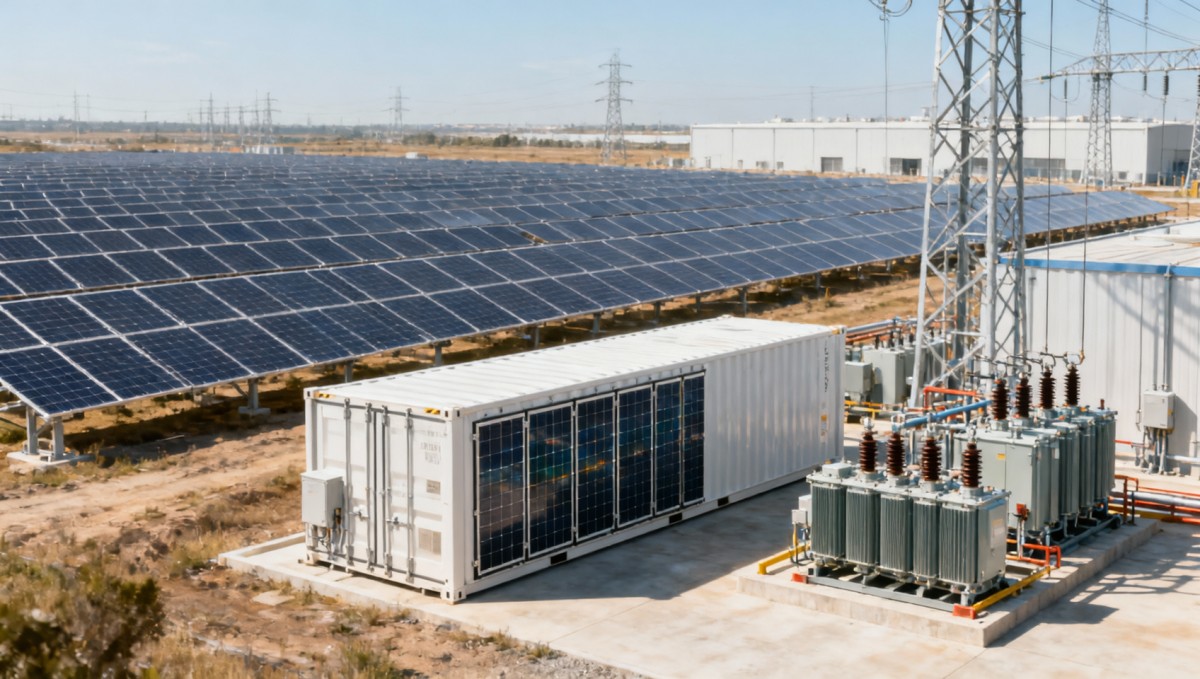
In many renewable energy projects, generation capacity has expanded faster than storage infrastructure. A solar plant can often be designed and installed within 6–12 months, while grid upgrades, transformer expansion, and battery procurement may take 9–18 months depending on location and supply conditions. This mismatch is reshaping project assumptions from the first feasibility review.
The gap appears in several forms. One is insufficient battery duration. A 100 MW solar site paired with only 25 MW / 50 MWh of storage may smooth short fluctuations, but it may not support evening peak shifting or sustained congestion relief. Another is delayed interconnection approval, where generation is ready but dispatch restrictions reduce actual plant utilization for the first 12–24 months.
Developers are therefore revising metrics that once seemed stable. Instead of focusing only on installed capacity, teams now compare usable export windows, storage discharge duration, round-trip efficiency ranges of 85%–92%, and forecasted curtailment percentages. In practical terms, a project with a lower nameplate output but better storage alignment can outperform a larger plant with frequent export constraints.
For information researchers, the key lesson is that project value can no longer be measured by generation volume alone. For field users and operators, the operational lesson is equally direct: without coordinated storage planning, inverter loading, battery cycling strategy, and grid dispatch logic will increasingly determine whether a site meets commercial expectations.
Main sources of the storage gap
- Battery supply lead times extending from 16 weeks to 40 weeks for some projects, especially where containerized ESS and PCS units are sourced internationally.
- Grid connection bottlenecks that limit export capacity below planned DC generation, often forcing redesign of the AC/DC ratio.
- Underestimation of load shifting requirements, where 1-hour storage proves insufficient and 2–4 hour systems become necessary.
- Software and EMS limitations that prevent dynamic optimization across solar output, local demand, and tariff periods.
How project teams are adjusting early-stage planning
Early-stage planning now includes deeper scenario modeling. Instead of one base case, many teams run 3–5 scenarios covering normal irradiation, high curtailment periods, delayed battery delivery, and seasonal tariff changes. This improves CAPEX and OPEX visibility before procurement starts. It also helps buyers compare whether a larger battery, smarter EMS, or phased deployment will produce the best result.
The shift is especially relevant across industrial parks, commercial campuses, logistics hubs, and remote infrastructure sites. Each of these sectors has a different load profile, outage tolerance, and energy cost structure. A project that works in one environment may fail in another if storage duration and control logic are copied without local operational analysis.
Grid Constraints, Cost Pressure, and Real-World Project Delays
Grid constraints are now a leading factor in renewable project redesign. In markets where transmission and distribution upgrades lag behind generation growth, operators may face export caps, reactive power requirements, and narrower dispatch windows. Even when a site is technically complete, actual operating performance can remain below forecast for 3–9 months after commissioning.
Cost pressure compounds the issue. Developers balancing EPC budgets must weigh battery sizing against switchgear upgrades, SCADA integration, transformer capacity, and land use. A storage addition that looks manageable in concept can trigger further costs in fire safety compliance, thermal management, and civil engineering. For B2B buyers, the practical challenge is to distinguish mandatory costs from optional optimization layers.
The table below outlines how common storage-related constraints affect project planning across different operational conditions.
The main conclusion is that storage gaps rarely stay isolated. A battery sizing issue can become a software issue, then a revenue issue, and finally a financing issue. This is why procurement, engineering, and operations teams should review constraints as a connected system rather than as separate line items.
For field operators, delay risk also changes maintenance planning. Temporary dispatch rules can increase cycling frequency or partial-load operation, which affects battery degradation rates and inverter stress. Teams should review whether the operational strategy remains viable at cycle counts such as 250–350 per year, rather than assuming ideal dispatch from the original design model.
Three cost areas often underestimated
- Integration engineering, including EMS logic mapping, BMS communication checks, and SCADA commissioning.
- Compliance infrastructure such as fire separation, ventilation, emergency shutdown design, and site access controls.
- Operational adaptation costs, including training, spare parts strategy, and revised maintenance frequency over the first 24 months.
Operational warning signs during delay periods
If a project enters service with unresolved storage constraints, users should watch for repeated clipping events, battery standby inefficiency, dispatch commands that conflict with local load demand, and transformer loading near design thresholds. These are early indicators that the project plan needs correction before losses accumulate over multiple seasons.
How Data Analysis and AI Tools Improve Storage Decisions
Data Analysis has become one of the most practical ways to close renewable energy storage gaps. Project teams that collect 12 months of irradiance, temperature, load profile, and tariff data can model storage sizing far more accurately than those relying only on annual generation assumptions. Even a simple 15-minute interval dataset can reveal charging windows, clipping frequency, and discharge value that annual averages hide.
AI tools are adding a second layer of value. They are increasingly used for production forecasting, anomaly detection, cycle optimization, and maintenance planning. For example, an AI-assisted EMS may compare weather forecasts, historical load, and battery state-of-charge every 5–15 minutes to adjust charging strategy. That does not eliminate engineering judgment, but it can improve responsiveness under volatile market conditions.
For information researchers, the key benefit is better decision support. AI-assisted modeling can rank 3 storage configurations against peak shaving, arbitrage, self-consumption, and backup criteria. For operators, the value lies in actionability: fewer manual dispatch corrections, earlier fault identification, and tighter control over cycle depth and reserve margins.
The comparison below shows how conventional planning and data-driven planning differ in practical project terms.
The important takeaway is not that every project needs advanced AI from day one. Rather, teams should identify where data quality can improve core decisions. In some projects, a better battery dispatch model produces more value than a larger battery bank. In others, anomaly detection that reduces downtime by even 1%–3% can justify software integration costs.
Where AI delivers the most practical value
- Forecasting short-term solar output for 4–24 hour dispatch planning.
- Detecting battery temperature or voltage deviation before it becomes a shutdown event.
- Optimizing charge and discharge windows under time-of-use tariffs.
- Supporting preventive maintenance schedules based on actual cycling behavior rather than fixed intervals.
A caution on tool adoption
AI tools are only as effective as the operational data behind them. If sensors are poorly calibrated, communications are unstable, or baseline asset mapping is incomplete, the output may mislead decision-makers. Before scaling digital tools, teams should verify data integrity, integration scope, and response accountability across engineering and operations.
Procurement Criteria for Researchers, Buyers, and Field Operators
Storage gaps often widen during procurement because different stakeholders focus on different priorities. Researchers may compare market trends and technology pathways. Procurement teams may prioritize lead time and price. Field operators care more about serviceability, interoperability, and safe maintenance procedures. A successful buying process aligns these perspectives before contracts are finalized.
A practical procurement review should cover at least 6 dimensions: battery chemistry, usable energy ratio, discharge duration, system integration compatibility, service access, and expected operating environment. In hot or dusty conditions, enclosure design, thermal control, and maintenance access can matter as much as battery capacity. In grid-constrained sites, ramp rate and EMS flexibility may outweigh pure energy volume.
The table below can support pre-purchase evaluation for renewable energy storage systems in commercial, industrial, and utility-linked applications.
The strongest procurement decisions usually come from cross-functional review, not isolated price comparison. A system with a slightly higher upfront cost may reduce integration delays, maintenance interruptions, and redesign work. That matters in projects where a 1-month delay can affect revenue recognition, tariff eligibility, or seasonal demand capture.
GISN’s B2B audience should also note the importance of vendor transparency. Buyers should ask for expected delivery windows, recommended operating temperature ranges, maintenance intervals, control architecture, and warranty conditions under real cycling scenarios. These questions help separate technically suitable offers from proposals that look strong on paper but create hidden operational costs later.
A practical 5-step buying checklist
- Define the primary use case: peak shaving, backup, self-consumption, frequency support, or curtailment management.
- Match storage duration to actual site data, not only installer assumptions.
- Confirm electrical and software compatibility across battery, PCS, inverter, and EMS.
- Review delivery and commissioning timelines with a realistic buffer of 10%–20%.
- Validate support terms, spare parts availability, and operating procedures for field teams.
Implementation Roadmap, Risk Control, and Frequently Asked Questions
Once a project has identified its storage gap, implementation should move through a structured sequence rather than reactive patchwork. In many cases, the most effective roadmap includes 4 stages: site data collection, technical design revision, procurement and integration review, and operational optimization after commissioning. This staged approach helps teams avoid rushed specification changes that create new technical conflicts.
Risk control should start before equipment arrives on site. Teams should confirm cable routes, thermal environment, protection coordination, communications testing, and emergency shutdown logic. During the first 30–90 days of operation, they should also review actual versus forecast performance, cycle depth trends, and dispatch consistency. Early corrections are usually less costly than post-failure retrofits.
Operational users benefit most when implementation includes clear responsibility mapping. Engineering teams should own validation of design assumptions. Procurement should track delivery milestones. Operators should receive training on alarms, safe isolation, and routine inspection. A project can have strong hardware but still underperform if the handover process is incomplete.
Common risk-control measures
- Maintain a commissioning checklist covering at least 20–30 critical items across electrical, software, and safety functions.
- Set alarm thresholds for temperature, state-of-charge deviation, and communication dropouts before live operation begins.
- Plan inspection frequency based on site conditions, such as monthly checks in dusty or high-heat environments.
- Track battery cycling and degradation trends quarterly rather than waiting for annual reviews.
How long does it usually take to close a storage gap in an existing project?
If the issue is software optimization only, corrective work may take 2–6 weeks. If additional battery containers, switchgear changes, or interconnection updates are required, the timeline can extend to 3–9 months. The largest time drivers are equipment lead time, permit adjustments, and testing windows.
What storage duration is most suitable for solar projects?
There is no universal answer. One-hour systems may help with ramp smoothing and short peak events. Two-hour systems are often a practical middle ground for commercial and industrial use. Four-hour systems are more suitable where evening dispatch, congestion relief, or market participation require longer discharge windows. The right choice depends on tariff design, load curve, and grid limits.
Can smaller projects benefit from AI-based optimization?
Yes, provided the data infrastructure is adequate. Even a modest project can benefit from forecasting and automated charge scheduling if electricity prices vary by time or if local load is irregular. The key requirement is not project size alone, but whether reliable operational data is collected at meaningful intervals.
Renewable energy storage gaps are changing how projects are designed, financed, procured, and operated across industries. The most resilient project plans now combine realistic grid assessment, interval-based Data Analysis, fit-for-purpose storage sizing, and disciplined implementation. For researchers and field users alike, the advantage comes from turning complex system variables into practical decisions that reduce delay, protect performance, and improve long-term asset value.
GISN supports global decision-makers with actionable intelligence across renewable energy, industrial systems, digital solutions, and cross-border market development. If you are evaluating storage options, revising a solar project plan, or comparing technology pathways for a constrained site, contact us to get a tailored solution, discuss project details, or explore more industry-focused insights.
Recommended News
- CBAM Takes Effect for PV and Energy Storage ExportsAug 13, 2026CBAM takes effect for PV and energy storage exports in 2026. Learn how certified lifecycle carbon emissions data impacts EU customs, shipments, and supply chain compliance.
- VEW 2026 Opens Booth Booking for Chinese SuppliersAug 12, 2026VEW 2026 opens booth booking for Chinese suppliers, signaling new opportunities in Vietnam’s renewable energy market amid tighter grid-connection and ESG procurement expectations.
- EU ESS Rule Adds AI Energy Monitoring from Oct 2026Aug 11, 2026EU ESS Rule adds AI energy monitoring from Oct 2026. Learn how EN 50664-2:2026, EU cloud upload, and CE compliance will reshape ESS exports, testing, and market access.
- EU Enforces EN 50581:2026 for ESSAug 08, 2026EU Enforces EN 50581:2026 for ESS: learn how new thermal runaway testing, carbon footprint declarations, and DPP verification will affect EU market access, certification, delivery, and contracts.
- EU Battery Rules Tighten Disclosure for ESS BatteriesAug 04, 2026EU Battery Rules tighten disclosure for ESS batteries from Aug 18, 2026. Learn how carbon footprint and recycled cobalt, nickel, and lithium data may affect EU exports, certification, and supply chain readiness.
- Can Bulldozers Be Adapted for Precision Agriculture Applications?Sep 16, 2026Can bulldozers be converted for precision agriculture applications? Discover how guided grading, soil protection, and data-driven planning improve farm infrastructure.
- REACH Compliance in B2B Market Analysis: Assessing Supplier Risk and Market AccessSep 12, 2026B2B market analysis REACH compliance: assess supplier risk, strengthen evidence controls, and protect EEA market access with practical sourcing insights.
- Analyzing Pressure Ratings in Technical Specifications for Safe Equipment SelectionSep 10, 2026Technical specifications analysis for pressure rating selection: learn how to assess temperature, materials, transients, and connections for safer equipment choices.
- How Often Should Heavy Excavators Be Serviced in Mining Operations?Sep 03, 2026What are the maintenance intervals for heavy excavators in mining? Discover practical service schedules, severe-duty adjustments, oil analysis, and uptime-focused maintenance tips.
- Which mining equipment performance standards matter most on site?Sep 03, 2026Mining equipment performance industry standards: assess availability, payload, fuel efficiency, durability, and safety to improve on-site productivity.
- Prefab Building Cost Factors: How to Budget for Design, Transport, and Site WorkSep 17, 2026Explore prefab building cost factors and learn how to budget smarter for design, transport, foundations, utilities, installation, and approvals.
- Which Emerging Destinations Offer the Best Manufacturing Tax Incentives in 2026?Sep 03, 2026What emerging destinations offer the best manufacturing tax incentives 2026? Compare Vietnam, India, Morocco, Egypt, and Gulf zones for tax, duty, and export advantages.
- Can Data Analysis Tools Detect Supplier Fraud in Procurement Data?Sep 03, 2026Can data analysis tools detect supplier fraud in procurement data? Discover key red flags, analytics methods, and practical controls to investigate risks sooner.
- What are the current pricing structures for industrial automation solutions?Sep 03, 2026What are the current pricing structures for industrial automation solutions? Compare upfront, subscription, usage-based, RaaS, and lifecycle costs to make smarter investment decisions.
- How German bulk pricing changes the cost of industrial machinerySep 03, 2026Industrial machinery and supplies price list and bulk purchase costs in Germany: uncover real savings across equipment, logistics, service, and compliance.
All Categories
Hot Articles
- How to Specify Energy-Efficient Poultry Ventilation for Broiler HousesSep 20, 2026Energy efficient poultry ventilation systems: learn how to specify fans, inlets, controls, and cooling for lower energy use, healthier broilers, and reliable airflow.
- How to Choose Business Travel Services in Europe for Multi-Country TeamsSep 19, 2026Business travel services Europe: learn how to select the right provider for multi-country teams, with policy control, rail access, duty of care, payment visibility, and 24/7 support.
- How to Document a B2B Market Analysis for Clear, Decision-Ready InsightsSep 18, 2026B2B market analysis documentation guide: learn to organize evidence, assess competitors, map buyers, and turn market research into clear, decision-ready growth actions.