
France Announces €23B Africa Investment, Boosting PV & ESS Exports
TIME
Click count
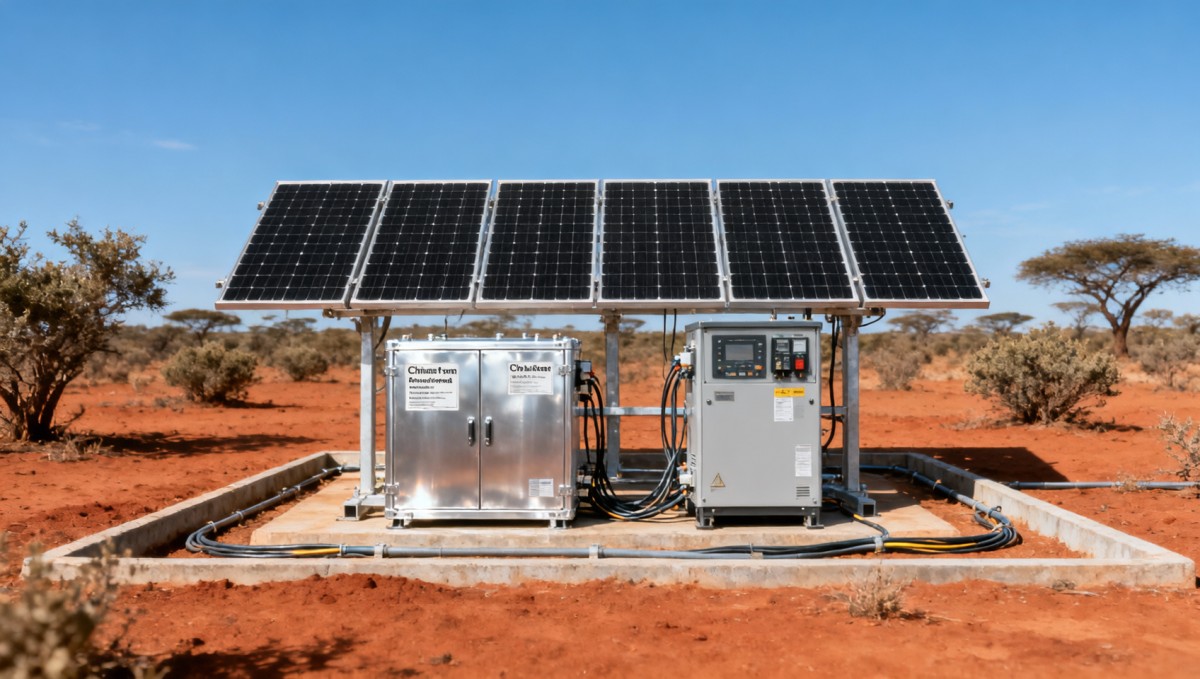
On May 14, 2026, French President Emmanuel Macron announced a €23 billion investment initiative for Africa during the France-Africa Summit, targeting energy transition, digital infrastructure, and green manufacturing. The plan explicitly prioritizes off-grid photovoltaic (PV) systems, residential energy storage systems (ESS), and smart microgrids — creating new export opportunities for Chinese-made PV modules, lithium-ion battery storage cabinets, and smart inverters, while prompting several African countries to revise grid interconnection standards and energy efficiency certification requirements.
Event Overview
On May 14, 2026, at the France-Africa Summit, President Macron unveiled a €23 billion investment framework focused on three pillars: energy transition, digital infrastructure, and green manufacturing. Within the energy pillar, the initiative specifically identifies accelerated deployment of off-grid PV systems, household-scale energy storage (ESS & Storage), and intelligent microgrids across African countries. The announcement confirms increased import demand for quota-eligible Chinese PV components, lithium-based ESS cabinets, and smart inverters. It also notes that multiple African nations are advancing revisions to national grid interconnection technical standards and energy efficiency certification procedures.
Industries Affected
Direct Exporters (PV Modules, ESS Cabinets, Smart Inverters)
These enterprises face rising demand tied to project-level procurement under the French-funded programs. Impact manifests as higher volume expectations in target African markets, tighter lead-time requirements, and heightened scrutiny of product compliance with emerging local technical and certification frameworks.
Component Suppliers & Raw Material Procurement Firms
Suppliers supporting the above exporters may experience upstream demand shifts — particularly for lithium-ion cell formats compatible with residential ESS cabinets and specialized semiconductor components used in smart inverters. Impact is indirect but time-sensitive, as production ramp-ups must align with downstream export schedules.
Manufacturers Engaged in Local Assembly or CKD/SKD Models
Firms operating or planning assembly operations in Africa (e.g., module stringing, battery cabinet integration, inverter housing) may see renewed interest from French development partners or African utilities seeking localized value addition. Impact centers on regulatory alignment — especially evolving national standards for safety, grid interaction, and lifecycle labeling.
Distribution & Certification Support Providers
Companies offering logistics, customs brokerage, conformity assessment, or type testing services for PV/ESS products entering African markets will likely observe increased inquiries related to newly referenced standards (e.g., updated IEC 62109, IEC 62619, or regional adaptations). Impact includes higher demand for documentation support and pre-shipment verification aligned with revised national requirements.
What Enterprises and Practitioners Should Monitor and Do Now
Track official implementation roadmaps and bilateral MOUs
While the €23 billion figure was announced, no detailed allocation breakdown, country-specific funding envelopes, or procurement timelines have been published. Enterprises should monitor updates from the French Development Agency (AFD), the European Union’s Team Europe Initiative, and participating African governments — particularly announcements concerning tender windows, eligibility criteria, and preferred supplier frameworks.
Map priority markets and technical requirements by country
The initiative covers multiple African countries, but standardization efforts and rollout pace will vary. Current indications suggest early focus on nations already engaged in French-supported energy projects (e.g., Senegal, Côte d’Ivoire, Kenya). Exporters should prioritize reviewing draft or recently amended national grid codes and energy storage certification rules in those jurisdictions — not assuming harmonization across regions.
Distinguish policy signals from near-term procurement reality
Analysis shows this initiative functions primarily as a high-level strategic commitment and coordination mechanism, not an immediate procurement pipeline. Most funded projects will require feasibility studies, environmental assessments, and local permitting before tendering — meaning material export volumes are unlikely before late 2027. Companies should avoid overcommitting production capacity based solely on the headline figure.
Prepare documentation and pre-certification alignment
Observably, African regulators are accelerating updates to technical standards — especially for ESS safety, inverter anti-islanding logic, and DC-side arc-fault detection. Exporters should audit existing product certifications against latest drafts (e.g., South African SANS 10142-1 Ed.3, Kenyan KEBS PV/ESS guidelines), initiate gap assessments, and engage accredited labs early to avoid delays once formal tenders open.
Editorial Perspective / Industry Observation
This announcement is best understood as a coordinated policy signal — not yet a transactional catalyst. From an industry perspective, it reflects growing institutional recognition that decentralized renewable energy infrastructure is central to both climate resilience and economic inclusion in Africa. However, its operational impact remains contingent on three factors: the speed of bilateral implementation mechanisms, the degree of alignment between French funding conditions and existing African regulatory capacity, and the ability of international suppliers to meet localized compliance expectations without excessive cost or timeline penalties. Continued observation is warranted — particularly for updates on AFD co-financing terms, EU-Africa Green Partnership workstreams, and national standardization body notices.
In summary, the €23 billion initiative marks a significant reinforcement of institutional support for distributed solar and storage deployment in Africa — but its practical implications for global suppliers remain phased and conditional. It is more accurately interpreted as a medium-term structural tailwind than an immediate sales driver. Enterprises should treat it as a strategic horizon marker, not a short-term order book expansion.
Source: Official statement issued by the Presidency of the French Republic on May 14, 2026, during the France-Africa Summit; supplementary briefings from the French Development Agency (AFD) and the European Commission’s Team Europe communications portal.
Note: Country-specific implementation plans, funding disbursement schedules, and final versions of revised technical standards remain pending and are subject to ongoing observation.
Recommended News
- CBAM Takes Effect for PV and Energy Storage ExportsAug 13, 2026CBAM takes effect for PV and energy storage exports in 2026. Learn how certified lifecycle carbon emissions data impacts EU customs, shipments, and supply chain compliance.
- VEW 2026 Opens Booth Booking for Chinese SuppliersAug 12, 2026VEW 2026 opens booth booking for Chinese suppliers, signaling new opportunities in Vietnam’s renewable energy market amid tighter grid-connection and ESG procurement expectations.
- EU ESS Rule Adds AI Energy Monitoring from Oct 2026Aug 11, 2026EU ESS Rule adds AI energy monitoring from Oct 2026. Learn how EN 50664-2:2026, EU cloud upload, and CE compliance will reshape ESS exports, testing, and market access.
- EU Enforces EN 50581:2026 for ESSAug 08, 2026EU Enforces EN 50581:2026 for ESS: learn how new thermal runaway testing, carbon footprint declarations, and DPP verification will affect EU market access, certification, delivery, and contracts.
- EU Battery Rules Tighten Disclosure for ESS BatteriesAug 04, 2026EU Battery Rules tighten disclosure for ESS batteries from Aug 18, 2026. Learn how carbon footprint and recycled cobalt, nickel, and lithium data may affect EU exports, certification, and supply chain readiness.
- How to Evaluate Technology Options Against Inspection Standards for Project ApprovalOct 07, 2026Technology option analysis inspection standards: compare evidence, testing, compliance, and lifecycle risk to make faster, approval-ready project decisions.
- How to Specify Manufacturing Equipment Systems for Throughput, Uptime, and SafetyOct 05, 2026Manufacturing equipment systems: learn how to specify sustained throughput, uptime, safety, controls, and acceptance tests for dependable production.
- How to Define Technical Buying Criteria for Reliable Category ResearchSep 28, 2026Technical buying criteria for category research: build measurable requirements, assess risk, compliance, and lifecycle value for smarter supplier decisions.
- B2B Market Analysis Compliance Guide: How to Validate Data, Claims, and SourcesSep 25, 2026B2B market analysis compliance guide: learn to validate data, supplier claims, methodologies, and cross-border sources for credible, decision-ready market intelligence.
- When R&D in manufacturing is ready to move beyond the pilot stageSep 22, 2026R&D in manufacturing: discover the five signs your pilot is ready to scale, from process control and quality to integration, ownership, and real-world economics.
- Technology Advancements Dashboards: What Metrics Reveal Emerging Industry Shifts?Oct 02, 2026Technology advancements dashboard insights reveal investment, adoption, supply-chain, and policy signals—helping leaders spot real industry shifts before competitors.
- How to Compare Global Sourcing Information Before Shortlisting Overseas SuppliersSep 30, 2026Global sourcing information comparison made practical: verify suppliers, assess compliance, capacity, landed cost, and delivery risk before building a confident overseas shortlist.
- Battery Cage Price in Nigeria: Cost Drivers for Farm Project BudgetsSep 22, 2026Battery cage price in Nigeria explained: compare installed costs, steel quality, logistics, water systems and project budget risks before choosing poultry housing.
- How to Build a Poultry Equipment Price List for a New Farm SetupSep 22, 2026Poultry equipment price list guide for new farm setups: compare systems, uncover hidden costs, assess quality, and plan installation with confidence.
- Which digital export channels fit products with longer sales cycles?Sep 21, 2026Digital export channels for long sales cycles: learn how websites, industry platforms, marketplaces, and targeted outreach build trust, qualify buyers, and drive complex B2B export deals.
All Categories
Hot Articles
- How to Evaluate Technology Options Against Inspection Standards for Project ApprovalOct 07, 2026Technology option analysis inspection standards: compare evidence, testing, compliance, and lifecycle risk to make faster, approval-ready project decisions.
- Heavy Equipment Sourcing: A Due-Diligence Checklist for Reliable SuppliersOct 06, 2026Heavy equipment sourcing information: use this due-diligence checklist to verify suppliers, compare true costs, control delivery risks, and secure reliable equipment support.
- How to Specify Manufacturing Equipment Systems for Throughput, Uptime, and SafetyOct 05, 2026Manufacturing equipment systems: learn how to specify sustained throughput, uptime, safety, controls, and acceptance tests for dependable production.