
Vietnam Requires Dual Certification for Prefab House Imports
TIME
Click count
From August 1, 2026, Vietnam's import rules for prefabricated houses move into a stricter documentation phase. The immediate point for importers, Chinese manufacturers, procurement teams, and cross-border supply chain operators is that a single supporting certificate will no longer be enough: imported prefabricated houses must be accompanied by both ISO 14001:2015 certification for the Chinese factory and a declaration of conformity with GB/T 37527-2019. For the industry, this is worth watching because it affects not just customs paperwork, but also factory qualification, supplier selection, and delivery readiness.
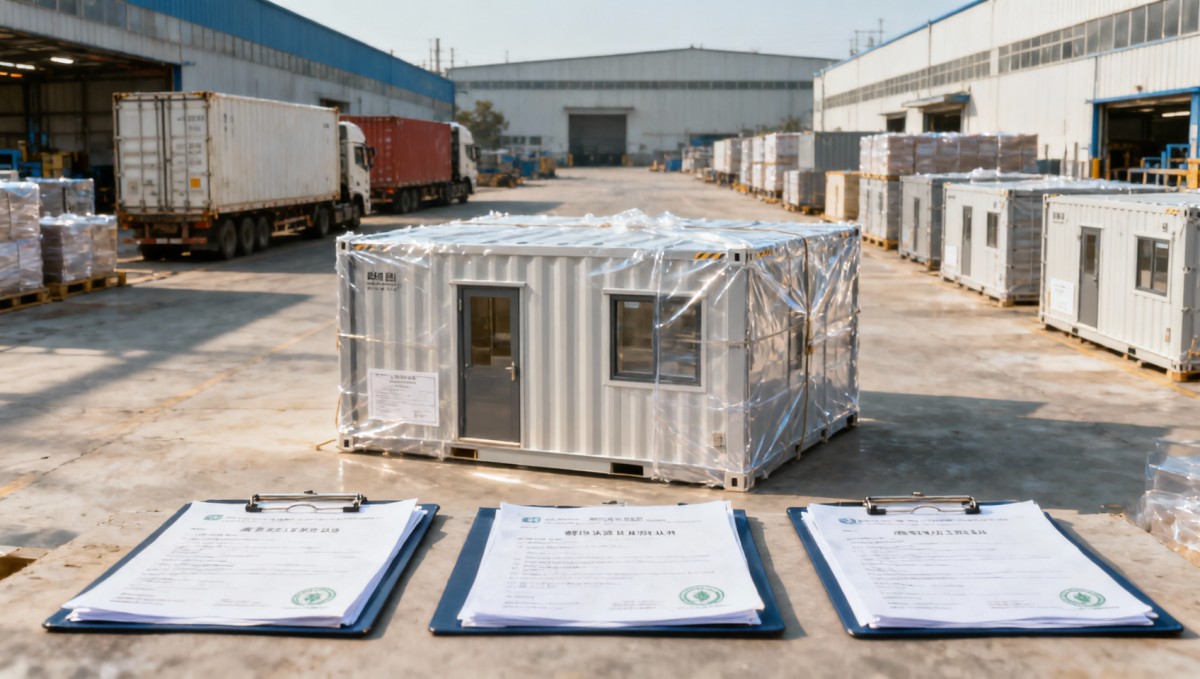
What the New Vietnam Rule Actually Requires
The confirmed facts are limited but clear. Vietnam's Ministry of Industry and Trade (MOIT) issued Circular No. 32/2026/TT-BCT on June 28, 2026. Under that notice, starting on August 1, 2026, all imported prefabricated houses must be accompanied by two documents tied to the Chinese manufacturing plant: an ISO 14001:2015 environmental management system certification and a declaration of conformity with China's GB/T 37527-2019 evaluation standard for prefabricated components used in green buildings. The two-document requirement is cumulative rather than optional, meaning both must be submitted.
Where the Immediate Pressure May Appear
Import documentation becomes the first bottleneck
From an industry perspective, direct trading companies and importers are the first group likely to feel the impact. Their exposure is straightforward: if either document is missing, incomplete, or not aligned with the factory named in the shipment file, the transaction workflow may face disruption at the documentation stage. What deserves closer attention is the handoff between sales contracts, shipping files, and factory certificates, because this is where mismatches are most likely to surface in practice.
Chinese factories face a qualification filter, not just a production task
For Chinese manufacturers supplying prefabricated houses to Vietnam, the rule shifts part of market access from product delivery to plant-level compliance evidence. Analysis shows that the issue is not only whether production capacity exists, but whether the factory can provide both the ISO 14001:2015 certificate and the GB/T 37527-2019 conformity declaration in a form acceptable to the importing side. This may affect supplier screening, quotation lead times, and discussions over which entity is responsible for preparing the file set.
Supply chain service providers may need tighter document coordination
Freight forwarders, customs-facing service providers, and trade compliance teams may also be affected because their work depends on document completeness before shipment or clearance milestones. Observably, the operational risk here is less about physical transport and more about coordination failure between factory, exporter, importer, and service intermediaries. The practical change is that document tracking may need to start earlier in the order cycle.
Buyers and project-facing procurement teams may need earlier confirmation
Procurement teams purchasing prefabricated houses for downstream use may not submit the import documents themselves, but they still carry timing and delivery risk. If a supplier cannot confirm both certifications in time, purchasing schedules and supplier comparisons may need to be adjusted. In business terms, certification status may become part of pre-order verification rather than a post-order formality.
What Companies Should Watch Now
Check whether both documents are tied to the actual manufacturing plant
The core compliance point is factory-specific documentation. Companies involved in procurement or import execution should verify that the ISO 14001:2015 certificate and the GB/T 37527-2019 conformity declaration both correspond to the Chinese plant responsible for production, rather than assuming group-level or unrelated affiliate documents will suffice.
Separate policy wording from filing execution
Analysis shows that businesses should pay attention to the difference between the rule as written and the way it is implemented in transaction workflows. Even when the headline requirement is clear, operational questions often center on file formatting, document consistency, and submission timing. Because the input does not provide further implementation detail, this remains a point for continued verification rather than assumption.
Reassess supplier readiness before shipment scheduling
Importers and sourcing teams should focus on whether current suppliers can actually produce the required supporting materials within the commercial timeline. This is especially relevant for orders already in negotiation around the August 1, 2026 effective date, where shipment planning and compliance preparation may overlap.
Prepare customer and partner communication around lead time risk
Where sales, procurement, and logistics involve multiple parties, early communication becomes a practical issue. If dual certification is now mandatory, delays may arise not only from missing documents but from late confirmation of document validity. Clear responsibility mapping between factory, exporter, importer, and service providers becomes more important under this kind of rule change.
Why the Market Should Read This as More Than a Filing Detail
Observably, this development is not just a narrow paperwork update. It signals that market access for imported prefabricated houses into Vietnam is being linked more explicitly to environmental management certification and a declared conformity position tied to a Chinese standard. At the same time, it would be premature to treat this single notice as a full market outcome on its own. It is more appropriate to understand this as a concrete regulatory change with immediate transaction relevance and a broader policy signal that still requires close follow-up in actual implementation.
How to Read the Current Stage
The most balanced conclusion is that this is an immediate compliance change with wider supply chain implications, rather than a purely symbolic policy statement. For companies already active in prefab house trade with Vietnam, the near-term issue is documentation readiness. For the wider market, the bigger takeaway is that factory credentials and standards-linked declarations may carry greater weight in cross-border prefab housing transactions going forward. Current conditions are best understood as a rule now in force that still needs continued observation at the execution level.
Basis of This Article and What Still Needs Verification
This article is based on the user-provided news title, event date, and event summary concerning Vietnam's new requirement for imported prefabricated houses from August 1, 2026. For this type of industry update, relevant source categories typically include official government notices, company disclosures, industry association releases, authoritative media reports, and standard-related documents. The specific official source link was not provided in the input, so continued verification remains necessary. What deserves further attention is any later official clarification on filing practice, document interpretation, and how the dual-certification requirement is applied in live import operations.
Recommended News
- Integrated Houses for Tourism Development: Planning for Site, Capacity, and ComfortSep 16, 2026Integrated houses for tourism development project planning made practical: optimize site layout, capacity, utilities, and year-round guest comfort.
- How Should Buyers Choose Between Prefab and Modular Homes for Remote Sites?Sep 16, 2026How to choose between prefab and modular home for remote sites: compare access, costs, climate resilience, and installation needs for a smarter build.
- How Emergency Projects Can Select Prefabricated Building Systems for Rapid DeploymentSep 13, 2026Prefabricated building systems for emergency response: learn how to select safe, adaptable solutions for rapid deployment, utilities, logistics, and site needs.
- How Should After-Sales Warranty Claims for Modular Homes Be Handled?Sep 03, 2026How to handle after-sales warranty claims for modular home units: learn fast triage, evidence collection, responsibility rules, repair timelines, and dispute resolution.
- How to Evaluate Panelized Prefab Building Systems for Faster, Lower-Risk ProjectsAug 18, 2026Panelized prefab building systems can speed delivery and cut project risk—but only with the right fit. Learn how to compare suppliers, compliance, logistics, and total value.
- How to Define Technical Buying Criteria for Reliable Category ResearchSep 28, 2026Technical buying criteria for category research: build measurable requirements, assess risk, compliance, and lifecycle value for smarter supplier decisions.
- B2B Market Analysis Compliance Guide: How to Validate Data, Claims, and SourcesSep 25, 2026B2B market analysis compliance guide: learn to validate data, supplier claims, methodologies, and cross-border sources for credible, decision-ready market intelligence.
- When R&D in manufacturing is ready to move beyond the pilot stageSep 22, 2026R&D in manufacturing: discover the five signs your pilot is ready to scale, from process control and quality to integration, ownership, and real-world economics.
- How R&D in the manufacturing industry reduces scale-up riskSep 22, 2026r&d in manufacturing industry reduces scale-up risk with pilot builds, process validation, supplier alignment, and workforce readiness for more reliable launches.
- The most common supplier compliance requirements before onboardingSep 21, 2026Explore the most common supplier compliance requirements before onboarding, from legal checks and quality to ESG, cybersecurity, and supply continuity.
- Technology Advancements Dashboards: What Metrics Reveal Emerging Industry Shifts?Oct 02, 2026Technology advancements dashboard insights reveal investment, adoption, supply-chain, and policy signals—helping leaders spot real industry shifts before competitors.
- How to Compare Global Sourcing Information Before Shortlisting Overseas SuppliersSep 30, 2026Global sourcing information comparison made practical: verify suppliers, assess compliance, capacity, landed cost, and delivery risk before building a confident overseas shortlist.
- Battery Cage Price in Nigeria: Cost Drivers for Farm Project BudgetsSep 22, 2026Battery cage price in Nigeria explained: compare installed costs, steel quality, logistics, water systems and project budget risks before choosing poultry housing.
- How to Build a Poultry Equipment Price List for a New Farm SetupSep 22, 2026Poultry equipment price list guide for new farm setups: compare systems, uncover hidden costs, assess quality, and plan installation with confidence.
- Which digital export channels fit products with longer sales cycles?Sep 21, 2026Digital export channels for long sales cycles: learn how websites, industry platforms, marketplaces, and targeted outreach build trust, qualify buyers, and drive complex B2B export deals.
All Categories
Hot Articles
- Technology Advancements Dashboards: What Metrics Reveal Emerging Industry Shifts?Oct 02, 2026Technology advancements dashboard insights reveal investment, adoption, supply-chain, and policy signals—helping leaders spot real industry shifts before competitors.
- How to Compare Eco-Friendly Flooring Materials for High-Traffic Commercial SpacesOct 01, 2026Compare eco-friendly flooring materials for high-traffic commercial spaces with practical insights on durability, maintenance, lifecycle impact, and smarter specification choices.
- How to Compare Global Sourcing Information Before Shortlisting Overseas SuppliersSep 30, 2026Global sourcing information comparison made practical: verify suppliers, assess compliance, capacity, landed cost, and delivery risk before building a confident overseas shortlist.