
Vietnam Halts Prefab House Imports Over B1 Fire-Test Documents
TIME
Click count
On July 2, 2026, Vietnam moved to suspend customs clearance for all imported prefab houses under an emergency notice jointly issued by its Ministry of Industry and Trade and Ministry of Construction. The immediate issue is not only product compliance, but also document compliance: importers must now provide a B1 fire-performance test report issued by a Vietnam-recognized laboratory, together with a Chinese notarized document carrying dual authentication by a Chinese notary office and the Vietnamese Embassy in China. For traders, manufacturers, project buyers, and supply-chain service providers handling prefab house business tied to Vietnam, this development matters because non-compliant cargo now faces return or destruction rather than a routine delay.
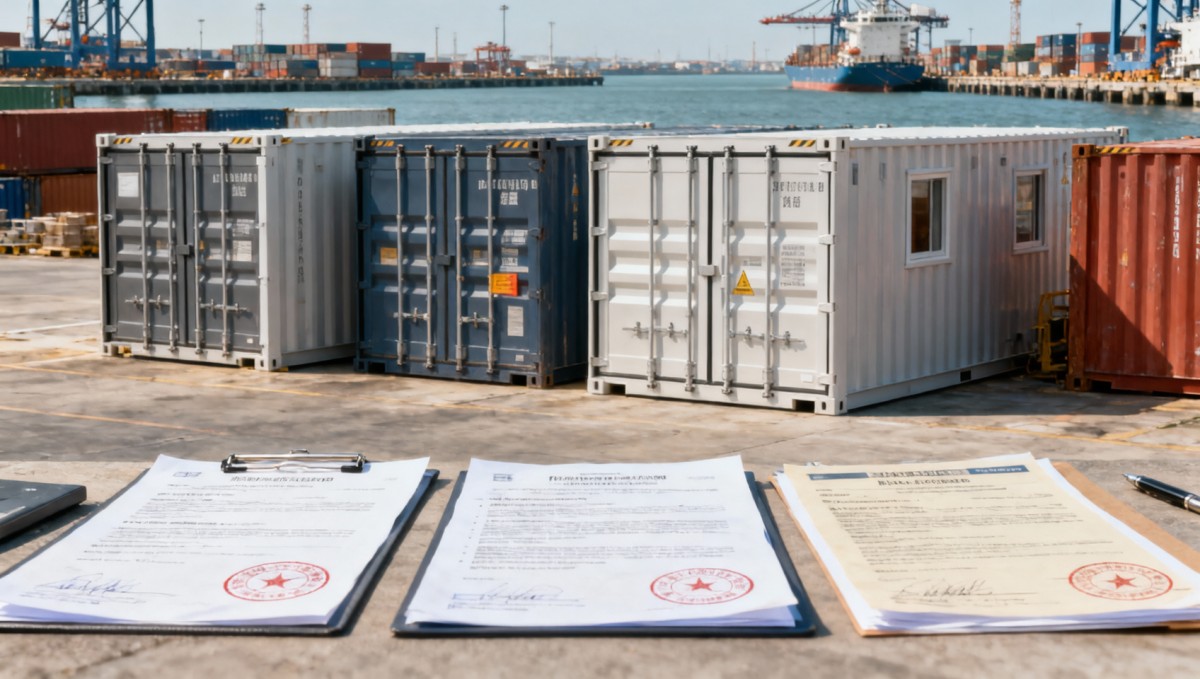
What the Emergency Notice Actually Requires
According to the information provided, Vietnam's Ministry of Industry and Trade and Ministry of Construction jointly issued Emergency Notice No. 112/BCN-XD dated July 2, 2026.
The notice states that customs clearance for all imported prefab houses is suspended with immediate effect.
To proceed, importers are required to submit a B1 fire-performance test report issued by a laboratory recognized by Vietnam.
They must also provide a Chinese-language notarized document that has been authenticated by both a Chinese notary office and the Vietnamese Embassy in China.
For cargo that does not meet these requirements, the stated consequence is return at destination or destruction.
Where the Pressure Will Show Up First
Import transactions now face a documentation bottleneck
From an industry perspective, direct trading companies are likely to feel the impact first because customs clearance has been suspended immediately. The pressure point is not limited to product specifications; it also sits in the completeness and acceptability of the supporting file set. What deserves closer attention is whether shipments already arranged for Vietnam have documentation that matches the new threshold.
Manufacturing-side delivery plans may be disrupted
Analysis shows that manufacturers supplying prefab houses into Vietnam may be affected through shipment timing, customer acceptance, and order execution. Even where production has already been completed, the absence of a Vietnam-recognized B1 fire-performance test report or the required notarization and embassy authentication could interrupt delivery rather than manufacturing itself. That makes compliance readiness part of the delivery schedule.
Logistics and customs service providers will need tighter file control
Supply-chain service providers, including customs and freight coordination teams, may face higher operational risk around pre-shipment review. The practical impact is likely to center on document screening, cargo release expectations, and communication with importers and exporters. The stated risk of return or destruction means filing errors may carry heavier consequences than an ordinary hold at customs.
Buyers and project-side procurement may need to reassess timing
For procurement teams and downstream users of prefab houses, the key exposure is delivery certainty. Observably, any business relying on near-term import clearance into Vietnam may need to recheck order timing, acceptance conditions, and documentary obligations with suppliers. The immediate concern is not broader demand, but whether contracted goods can legally pass customs under the notice now in force.
What Companies Should Track Now
Whether existing reports are accepted under the new rule
The notice specifically refers to a B1 fire-performance test report issued by a Vietnam-recognized laboratory. Companies should therefore focus on the acceptance standard embedded in that wording, because the key operational question is not simply whether a fire test exists, but whether the issuing laboratory is recognized by Vietnam for this purpose.
The notarization and embassy authentication chain
Another immediate point is the documentary route itself. The requirement for a Chinese notarized document with dual authentication by a Chinese notary office and the Vietnamese Embassy in China introduces a separate compliance step beyond technical testing. Businesses should distinguish clearly between product qualification and paperwork qualification, because either gap can block clearance.
Exposure of in-transit and near-shipment cargo
What deserves closer attention is cargo that is already booked, produced, or moving toward shipment. The risk stated in the notice is not limited to delay; it includes return or destruction for non-compliant goods. That raises the importance of shipment-by-shipment document review before cargo reaches the customs stage.
How to communicate with counterparties on delivery obligations
Importers, exporters, and service partners should also align on how this notice affects delivery milestones, handover timing, and document responsibility. Analysis shows that the practical issue is likely to be coordination: who secures the test report, who arranges notarization and authentication, and at what stage documents must be completed to avoid cargo exposure.
Why This Looks More Than a Routine Clearance Delay
This section is analysis. It is more appropriate to understand this development as a compliance enforcement signal tied to both technical fire-performance verification and formal document authentication, rather than as a simple customs slowdown. The combination of an immediate suspension, a named fire-performance threshold, and the explicit consequence of return or destruction suggests that market participants should watch implementation closely.
At the same time, it is still prudent to treat this as a developing regulatory situation rather than a fully mapped long-term framework. The confirmed facts establish the immediate rule and consequence, but they do not by themselves answer how fast supporting procedures will stabilize in day-to-day trade execution. That is why continued observation remains necessary.
How the Market Should Read This Stage
In practical terms, this notice matters because it shifts prefab house imports into Vietnam from a standard customs process to a higher-document-control environment. The immediate industry meaning lies less in broad market interpretation and more in execution risk: testing recognition, notarized paperwork, authentication timing, and cargo exposure now sit at the center of transaction viability.
For now, the most balanced reading is that this is an active and consequential compliance change with direct short-term effects on shipments, while its longer-term operating implications still need to be watched through subsequent implementation and any further official clarification.
Basis of This Article and What Still Needs Verification
This article is based on the user-provided news title, event date, and event summary concerning Vietnam's suspension of prefab house import customs clearance on July 2, 2026.
For reporting of this type, commonly relevant source categories may include official notices, company disclosures, industry association updates, authoritative media reports, and standard-related documents. No specific official source link was provided in the input, so the underlying notice text and any follow-up clarification should continue to be verified.
Areas that warrant ongoing attention include whether further official wording is released, how recognition of laboratories is applied in practice, and whether any additional customs implementation guidance appears after the initial emergency notice.
Recommended News
- Integrated Houses for Tourism Development: Planning for Site, Capacity, and ComfortSep 16, 2026Integrated houses for tourism development project planning made practical: optimize site layout, capacity, utilities, and year-round guest comfort.
- How Should Buyers Choose Between Prefab and Modular Homes for Remote Sites?Sep 16, 2026How to choose between prefab and modular home for remote sites: compare access, costs, climate resilience, and installation needs for a smarter build.
- How Emergency Projects Can Select Prefabricated Building Systems for Rapid DeploymentSep 13, 2026Prefabricated building systems for emergency response: learn how to select safe, adaptable solutions for rapid deployment, utilities, logistics, and site needs.
- How Should After-Sales Warranty Claims for Modular Homes Be Handled?Sep 03, 2026How to handle after-sales warranty claims for modular home units: learn fast triage, evidence collection, responsibility rules, repair timelines, and dispute resolution.
- How to Evaluate Panelized Prefab Building Systems for Faster, Lower-Risk ProjectsAug 18, 2026Panelized prefab building systems can speed delivery and cut project risk—but only with the right fit. Learn how to compare suppliers, compliance, logistics, and total value.
- How to Define Technical Buying Criteria for Reliable Category ResearchSep 28, 2026Technical buying criteria for category research: build measurable requirements, assess risk, compliance, and lifecycle value for smarter supplier decisions.
- B2B Market Analysis Compliance Guide: How to Validate Data, Claims, and SourcesSep 25, 2026B2B market analysis compliance guide: learn to validate data, supplier claims, methodologies, and cross-border sources for credible, decision-ready market intelligence.
- When R&D in manufacturing is ready to move beyond the pilot stageSep 22, 2026R&D in manufacturing: discover the five signs your pilot is ready to scale, from process control and quality to integration, ownership, and real-world economics.
- How R&D in the manufacturing industry reduces scale-up riskSep 22, 2026r&d in manufacturing industry reduces scale-up risk with pilot builds, process validation, supplier alignment, and workforce readiness for more reliable launches.
- The most common supplier compliance requirements before onboardingSep 21, 2026Explore the most common supplier compliance requirements before onboarding, from legal checks and quality to ESG, cybersecurity, and supply continuity.
- Technology Advancements Dashboards: What Metrics Reveal Emerging Industry Shifts?Oct 02, 2026Technology advancements dashboard insights reveal investment, adoption, supply-chain, and policy signals—helping leaders spot real industry shifts before competitors.
- How to Compare Global Sourcing Information Before Shortlisting Overseas SuppliersSep 30, 2026Global sourcing information comparison made practical: verify suppliers, assess compliance, capacity, landed cost, and delivery risk before building a confident overseas shortlist.
- Battery Cage Price in Nigeria: Cost Drivers for Farm Project BudgetsSep 22, 2026Battery cage price in Nigeria explained: compare installed costs, steel quality, logistics, water systems and project budget risks before choosing poultry housing.
- How to Build a Poultry Equipment Price List for a New Farm SetupSep 22, 2026Poultry equipment price list guide for new farm setups: compare systems, uncover hidden costs, assess quality, and plan installation with confidence.
- Which digital export channels fit products with longer sales cycles?Sep 21, 2026Digital export channels for long sales cycles: learn how websites, industry platforms, marketplaces, and targeted outreach build trust, qualify buyers, and drive complex B2B export deals.
All Categories
Hot Articles
- How to Choose Translation Services for Technical Documents and Global ProjectsOct 03, 2026Translationservices guide for technical documents and global projects: evaluate expertise, terminology control, quality assurance, security, and delivery for reliable results.
- Technology Advancements Dashboards: What Metrics Reveal Emerging Industry Shifts?Oct 02, 2026Technology advancements dashboard insights reveal investment, adoption, supply-chain, and policy signals—helping leaders spot real industry shifts before competitors.
- How to Compare Eco-Friendly Flooring Materials for High-Traffic Commercial SpacesOct 01, 2026Compare eco-friendly flooring materials for high-traffic commercial spaces with practical insights on durability, maintenance, lifecycle impact, and smarter specification choices.