
A Practical Guide to Reading Bulldozers Spec Sheets
TIME
Click count
Reading bulldozers spec sheets should be a practical guide, not a guessing game. For researchers and operators comparing performance, weight, power, and jobsite fit, this introduction explains how to identify the numbers that truly matter. In a data-driven era shaped by Data Analysis, AI tools, and smarter industrial decision-making, understanding bulldozers specifications helps buyers and users make informed, efficient choices.
In industrial machinery procurement, a spec sheet is more than a catalog summary. It is a working document that affects equipment selection, operating efficiency, transport planning, fuel budgeting, maintenance scheduling, and jobsite safety. For B2B buyers, field supervisors, and equipment operators, the ability to read bulldozers specifications accurately can reduce costly mismatches between machine capability and actual project conditions.
This guide breaks down the most important data points on bulldozer spec sheets, explains how different figures relate to real jobsite performance, and highlights practical buying and operating considerations. Whether you are screening several models for landfill work, road construction, quarry support, or site preparation, the goal is to turn technical data into clear, defensible decisions.
Why Bulldozer Spec Sheets Matter in Real Equipment Decisions
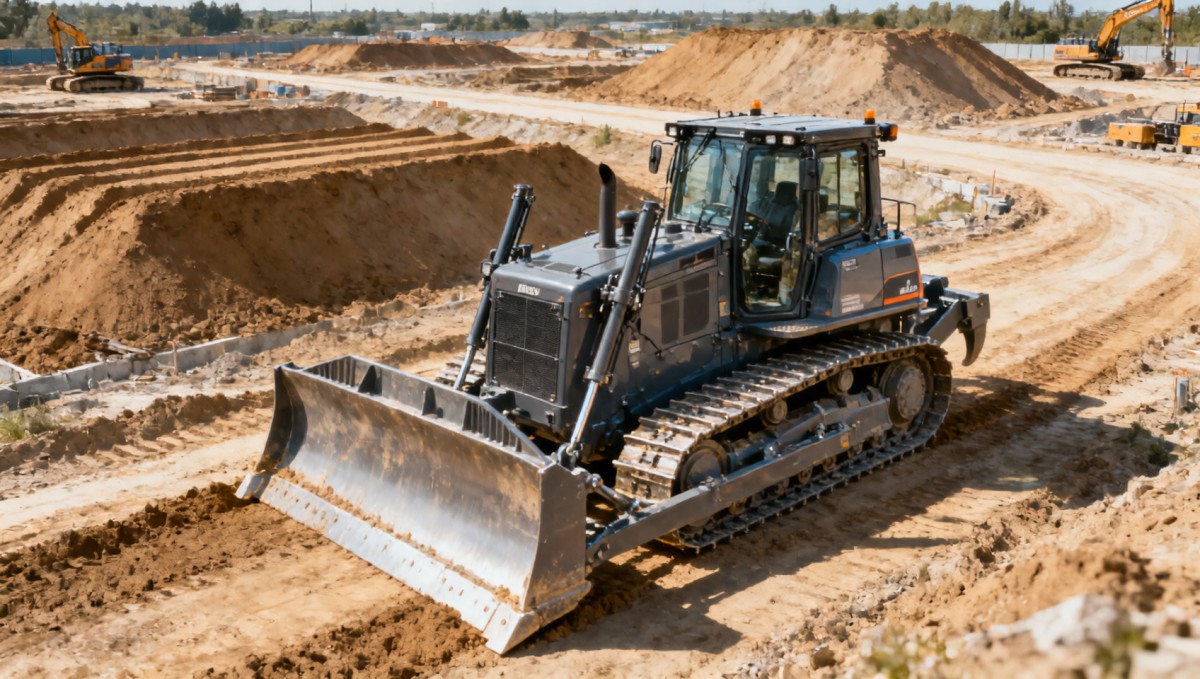
A bulldozer may look suitable at first glance, but the wrong interpretation of machine weight, blade capacity, drawbar pull, or ground pressure can create serious problems in the field. A machine that is 3 to 5 tons heavier than the site can support may sink in soft ground. A dozer with insufficient blade volume may require 15% to 25% more passes to move the same material. These are not abstract technical issues; they directly affect productivity and total operating cost.
For information researchers, spec sheets help standardize comparison across brands, regions, and machine classes. For operators, they reveal practical constraints such as transmission type, travel speed, operating weight, and maintenance access intervals. In many B2B purchasing workflows, the first screening decision happens before any site demonstration, so the spec sheet often determines which machines move to the short list.
A good reading method also prevents common evaluation errors. Many buyers focus only on engine horsepower, but horsepower alone does not tell you how effectively the bulldozer pushes material. Track width, machine balance, blade design, and torque characteristics can matter just as much in dense clay, loose sand, or rocky fill.
Three questions a spec sheet should answer
- Can the bulldozer match the material type and production target, such as light grading, rough pushing, or slope work?
- Can the machine operate safely on the site, considering ground pressure, dimensions, and transport weight limits?
- Will the machine fit the owner’s cost model, including fuel use, service intervals, wear parts, and expected operating hours per year?
The table below shows how several core specification categories connect to real purchasing and operating outcomes. This is useful when a procurement team needs to translate technical data into approval criteria.
The main conclusion is straightforward: reading bulldozers specifications correctly improves both equipment fit and financial control. A spec sheet should help a business estimate output, mobility, operating limits, and ownership impact before the machine reaches the site.
How to Read the Core Performance Numbers
Most bulldozer spec sheets begin with engine power, operating weight, and blade details. These are essential, but they must be interpreted together. For example, a 160 hp bulldozer in the 18 to 20 ton class may perform very differently from a 160 hp unit in a lighter configuration if one has wider tracks, a semi-U blade, and stronger low-end torque. The relationship between these values often matters more than any single number on its own.
Operating weight usually includes the base machine with a standard blade, lubricants, coolant, and often a rear attachment such as a ripper, depending on the manufacturer’s reporting method. Buyers should verify what is included. A difference of 1,500 to 3,000 kg can change trailer requirements, mobilization cost, and jobsite access planning. For fleet managers working across multiple regions, transport restrictions may be just as important as field productivity.
Net power and gross power also require careful reading. Gross power is measured at the engine before some auxiliary losses, while net power reflects usable output after fan, alternator, and similar loads are considered. In practical terms, net power is often the more relevant figure when comparing machines for pushing or grading performance over 8 to 10 hour work shifts.
Blade, undercarriage, and traction metrics
Blade capacity is typically listed in cubic meters or cubic yards. Straight blades are common for fine grading and shorter pushes, while universal and semi-universal blades handle larger volumes and better material retention. However, bigger is not always better. An oversized blade on a marginally powered machine can reduce effective productivity if the bulldozer loses momentum in heavy material.
Track length on ground and track shoe width affect both stability and ground pressure. Wider shoes reduce ground pressure, which may be useful below roughly 55 to 70 kPa in softer conditions, but they can also trade off maneuverability or wear pattern depending on terrain. Drawbar pull and torque rise give better clues about pushing ability than headline horsepower alone, especially on grades or in compacted soils.
A quick interpretation framework
- Check machine class by operating weight first: light, medium, or heavy.
- Compare net power to blade capacity, not power alone.
- Review ground pressure and track configuration against site conditions.
- Confirm whether ripper, winch, or special guarding changes the reported weight.
- Look at travel speed and steering system if the machine will operate in confined areas.
The following table summarizes common specification items and how they should be interpreted by researchers and operators during model comparison.
When these values are read together, the spec sheet becomes a practical selection tool rather than a technical checklist. That is especially useful for organizations comparing several machines across civil works, mining support, landfill operations, and general site preparation.
Matching Specifications to Jobsite Conditions and Use Cases
A bulldozer that performs well on hard, dry cut-and-fill projects may be inefficient in forestry clearing or soft landfill work. The best way to read bulldozers specifications is to connect the numbers to the actual site environment. Key variables include material type, average push distance, slope, operating altitude, annual machine hours, and whether the machine must support grading, ripping, or slot dozing.
Push distance is one of the most overlooked planning factors. For shorter pushes under 30 to 40 meters, a certain blade and power combination may work efficiently. When pushes extend beyond 60 to 90 meters, cycle time rises and productivity may drop sharply unless the machine class is increased or the workflow is redesigned. This is why spec sheets should be read in the context of haul pattern and site layout, not in isolation.
Ground condition is equally important. Low ground pressure models are often preferred in mud, loose fill, or environmentally sensitive terrain. In contrast, rock applications may require heavier guarding, stronger undercarriage components, and careful attention to shoe design. For operators, this translates into better stability, reduced slip, and more predictable wear across a 1,500 to 3,000 hour service interval.
Typical application matching logic
- Fine grading and site finishing often favor stable control response, moderate blade size, and balanced visibility.
- Heavy earthmoving and quarry support require stronger drawbar pull, robust undercarriage, and higher mass for traction.
- Landfill and soft-soil work benefit from lower ground pressure, wider tracks, and protective features against debris buildup.
- Forestry and land clearing may call for guarding packages, rear attachments, and cooling capacity for dusty environments.
The table below provides a practical way to align bulldozers specifications with common site scenarios. It is not a fixed rulebook, but it offers a solid starting point for technical comparison and procurement filtering.
The key takeaway is that bulldozers specifications should be interpreted against operational reality. The same machine can be productive in one environment and inefficient in another, even if the headline numbers look competitive.
Common Mistakes When Comparing Bulldozer Spec Sheets
One frequent mistake is comparing machines from different manufacturers without checking test conditions or included configurations. Two bulldozers may both list similar horsepower, but one spec sheet may include a standard blade and no ripper, while another includes a heavier rear attachment. This can distort weight, balance, and performance interpretation. A disciplined comparison process should normalize configuration as much as possible.
Another issue is treating brochure numbers as guaranteed production output. Blade capacity, for example, does not mean every pass achieves full material load. Material swell, operator skill, moisture content, and slope can reduce effective fill rate. In practice, actual production may vary by 10% to 30% depending on conditions. That is why experienced buyers combine spec sheet review with application analysis and operator feedback.
Buyers also sometimes ignore service-related data. Access points, filter layout, undercarriage wear expectation, and routine service intervals are highly relevant when machines operate 1,800 to 2,500 hours per year. A bulldozer that saves a small amount on purchase price but requires longer maintenance downtime can cost more over 3 to 5 years of ownership.
Red flags during spec review
- Only one metric dominates the decision, usually horsepower or blade size.
- No check is made on transport dimensions, shipment weight, or local road restrictions.
- Ground pressure is ignored for soft terrain projects.
- Maintenance intervals and parts availability are not included in total cost analysis.
- Spec sheets from different years or emission configurations are compared as if identical.
A practical verification checklist
Before shortlisting a machine, confirm at least 6 items: machine configuration, blade type, rear attachment status, operating weight basis, net versus gross power, and track setup. If the machine will cross borders or operate in regulated projects, also verify compliance with local emission and safety requirements. This reduces the risk of late-stage surprises in procurement or deployment.
For research teams working with international data sources, it is useful to build a comparison worksheet that standardizes units into kW, tons, kPa, and cubic meters. Even simple unit inconsistencies can lead to poor model ranking if one record is entered in imperial values and another in metric format.
A Practical Buying and Evaluation Framework for Researchers and Operators
The most effective way to use bulldozers specifications is to combine desk research with operating logic. For B2B buyers, this means moving from raw specs to a structured scoring method. A simple framework can assign 25% to jobsite fit, 25% to productivity potential, 20% to serviceability, 15% to transport and logistics, and 15% to ownership cost. The exact weighting can be adjusted by sector, but the principle is consistent: selection should reflect project priorities, not just brochure appeal.
Operators can contribute valuable insight during this process. They often detect issues that spec sheets do not fully capture, such as visibility around the blade corners, ride quality over rough ground, control response, and fatigue during long shifts. When a fleet expects 8 to 12 operating hours per day, ergonomic considerations become operational considerations, not optional extras.
A practical evaluation process usually works best in 4 stages: define the use case, normalize the spec data, compare cost and service factors, and validate short-listed models against site conditions. This method creates a clearer bridge between technical documentation and real procurement decisions.
Suggested evaluation workflow
- Define the job profile: material type, push distance, slope, annual hours, and transport limits.
- Shortlist machine classes based on operating weight, ground pressure, and power range.
- Compare blade configuration, traction-related data, and maintenance access.
- Review dealer support, parts lead time, and planned service intervals.
- Validate final options with operators, supervisors, or trial observation when possible.
The table below can be used as a purchasing reference sheet during internal review meetings or supplier comparison exercises.
This framework helps turn bulldozers specifications into an operational business case. It is especially useful for cross-functional teams where engineering, procurement, and field operations all influence the final decision.
FAQ: Practical questions buyers and users often ask
How much emphasis should I place on horsepower?
Horsepower matters, but it should not dominate the decision. A better approach is to evaluate horsepower together with operating weight, blade capacity, torque behavior, and undercarriage setup. In many applications, traction and machine balance determine real pushing performance more clearly than a headline engine figure.
What is the safest way to compare spec sheets from different suppliers?
Normalize the data first. Convert units, confirm included attachments, separate net from gross power, and note whether ground pressure is based on standard or low-ground-pressure tracks. A 5-step comparison sheet is often enough to eliminate most misleading differences.
When should low ground pressure be prioritized?
It should be prioritized when the machine works on soft fill, landfill cover, marshy ground, or unstable surfaces where flotation matters. If the site is rocky and abrasive, the priority may shift toward durability and protection rather than the lowest possible pressure value.
How can operators use spec sheets in daily work?
Operators can use them to understand operating limits, choose suitable tasks, estimate traction behavior, and prepare for maintenance intervals. Knowing whether a machine is optimized for grading, heavy pushing, or soft-ground work can improve operating technique and reduce unnecessary wear.
Reading bulldozers spec sheets effectively means understanding how machine data translates into performance, cost, and reliability. For researchers, it improves comparison accuracy. For operators, it clarifies what the machine can realistically do under specific conditions. For procurement teams, it reduces the risk of selecting a dozer that looks strong on paper but underperforms on site.
GISN supports industrial decision-makers with practical, data-oriented insight across machinery and global trade sectors. If you are comparing bulldozers specifications, evaluating industrial equipment options, or building a more informed procurement process, contact us to explore tailored research support, deeper market intelligence, and solution-focused guidance for your next equipment decision.
Recommended News
- Analyzing Pressure Ratings in Technical Specifications for Safe Equipment SelectionSep 10, 2026Technical specifications analysis for pressure rating selection: learn how to assess temperature, materials, transients, and connections for safer equipment choices.
- How Often Should Heavy Excavators Be Serviced in Mining Operations?Sep 03, 2026What are the maintenance intervals for heavy excavators in mining? Discover practical service schedules, severe-duty adjustments, oil analysis, and uptime-focused maintenance tips.
- How to Choose Engineering Metrics for Tracking Cost, Quality, and Delivery PerformanceSep 02, 2026Engineering metrics guide smarter decisions on cost, quality, and delivery. Learn how to build a focused dashboard that exposes risks early and improves project performance.
- How Is Materials Performance Analysis Used for Projects in the Middle East?Aug 26, 2026Materials performance analysis Middle East projects rely on helps teams validate durability, cut lifecycle risk, and avoid costly failures in harsh regional conditions.
- How to Evaluate Corrosion Resistance in Technical Buying Guides for Industrial MaterialsAug 25, 2026Technical buying guides corrosion resistance: learn how to assess exposure, coatings, alloys, joints, and test data to choose industrial materials with longer service life and lower risk.
- Can Bulldozers Be Adapted for Precision Agriculture Applications?Sep 16, 2026Can bulldozers be converted for precision agriculture applications? Discover how guided grading, soil protection, and data-driven planning improve farm infrastructure.
- REACH Compliance in B2B Market Analysis: Assessing Supplier Risk and Market AccessSep 12, 2026B2B market analysis REACH compliance: assess supplier risk, strengthen evidence controls, and protect EEA market access with practical sourcing insights.
- Analyzing Pressure Ratings in Technical Specifications for Safe Equipment SelectionSep 10, 2026Technical specifications analysis for pressure rating selection: learn how to assess temperature, materials, transients, and connections for safer equipment choices.
- How Often Should Heavy Excavators Be Serviced in Mining Operations?Sep 03, 2026What are the maintenance intervals for heavy excavators in mining? Discover practical service schedules, severe-duty adjustments, oil analysis, and uptime-focused maintenance tips.
- Which mining equipment performance standards matter most on site?Sep 03, 2026Mining equipment performance industry standards: assess availability, payload, fuel efficiency, durability, and safety to improve on-site productivity.
- Prefab Building Cost Factors: How to Budget for Design, Transport, and Site WorkSep 17, 2026Explore prefab building cost factors and learn how to budget smarter for design, transport, foundations, utilities, installation, and approvals.
- Which Emerging Destinations Offer the Best Manufacturing Tax Incentives in 2026?Sep 03, 2026What emerging destinations offer the best manufacturing tax incentives 2026? Compare Vietnam, India, Morocco, Egypt, and Gulf zones for tax, duty, and export advantages.
- Can Data Analysis Tools Detect Supplier Fraud in Procurement Data?Sep 03, 2026Can data analysis tools detect supplier fraud in procurement data? Discover key red flags, analytics methods, and practical controls to investigate risks sooner.
- What are the current pricing structures for industrial automation solutions?Sep 03, 2026What are the current pricing structures for industrial automation solutions? Compare upfront, subscription, usage-based, RaaS, and lifecycle costs to make smarter investment decisions.
- How German bulk pricing changes the cost of industrial machinerySep 03, 2026Industrial machinery and supplies price list and bulk purchase costs in Germany: uncover real savings across equipment, logistics, service, and compliance.
All Categories
Hot Articles
- How to Specify Energy-Efficient Poultry Ventilation for Broiler HousesSep 20, 2026Energy efficient poultry ventilation systems: learn how to specify fans, inlets, controls, and cooling for lower energy use, healthier broilers, and reliable airflow.
- How to Choose Business Travel Services in Europe for Multi-Country TeamsSep 19, 2026Business travel services Europe: learn how to select the right provider for multi-country teams, with policy control, rail access, duty of care, payment visibility, and 24/7 support.
- How to Document a B2B Market Analysis for Clear, Decision-Ready InsightsSep 18, 2026B2B market analysis documentation guide: learn to organize evidence, assess competitors, map buyers, and turn market research into clear, decision-ready growth actions.