
New Hazardous Chemicals Safety Law Takes Effect May 2026
TIME
Click count
China’s newly revised Hazardous Chemicals Safety Law enters force on May 1, 2026, introducing mandatory pre-export compliance declarations, bilingual (Chinese–English) GHS labeling, and UN-certified transport packaging with traceability requirements. Chemical exporters, international importers, and global supply chain stakeholders — especially those engaged in EU, U.S., and Southeast Asian trade — must reassess documentation, labeling, and certification workflows.
Event Overview
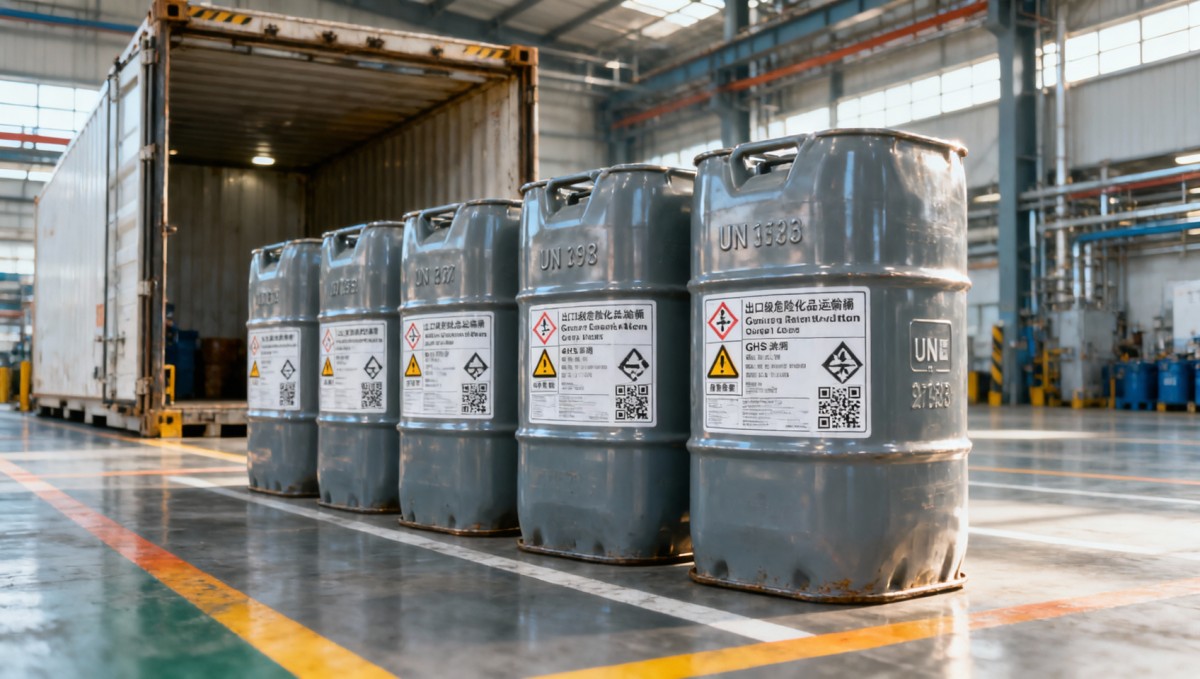
The revised Hazardous Chemicals Safety Law takes effect on May 1, 2026. It strengthens full-lifecycle regulation of hazardous chemicals in China, with three confirmed new requirements: (1) mandatory pre-export compliance declaration; (2) compulsory bilingual (Chinese–English) GHS labels; and (3) UN-certified transport packaging featuring verifiable traceability. The law directly affects customs clearance compliance in over 70 countries, particularly influencing EU REACH extended obligations, U.S. EPA import notification procedures, and Southeast Asian customs inspection standards. Overseas importers are required to update their lists of compliant Chinese suppliers and confirm the alignment of English-language SDS/MSDS and labeling at least 60 days prior to import.
Industries Affected by Segment
Direct Exporters and Trading Enterprises
These entities face immediate operational impact because they are legally responsible for submitting pre-export declarations and ensuring label and packaging compliance before shipment. Non-compliance may result in export delays, rejection at foreign ports, or penalties under both Chinese and destination-country regulations.
Raw Material Procurement Enterprises
Companies sourcing hazardous chemical intermediates or additives from Chinese suppliers must now verify upstream compliance status — including valid UN packaging certifications and bilingual label readiness — as part of procurement due diligence. Failure to do so risks downstream shipment failure or contractual liability.
Chemical Formulators and Manufacturing Enterprises
Manufacturers blending, repackaging, or re-labeling hazardous chemicals in China must ensure all final products meet the new labeling and packaging requirements before export. This includes updating internal quality control checklists and revising product release protocols to include bilingual GHS verification.
Distribution and Logistics Service Providers
Cargo handlers, freight forwarders, and third-party logistics providers must now validate UN certification numbers and bilingual label presence during pre-shipment inspections. Their documentation systems must support traceability linkage between declared shipments and certified packaging batches.
What Enterprises and Practitioners Should Focus On Now
Monitor official implementation guidance from MEE and GACC
While the law takes effect May 1, 2026, subordinate regulations — such as the format of pre-export declarations, approved bilingual label templates, and UN certification verification mechanisms — remain pending. Enterprises should track announcements from China’s Ministry of Ecology and Environment (MEE) and General Administration of Customs (GACC).
Prioritize high-risk categories and key markets
Analysis shows that organic peroxides, flammable liquids (e.g., solvents), and certain corrosion-inhibiting agents face stricter scrutiny under the new law. Exporters targeting the EU (REACH Annex XVII), U.S. (TSCA/EPA), and ASEAN (e.g., Singapore’s NEA, Thailand’s FDA) should treat these categories as priority for early compliance validation.
Distinguish regulatory signals from enforceable obligations
Observably, the requirement for “bilingual GHS labels” is codified, but enforcement thresholds — such as font size, layout consistency, or acceptable translation standards — have not yet been published. Enterprises should avoid assuming equivalence with existing EU CLP or U.S. OSHA formats until official technical guidance is released.
Initiate supplier coordination and documentation updates now
Given the 60-day confirmation window for SDS/SDS English versions and label alignment, enterprises should begin engaging Chinese suppliers immediately to review current SDS versions, label drafts, and UN packaging batch records. Internal SOPs for document version control and cross-border handover should be updated ahead of Q1 2026.
Editorial Perspective / Industry Observation
This revision is better understood as a structural signal than an isolated compliance shift. From an industry perspective, it reflects China’s increasing alignment with global chemical regulatory infrastructure — not only in substance but also in procedural rigor. The emphasis on traceability and pre-declaration suggests a move toward proactive risk governance rather than reactive incident response. However, its practical impact remains contingent on how implementing rules define scope, exemptions, and enforcement timelines. Continued monitoring of MEE/GACC notices through mid-2026 will be essential to assess whether this becomes a routine operational requirement or triggers broader supply chain recalibration.
Conclusion
The 2026 revision of China’s Hazardous Chemicals Safety Law marks a formal step toward harmonized global chemical trade compliance — but its real-world implications depend heavily on forthcoming technical guidance and cross-border enforcement coordination. For now, it is more accurately interpreted as a regulatory inflection point requiring proactive alignment, not an immediate operational crisis. Enterprises should treat it as a catalyst for strengthening documentation discipline, supplier collaboration, and regulatory intelligence capacity — rather than as a one-time compliance checklist.
Information Sources
Primary source: Official text of the revised Hazardous Chemicals Safety Law, promulgated by the Standing Committee of the National People’s Congress, effective May 1, 2026. Pending implementation rules issued by the Ministry of Ecology and Environment (MEE) and General Administration of Customs (GACC) remain under observation.
Recommended News
- REACH Compliance in B2B Market Analysis: Assessing Supplier Risk and Market AccessSep 12, 2026B2B market analysis REACH compliance: assess supplier risk, strengthen evidence controls, and protect EEA market access with practical sourcing insights.
- Which mining equipment performance standards matter most on site?Sep 03, 2026Mining equipment performance industry standards: assess availability, payload, fuel efficiency, durability, and safety to improve on-site productivity.
- How Technology Standards Define Corrosion Resistance Testing and Acceptance CriteriaAug 31, 2026Technology standards corrosion resistance guidance: learn how test methods, acceptance criteria, specimen design, and service conditions support reliable procurement decisions.
- How to Evaluate ISO 9001 Certification Services for Supplier Qualification?Aug 17, 2026ISO9001certificationservices help procurement teams verify more than a certificate. Learn how to assess accreditation, scope, and audit rigor for smarter supplier qualification.
- China Ends New Chemical Filing on Aug. 15Aug 14, 2026China ends new chemical filing on Aug. 15, shifting to registration and blocking direct foreign applications—essential for exporters and importers.
- Can Bulldozers Be Adapted for Precision Agriculture Applications?Sep 16, 2026Can bulldozers be converted for precision agriculture applications? Discover how guided grading, soil protection, and data-driven planning improve farm infrastructure.
- REACH Compliance in B2B Market Analysis: Assessing Supplier Risk and Market AccessSep 12, 2026B2B market analysis REACH compliance: assess supplier risk, strengthen evidence controls, and protect EEA market access with practical sourcing insights.
- Analyzing Pressure Ratings in Technical Specifications for Safe Equipment SelectionSep 10, 2026Technical specifications analysis for pressure rating selection: learn how to assess temperature, materials, transients, and connections for safer equipment choices.
- How Often Should Heavy Excavators Be Serviced in Mining Operations?Sep 03, 2026What are the maintenance intervals for heavy excavators in mining? Discover practical service schedules, severe-duty adjustments, oil analysis, and uptime-focused maintenance tips.
- Which mining equipment performance standards matter most on site?Sep 03, 2026Mining equipment performance industry standards: assess availability, payload, fuel efficiency, durability, and safety to improve on-site productivity.
- Prefab Building Cost Factors: How to Budget for Design, Transport, and Site WorkSep 17, 2026Explore prefab building cost factors and learn how to budget smarter for design, transport, foundations, utilities, installation, and approvals.
- Which Emerging Destinations Offer the Best Manufacturing Tax Incentives in 2026?Sep 03, 2026What emerging destinations offer the best manufacturing tax incentives 2026? Compare Vietnam, India, Morocco, Egypt, and Gulf zones for tax, duty, and export advantages.
- Can Data Analysis Tools Detect Supplier Fraud in Procurement Data?Sep 03, 2026Can data analysis tools detect supplier fraud in procurement data? Discover key red flags, analytics methods, and practical controls to investigate risks sooner.
- What are the current pricing structures for industrial automation solutions?Sep 03, 2026What are the current pricing structures for industrial automation solutions? Compare upfront, subscription, usage-based, RaaS, and lifecycle costs to make smarter investment decisions.
- How German bulk pricing changes the cost of industrial machinerySep 03, 2026Industrial machinery and supplies price list and bulk purchase costs in Germany: uncover real savings across equipment, logistics, service, and compliance.
All Categories
Hot Articles
- How to Specify Energy-Efficient Poultry Ventilation for Broiler HousesSep 20, 2026Energy efficient poultry ventilation systems: learn how to specify fans, inlets, controls, and cooling for lower energy use, healthier broilers, and reliable airflow.
- How to Choose Business Travel Services in Europe for Multi-Country TeamsSep 19, 2026Business travel services Europe: learn how to select the right provider for multi-country teams, with policy control, rail access, duty of care, payment visibility, and 24/7 support.
- How to Document a B2B Market Analysis for Clear, Decision-Ready InsightsSep 18, 2026B2B market analysis documentation guide: learn to organize evidence, assess competitors, map buyers, and turn market research into clear, decision-ready growth actions.