
Kenya's First Zero-Tariff African Agri-Products Arrive in China
TIME
Click count
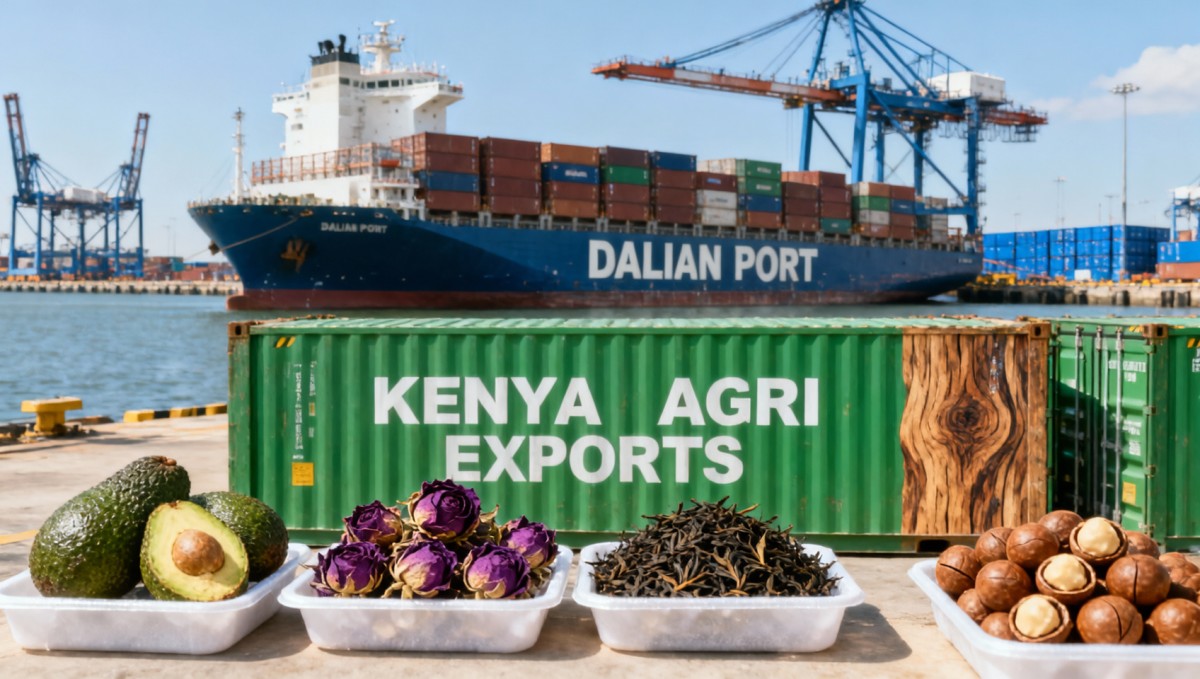
On May 1, 2026, Kenya’s inaugural shipment of zero-tariff agricultural products—valued at RMB 17 million—cleared customs at Dalian Port, marking the operational launch of China’s unilateral zero-tariff policy for 53 African diplomatic partners. This policy shift directly impacts agri-food trade, supply chain services, and cross-border sourcing strategies across multiple sectors, driven by reduced import compliance burdens and predictable market access.
Event Overview
Effective May 1, 2026, China implemented a unilateral zero-tariff policy covering all tariff lines for imports from 53 African countries with which it maintains diplomatic relations. The first consignment benefiting from this policy originated from Kenya and arrived at Dalian Port on the same day. The cargo consisted exclusively of agricultural products and carried a declared value of RMB 17 million.
Industries Affected
Direct Trading Enterprises: Exporters, importers, and cross-border distributors headquartered in Africa or China face recalibrated risk-return profiles. With tariff elimination confirmed, upfront cost uncertainty declines—especially for SMEs lacking hedging capacity—but regulatory alignment (e.g., phytosanitary certification, origin verification) remains a critical bottleneck. Their margin sensitivity to logistics delays and documentation errors has not diminished; rather, it has shifted toward speed-to-market execution.
Raw Material Procurement Firms: Chinese food ingredient buyers, nutraceutical suppliers, and halal-certified product formulators now have stronger incentives to diversify sourcing away from traditional origins (e.g., Southeast Asia, Latin America). The policy lowers landed cost thresholds for African-origin commodities such as macadamia nuts, avocados, tea, and rooibos—yet procurement teams must verify traceability systems and invest in pre-shipment conformity assessments to avoid post-arrival rejections.
Processing & Manufacturing Companies: Domestic processors of ready-to-eat meals, frozen foods, and functional beverages may explore reformulating with African-sourced inputs—particularly where flavor profile differentiation or halal integrity adds premium value. However, scale-up requires stable volume commitments and adaptation to seasonal harvest cycles; current volumes remain symbolic, not systemic. Integration into existing production planning remains contingent on consistent supply cadence—not just tariff status.
Supply Chain Service Providers: Cold-chain logistics operators, customs brokerage firms, and certification agencies are seeing renewed demand for Africa-China corridor expertise—especially around temperature-controlled transport, halal compliance validation, and digital origin documentation (e.g., e-CO, blockchain-enabled phytosanitary certificates). Yet service scalability is constrained by port infrastructure readiness in both Dalian and Nairobi, and limited harmonization of sanitary standards across African jurisdictions.
Key Considerations and Recommended Actions
Verify Eligibility Beyond Tariff Lines
Zero-tariff status applies only to goods meeting strict rules of origin—and excludes items subject to anti-dumping duties, safeguard measures, or non-tariff barriers (e.g., import quotas, mandatory labeling). Traders must confirm HS code alignment against China’s official Annex I list before shipment.
Prioritize Pre-Certification for Phytosanitary & Halal Compliance
While tariffs fall to zero, China retains full authority to reject shipments failing inspection. African exporters should engage accredited third-party certifiers early—not only for phytosanitary certificates but also for halal certification recognized by China’s Islamic Association or provincial religious affairs bureaus.
Assess Logistics Corridor Capacity, Not Just Cost
Lower tariffs do not automatically translate into faster or more reliable delivery. Current transit times via sea freight from Mombasa to Dalian average 28–35 days, with cold-chain reliability varying significantly by carrier. Importers should benchmark carrier performance metrics—not just quoted rates—before committing long-term contracts.
Engage Local Trade Facilitation Mechanisms
African exporters and Chinese importers are advised to utilize the China-Africa Joint Arbitration Centre (CAJAC) and pilot digital trade platforms launched under the Forum on China–Africa Cooperation (FOCAC) framework to reduce documentation friction and dispute resolution timelines.
Editorial Perspective / Industry Observation
Observably, this policy is less a sudden market opening than a calibrated signal: it tests institutional readiness on both sides—not just tariff administration, but also standards alignment, certification reciprocity, and port-level interoperability. Analysis shows that while headline tariff removal attracts attention, the real inflection point will be whether African export hubs can sustain monthly shipments above 5,000 TEUs without quality variance or documentation failure. Current momentum reflects political commitment; commercial sustainability remains unproven.
Conclusion
This milestone represents a structural step—not an immediate transformation—in Sino-African agri-trade integration. Its broader industry significance lies in creating a replicable template: one where unilateral tariff concessions serve as catalysts for downstream investments in traceability, certification, and cold-chain infrastructure. A rational interpretation is that impact will accrue incrementally over 12–24 months, contingent on measurable improvements in cross-border process efficiency—not just policy intent.
Source Attribution
Official sources include the General Administration of Customs of the People’s Republic of China (GACC) Notice No. 2026-17, the Ministry of Commerce of China’s Implementation Guidelines for the Africa Zero-Tariff Initiative (April 2026), and the Kenya National Bureau of Statistics’ Export Shipment Ledger (May 1, 2026). Ongoing monitoring is recommended for updates on: (i) expansion of eligible product categories beyond initial agri-list; (ii) progress on mutual recognition agreements for halal and organic certifications; and (iii) infrastructure upgrades at designated African ports under the Belt and Road–Africa Cooperation Framework.
Recommended News
- What makes an Indian machinery exporter worth shortlistingMay 24, 2026Industrial & Manufacturing machinery exporter in India: learn what makes one worth shortlisting, from engineering depth and compliance to after-sales support for lower sourcing risk.
- Why exporters in India stay strong in machinery tradeMay 23, 2026Industrial & Manufacturing machinery exporter in India stays resilient through cost efficiency, adaptable engineering, and reliable support. Learn why global buyers keep choosing India.
- Which trade resources help USA exporters find leads fasterMay 22, 2026Trade resources for exporters in USA: discover the fastest tools to find qualified buyers, validate markets, and build a smarter export lead pipeline with confidence.
- Why Indian machinery exporters vary in lead timesMay 22, 2026Industrial & Manufacturing machinery exporter in India lead times vary due to engineering, sourcing, capacity, and logistics. Learn the key checklist to compare suppliers and avoid costly delays.
- How to compare equipment suppliers in Germany fairlyMay 22, 2026Industrial & Manufacturing equipment supplier in Germany: learn a fair, practical way to compare vendors by technical fit, compliance, delivery, service, and total cost.
- How industrial suppliers in Germany compare on qualityMay 23, 2026Industrial suppliers in Germany compare on quality through traceability, precision, compliance, and repeatability. Discover how to evaluate suppliers by sourcing scenario and reduce procurement risk.
- What to check before choosing a machinery parts exporterMay 23, 2026Industrial & Manufacturing machinery parts exporter selection starts with technical checks, not price alone. Learn how to verify quality, certifications, lead time, and export readiness before you buy.
- What to check before choosing automation solutionsMay 21, 2026Industrial & Manufacturing automation solutions: learn what to check before choosing—system fit, integration, scalability, security, and ROI—to reduce risk and make smarter decisions.
- How to choose an OEM maker for aesthetics devicesMay 20, 2026Aesthetics devices OEM manufacturer selection affects quality, compliance, and speed to market. Learn key checks to reduce sourcing risk and choose a reliable partner.
- What telemedicine hardware works best in rural clinics?May 20, 2026Telemedicine hardware for rural areas should be rugged, low-bandwidth, and easy to maintain. Discover the best devices, connectivity tools, and setup tips for reliable rural care.
- How German equipment suppliers differ on quality and lead timeMay 24, 2026Industrial & Manufacturing equipment supplier in Germany choices vary in quality and lead time. Learn how to compare suppliers, reduce sourcing risk, and choose the best fit faster.
- What makes an Indian machinery exporter worth shortlistingMay 24, 2026Industrial & Manufacturing machinery exporter in India: learn what makes one worth shortlisting, from engineering depth and compliance to after-sales support for lower sourcing risk.
- How to read an industrial machinery price list without overpayingMay 24, 2026Industrial & Manufacturing machinery price list guide: learn to compare quotes, uncover hidden costs, and avoid overpaying with smarter procurement decisions.
- How useful are trade leads on a B2B platform todayMay 23, 2026Trade leads for B2B platform users still drive faster sourcing and better procurement decisions when leads are qualified. Learn how to spot high-value opportunities and reduce project risk.
- Why exporters in India stay strong in machinery tradeMay 23, 2026Industrial & Manufacturing machinery exporter in India stays resilient through cost efficiency, adaptable engineering, and reliable support. Learn why global buyers keep choosing India.
All Categories
Hot Articles
- Why parts exporters matter more when downtime gets expensiveMay 24, 2026Industrial & Manufacturing machinery parts exporter selection is critical when downtime gets costly. Learn how the right partner cuts delays, protects uptime, and reduces operational risk.
- When do automation solutions deliver real factory ROIMay 24, 2026Industrial & Manufacturing automation solutions deliver real factory ROI when they fix clear bottlenecks, improve uptime and quality, and follow a phased, data-backed rollout.
- How German equipment suppliers differ on quality and lead timeMay 24, 2026Industrial & Manufacturing equipment supplier in Germany choices vary in quality and lead time. Learn how to compare suppliers, reduce sourcing risk, and choose the best fit faster.